
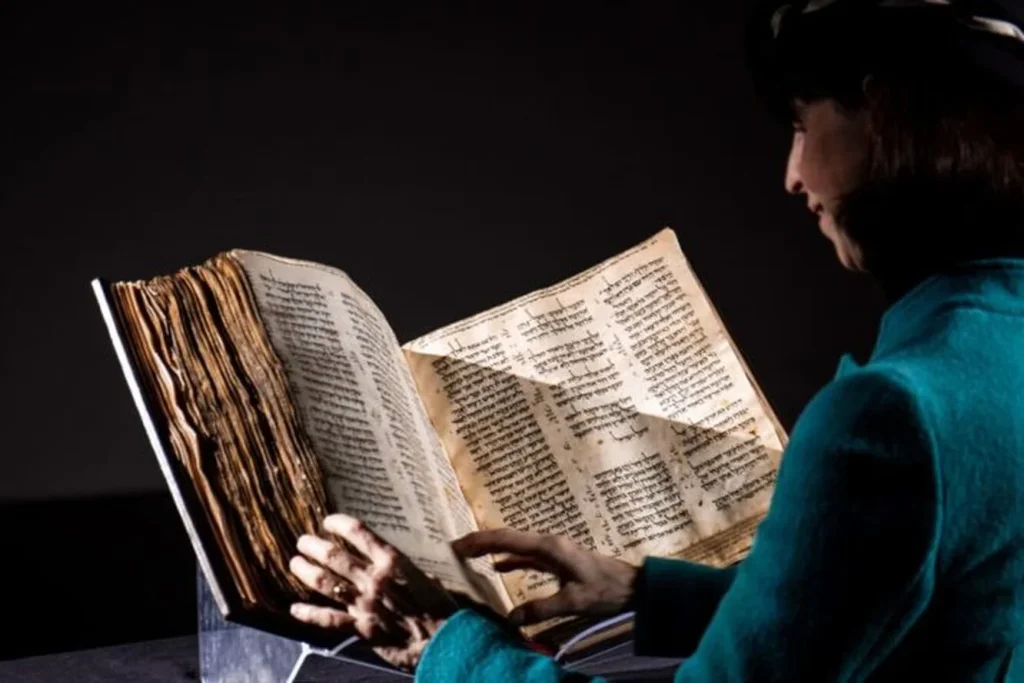
Hebrew words for witchcraft appear in several forms and describe different kinds of forbidden magic. The main Hebrew word for witchcraft is כְּשָׁפִים (keshafim), meaning sorcery or magical manipulation. A common related term is מְכַשֵּׁפָה (mekhashefah) for a female witch and מְכַשֵּׁף (mekhashef) for a male sorcerer. Another word is נַחַשׁ (nahash), referring to divination or omens, and עוֹנֵן (onen), meaning someone who practices occult prediction. Together, these words paint a picture of ancient prohibitions against harmful or deceptive supernatural practices.
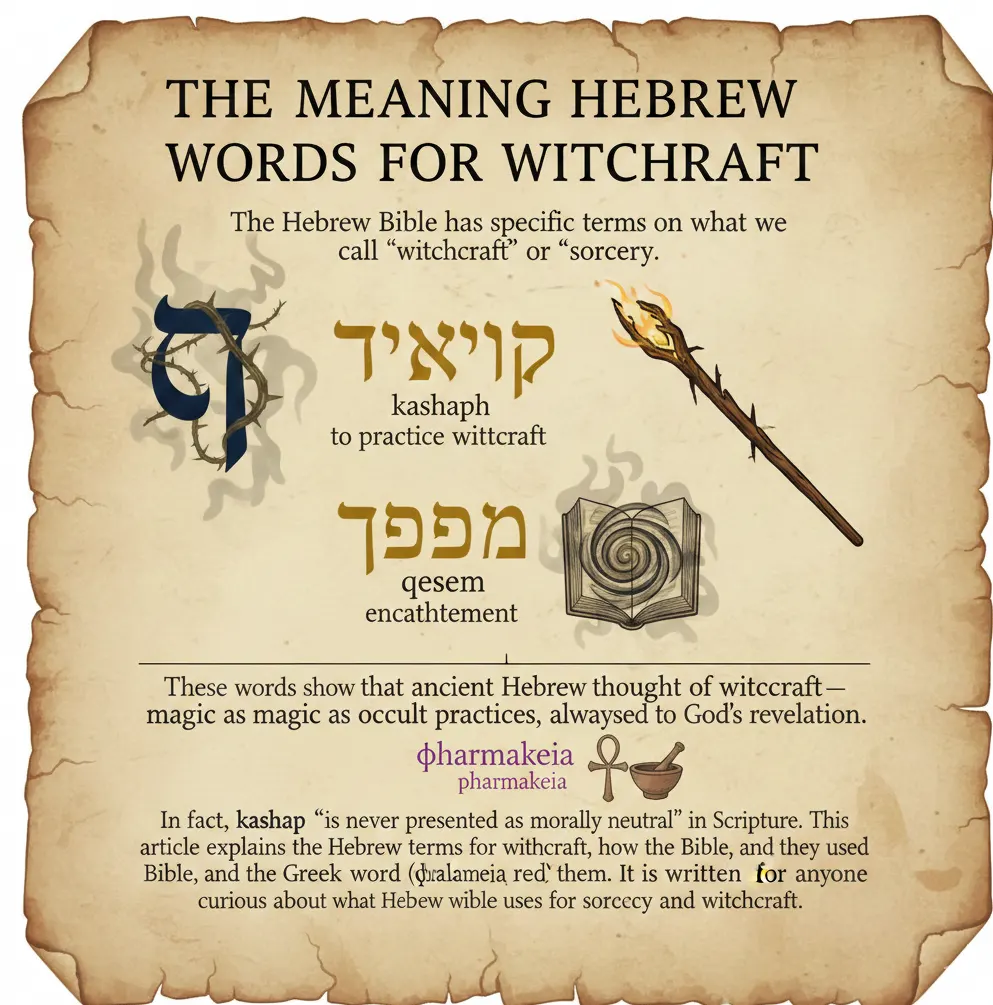
The Meaning of Hebrew Words for Witchcraft
The Hebrew Bible has specific terms for what we call “witchcraft” or “sorcery.” In Hebrew the main word is קָּשַׁף (kashaph), meaning “to practice sorcery” or “to use witchcraft”. The verb kashaph appears in laws and stories about magic (for example, Pharaoh’s magicians in Exodus). Another key term is קֶסֶם (qesem), meaning “divination” or “enchantment”. These words show that ancient Hebrew thought of witchcraft and magic as occult practices, always opposed to God’s revelation.
In fact, kashaph “is never presented as morally neutral” in Scripture. This article explains the Hebrew terms for witchcraft, how they are used in the Bible, and how the Greek word pharmakeia (φαρμακεία) relates to them. It is written for anyone curious about what Hebrew words the Bible uses for sorcery and witchcraft.
Hebrew Terms for Witchcraft
Bible scholars identify a few Hebrew words related to occult magic or witchcraft:
קָּשַׁף (kashaph) – a verb meaning “to practice sorcery” or “to use witchcraft.” Its root likely means “to whisper a spell” or “chant an incantation,” and it appears in verses that forbid witchcraft or describe sorcerers.
מְכַשֵּׁפָה (mekhashefa) – a feminine noun meaning “sorceress” or “witch.” For example, Exodus 22:18 says, “You must not allow a sorceress (mekhashefa) to live,” using this word for a woman who practices magic.
מְכַשְּׁפִים (mekhashephim) – the plural “sorcerers.” Malachi 3:5 mentions “sorcerers (mekhashephim)” alongside other lawbreakers.
קֶסֶם (qesem) – a noun meaning “divination,” “charm,” or “sorcery,” often translated as “witchcraft” in some versions. It refers to seeking hidden knowledge by occult means. For example, Deuteronomy 18:10 forbids “one who practices divination” (using qesem) among other occult arts.
קֹסֵם (kosem) – meaning “diviner” or “soothsayer.” This word often appears with qesem, for example “one who practices divination or soothsaying” in Deut 18:10.
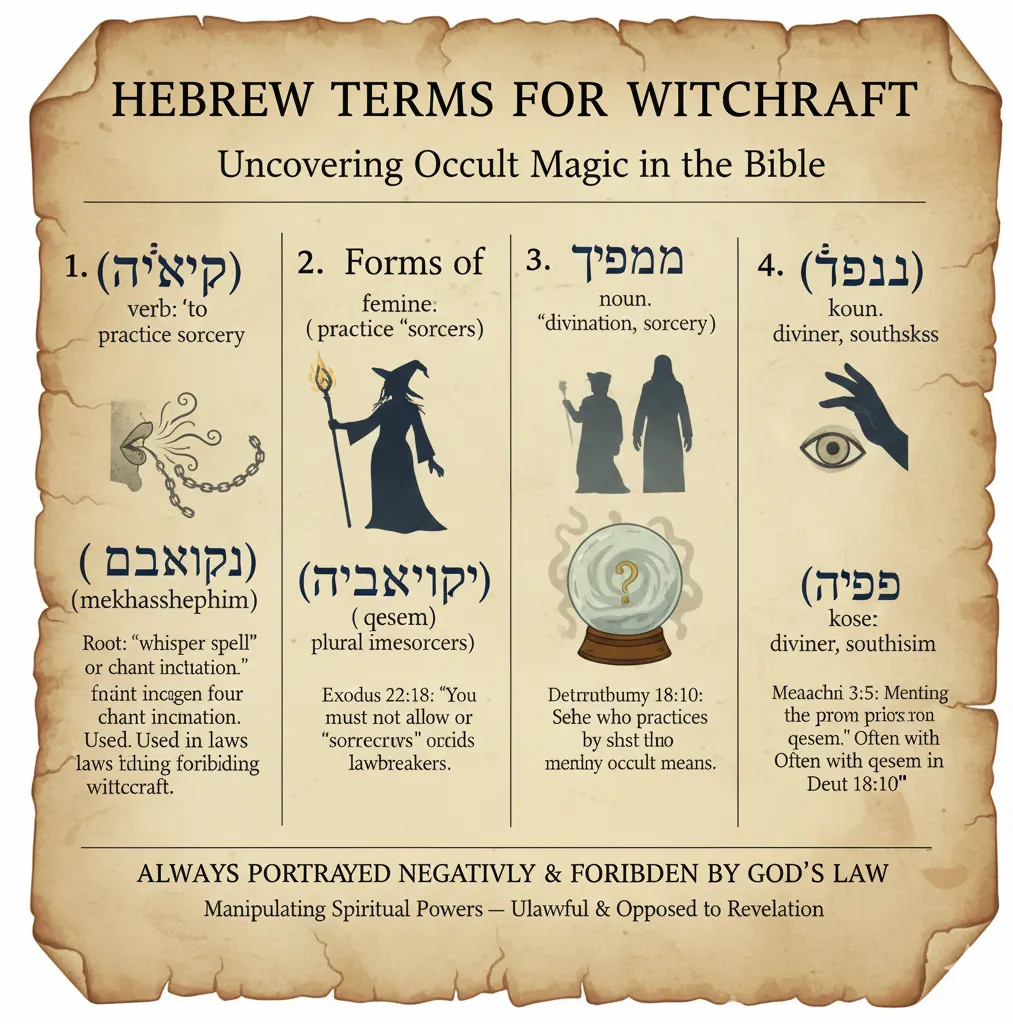
Each of these Hebrew terms occurs in contexts where magic and witchcraft are forbidden. For instance, a Strong’s Hebrew lexicon defines kashaph simply as “to practice sorcery, to use witchcraft.” Likewise, Brown-Driver-Briggs notes that kashaph denotes “the practice of manipulating spiritual powers through occult rituals,” always portrayed negatively. In short, the Hebrew Bible uses kashaph (with related forms like mekhashefa) and qesem for witchcraft and divination, always in a bad sense.
Sorcery in the Hebrew Bible
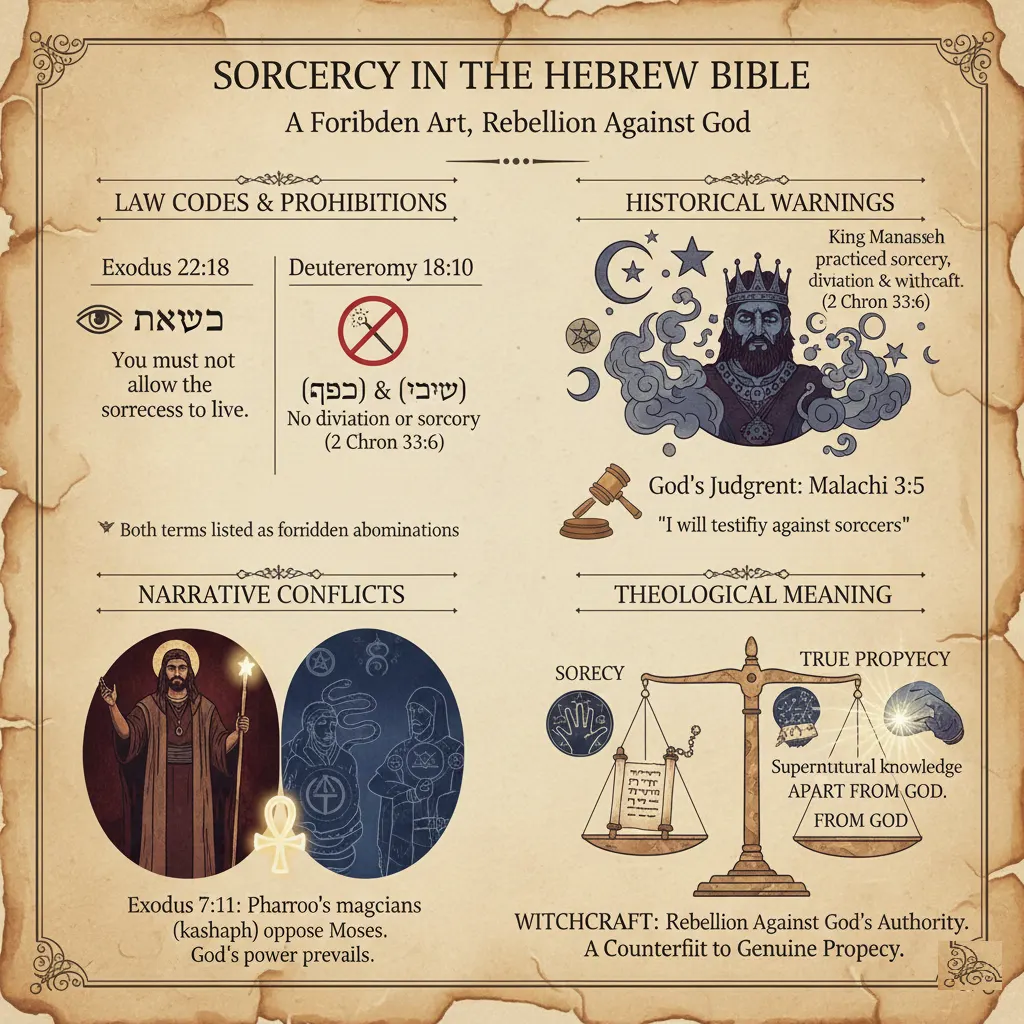
Witchcraft and sorcery are repeatedly condemned in the Hebrew Scriptures. Law codes and narratives forbid occult practices. For example, Exodus 22:18 (often cited) declares, “You must not allow a sorceress (mekhashefa) to live.” The Strong’s entry notes this covenant law, emphasising that civil law “prescribes sorcery with the death penalty.” Similarly, Deuteronomy 18:10 bans a range of pagan practices: “There shall not be found among you anyone who practices divination (qesem) or sorcery (kashaph)…”. These verses show that both kashaph and qesem are listed as forbidden abominations.
The historical books also highlight the ban on witchcraft. King Manasseh “practiced sorcery, divination, and witchcraft, and consulted mediums and spiritists” (2 Chronicles 33:6), illustrating how evil kings led Judah into occult sins. Later prophets promised God’s judgment on unrepentant sorcerers. Malachi 3:5, for instance, warns that God will testify against sorcerers (mekhashephim) along with others. In narrative scenes we see magicians confronted with God’s power: Exodus 7:11 (from the same root kashaph) describes Pharaoh’s magicians “by their secret arts” opposing Moses.
In every case, sorcery in the Hebrew Bible is an illicit attempt to control the supernatural. Scripture always contrasts it with true prophecy. The Strong’s topical notes explain that both kashaph and qesem represent “attempts to gain supernatural knowledge or power apart from God” and that either term “represents a counterfeit to genuine prophecy.” In short, witchcraft is depicted as rebellion against God’s authority.
Sorcery in Hebrew and the Greek “Pharmakeia”
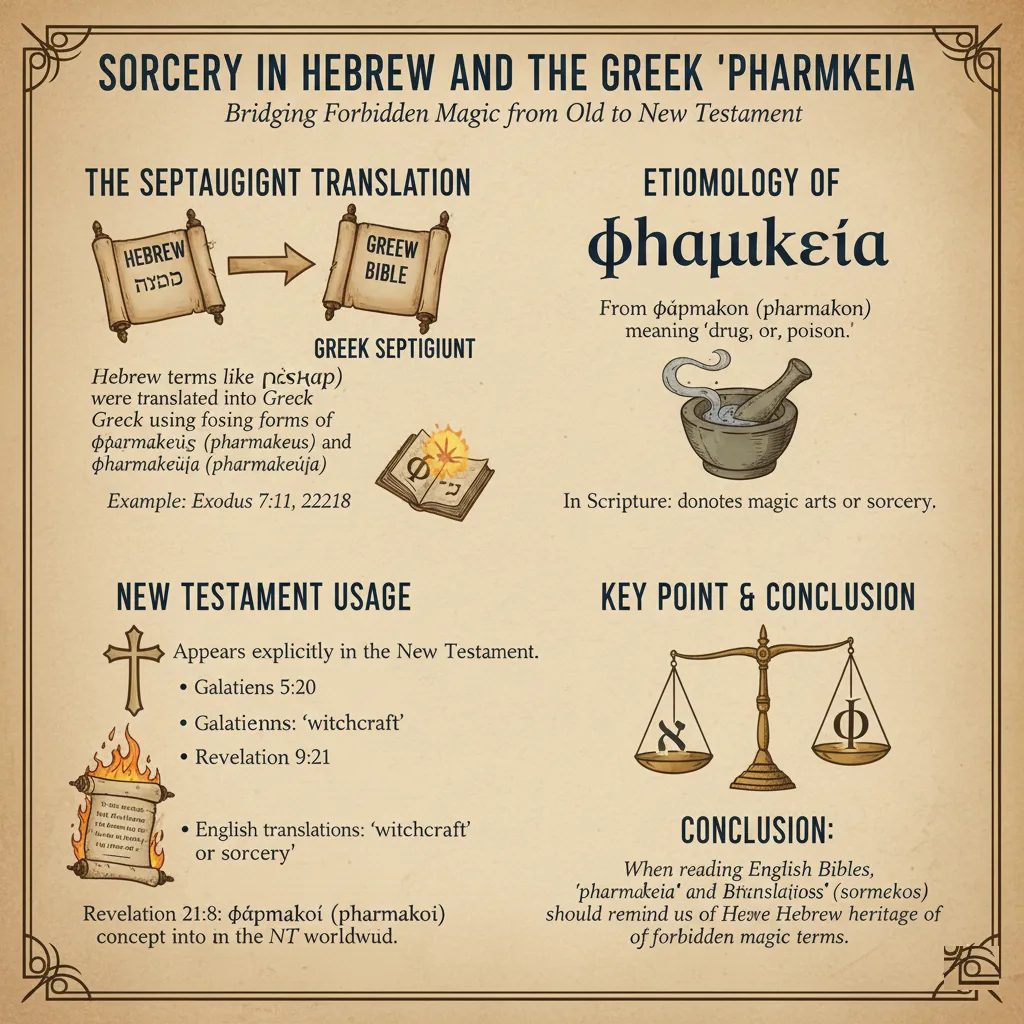
It is important to note that the Hebrew Bible was later translated into Greek (the Septuagint). The Greek translators often used forms of φαρμακεύς (pharmakeus) and φαρμακεία (pharmakeia) to render Hebrew kashaph and related terms. In fact, kashaph in Exodus 7:11, 22:18, and other verses is translated with φαρμακόυς (related to pharmakos). The Greek word pharmakeia comes from pharmakon (meaning “drug” or “poison”) and in Scripture denotes magic arts or sorcery.
In the New Testament, pharmakeia appears explicitly. Galatians 5:20 and Revelation 9:21, for example, use the term pharmakeia. English translations render it as “witchcraft” or “sorcery.” In Revelation 21:8, pharmakoi (the plural noun) is translated “sorcerers.” Thus, pharmakeia carries the same basic idea as the Hebrew terms – illicit magic.
Key Point: Pharmakeia is a Greek word, not Hebrew, but Bible translations link it with Hebrew sorcery. It bridges the Hebrew concept of kashaph into the New Testament worldview of forbidden magic. Greek lexicons and translators equate pharmakeia with kashaph (sorcery). When reading English Bibles, pharmakeia and pharmakos (sorcerer) should remind us of the Jewish heritage of those terms (witchcraft, sorcery, magic).
What is Witchcraft in Hebrew?
In Hebrew culture, witchcraft is known as “keshef” or “keshafim.” It refers to the practice of using supernatural powers or magic for both benign and malevolent purposes. Witchcraft in Hebrew encompasses a wide range of practices, including divination, spellcasting, and the use of charms and potions. It is rooted in ancient beliefs and traditions that have been passed down through generations.
The term “keshef” is derived from the Hebrew word “kashaf,” which means to practice magic or to enchant. It is important to note that the concept of witchcraft in Hebrew is not solely associated with dark or evil forces. Historically, Hebrew society had both positive and negative views of witchcraft, recognizing its potential for healing and spiritual guidance as well as its potential for harm. Thus, the understanding of witchcraft in Hebrew is multifaceted and varies depending on the context and interpretation of the practices involved.
Frequently Asked Questions
What is the Hebrew word for witchcraft?
The primary Hebrew word is קָּשַׁף (kashaph), a verb meaning “to practice sorcery.” Biblical laws and narratives use kashaph (and its forms) to mean witchcraft or sorcery. A related noun, מְכַשֵּׁפָה (mekhashefa), means “sorceress” or “witch.” Another word, קֶסֶם (qesem), means “divination” or enchantment.
How was witchcraft viewed in the Hebrew Bible?
Witchcraft was strictly forbidden. God’s law included capital punishment for practicing magic (e.g., “Do not permit a sorceress to live.” – Exodus 22:18). Prophets and historical accounts repeatedly warn that sorcery (kashaph, qesem) leads to national downfall. In short, the Hebrew Bible portrays witchcraft as a dangerous sin and a counterfeit to true prophecy.
What does pharmakeia mean in the Bible?
Pharmakeia (φαρμακεία) is a Greek word meaning “sorcery” or “witchcraft.” It appears in the New Testament (e.g., Galatians 5:20; Revelation 9:21) and is translated as “witchcraft” or “magic.” In the Greek Old Testament (Septuagint), translators used words related to pharmakeia to render Hebrew kashaph. So pharmakeia and the Hebrew kashaph refer to the same concept of illicit magic.
Are there other Hebrew terms for occult practices?
Yes. Besides קָּשַׁף and קֶסֶם, the Hebrew Bible uses words like מְכַשְּׁפִים (mekhashephim, “sorcerers” – Malachi 3:5) and קֹסֵם (kosem, “diviner”) in its lists of banned practices. All these terms encompass what we might call witchcraft, sorcery, enchantment, and soothsaying.
These Hebrew terms show that the Bible’s writers understood witchcraft as any attempt to manipulate spiritual powers outside God’s will. The words kashaph and qesem are the roots for “witchcraft” in the Old Testament, just as pharmakeia is the word used in later Scriptures.
Understanding the Hebrew Term for Witchcraft
Witchcraft holds a prominent place in Hebrew culture, with the term for witchcraft being “keshef” in Hebrew. Understanding the Hebrew term for witchcraft can provide insight into its significance and historical context within Hebrew society. Moreover, it helps in exploring the different forms of witchcraft found in Hebrew texts and shedding light on the role of witchcraft in Hebrew folklore and mythology.
The Hebrew term “keshef” refers to the practice of sorcery or the use of magical powers. It encompasses a range of mystical practices, including the casting of spells, divination, and other supernatural acts. In Hebrew literature, references to witchcraft are often associated with the occult, as well as with acts of deception and manipulation. To understand the Hebrew term for witchcraft is to delve into a complex and intricate world of supernatural beliefs and practices that have woven themselves into the fabric of Hebrew society throughout history.

The Historical Context of Witchcraft in Hebrew Culture
Witchcraft holds a significant place in the historical context of Hebrew culture. Throughout the ages, the Hebrew people have been deeply influenced by the belief in supernatural forces and the practices of magic. Witchcraft, also known as “Kishuf” in Hebrew, has been an integral part of their cultural beliefs and traditions.
In ancient times, the Hebrews believed that witchcraft had the power to influence the natural order of things. It was perceived as a mysterious and potent force, capable of invoking blessings or curses in the lives of individuals and communities. Witchcraft was often associated with divination, spellcasting, and the ability to communicate with spirits and supernatural beings. The Hebrews held a complex view of witchcraft, respecting its power while also cautioning against its misuse. As a result, the historical context of witchcraft in Hebrew culture is a fascinating exploration of spirituality, superstition, and the search for hidden knowledge.
Significance of Witchcraft in Hebrew Literature
Witchcraft holds great significance in Hebrew literature, permeating numerous texts and stories. From ancient biblical narratives to medieval mystical writings, the portrayal of witchcraft serves as a powerful thematic element, highlighting the interplay between the supernatural realm and human existence.
In Hebrew literature, witchcraft languge often symbolizes the tension between good and evil, divine and demonic forces. It represents a source of power and knowledge that can be harnessed for both nefarious or redemptive purposes. The portrayal of witches and their craft allows Hebrew authors to explore the complexities of human nature, the consequences of moral choices, and the nature of divine intervention. Furthermore, through the lens of witchcraft, Hebrew literature delves into questions of fate, destiny, and the delicate balance between the physical and spiritual realms. By examining various perspectives on witchcraft, these texts offer readers a profound understanding of the human condition and the moral dilemmas faced by individuals in their quest for power and transcendence.
Exploring the Different Forms of Witchcraft in Hebrew Texts
In Hebrew texts, the exploration of witchcraft reveals a fascinating array of different forms and practices. One significant form is known as “keshef,” which refers to the use of spells and enchantments, often associated with the casting of harmful magic. Another form, “ov,” refers to the necromantic practice of summoning the spirits of the dead for divination purposes. The manipulation of curses and blessings, known as “qeshaphim” and “berakhot,” respectively, are also prevalent in Hebrew texts. These various forms of witchcraft provide unique insights into the belief systems and mystical practices of ancient Hebrew culture.
Additionally, Hebrew texts highlight the presence of Wiccan-like practices in the form of “kosem” and “me’onena.” The “kosem” was a male diviner who used various methods such as casting lots, interpreting dreams, and deciphering signs to gain insights into future events. On the other hand, the “me’onena” was a female diviner who would enter into a trance-like state to communicate with the spiritual realm and provide wisdom and guidance. These practices demonstrate the diversity of witchcraft within Hebrew texts and shed light on the significant role these mystical figures played in Hebrew society.
As we delve further into the exploration of the different forms of witchcraft in Hebrew texts, it becomes clear that these practices were deeply rooted in the cultural and religious fabric of society. The documentation of these forms of witchcraft not only provides us with a glimpse into the mystical beliefs of ancient Hebrew culture but also serves as a testament to the complexity and rich tapestry of their views on magic and the supernatural. By studying these diverse forms of witchcraft, we gain a deeper understanding of the cultural nuances and perceptions surrounding witchcraft in Hebrew society.
The Role of Witchcraft in Hebrew Folklore and Mythology
Witchcraft holds a significant place in Hebrew folklore and mythology, acting as a powerful symbol and catalyst for various narratives and cultural beliefs. Within these tales, the concept of witchcraft often intertwines with other mystical elements, creating a rich tapestry of magical practices and supernatural occurrences.
One prevalent theme that emerges is the ability of witches to communicate and interact with otherworldly beings. This connection showcases their elevated status and heightened spiritual awareness, positioning them as intermediaries between humans and the divine. In some stories, witches utilize their magical abilities to summon and command spirits, allowing them to tap into hidden knowledge and orchestrate supernatural events. This association with the spiritual realm adds an air of mystery and intrigue to the figure of the witch, further accentuating their revered role in Hebrew folklore and mythology.
The Cultural Perception of Witchcraft in Hebrew Society
The cultural perception of witchcraft in Hebrew society is a complex and multifaceted subject that has evolved over time. In ancient Hebrew culture, witchcraft was generally viewed with fear and suspicion. It was seen as a dark and forbidden practice, often associated with evil spirits and demonic forces. This negative perception stemmed from the religious beliefs and values of the Hebrew people, who considered witchcraft to be a form of idolatry and a violation of their covenant with God.
However, it is important to note that the cultural perception of witchcraft in Hebrew society was not always uniformly negative. In some cases, particularly in ancient Hebrew literature, certain forms of witchcraft were portrayed in a more positive light. For example, the use of divination and prophecy by individuals like the biblical figure of Samuel was considered a legitimate and respected form of witchcraft. These individuals were regarded as having a special connection with the divine and were seen as intermediaries between God and the human realm. Overall, the cultural perception of witchcraft in Hebrew society varied depending on the specific context and beliefs of the individuals and communities involved.
sources: https://www.jewishencyclopedia.com/articles/14960-witchcraft