
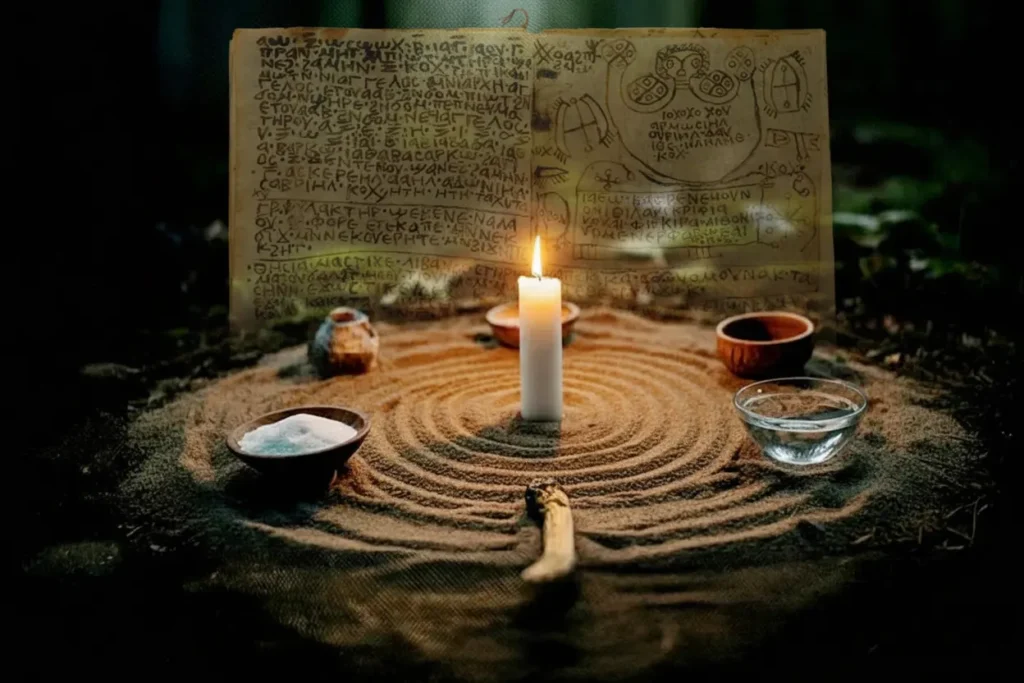
Welcome, seeker. If you’ve found your way here, chances are you feel a pull toward something more—a desire to connect with the world in a deeper, more intentional way. You might picture witches from fairy tales or films, but the reality of modern witchcraft is far more personal and profound. Spellcasting is not about fantasy; it’s a beautiful and empowering practice of focusing your intention to create meaningful change in your life. It is a craft of self-development, a way to align your inner world with your outer reality, and a path to understanding the subtle energies that flow through everything.
At its heart, a spell is simply a prayer with a purpose, an intention amplified through ritual, symbolic tools, and focused energy. It’s a way of communicating your deepest desires to the universe in a language it understands—the language of energy and symbolism. If you’ve ever searched for a list of spells or a magic spells list, you’ve come to the right place. This guide is designed to be your starting point on an incredible journey.

Think of these pages as the first entry in your own personal grimoire or “Book of Shadows.” This sacred journal is a witch’s most personal tool, a record of spells, dreams, insights, and experiences gathered along their unique path. Let this be your first step in creating a practice that is authentically, powerfully yours.
Witch List Spells: Your Essential Grimoire Starter Kit
Before diving into a witch spell list, it’s important to understand the landscape of modern witchcraft. The craft is wonderfully diverse, a tapestry woven from countless traditions, beliefs, and personal experiences. Many modern witches are “eclectic,” meaning they don’t follow a single, rigid tradition. Instead, they draw inspiration from various paths to create a practice that resonates with their own intuition and values. This freedom is one of the most beautiful aspects of the craft—it belongs to you.
While the possibilities are endless, most spells fall into a few core categories based on their intention. Understanding these foundational types of magic is the first step to building your own powerful spells list.
Table 1: Common Spell Categories at a Glance
| Spell Type | Core Intention | Common Tools & Ingredients |
| Protection | Shielding from negativity, creating safe spaces, setting energetic boundaries. | Salt, black tourmaline, obsidian, iron, rosemary, sage, protective symbols (sigils). |
| Prosperity & Luck | Attracting wealth, opening doors to opportunity, inviting good fortune. | Green or gold candles, cinnamon, basil, bay leaves, mint, pyrite, citrine. |
| Love | Drawing a new partner, deepening existing relationships, cultivating self-love and confidence. | Pink or red candles, rose petals, rose quartz, honey, jasmine, lavender. |
| Healing | Soothing emotional wounds, restoring spiritual balance, calming anxiety, encouraging rest. | Ritual baths, herbal teas (chamomile, lavender), amethyst, clear quartz, calming music. |

A common misconception for beginners is that you need a cabinet full of rare crystals and exotic herbs to begin practicing. This can feel like a significant barrier, suggesting that magic is something you must buy into rather than cultivate. However, a closer look at foundational folk magic reveals a different truth. The most effective and frequently recommended spells for newcomers rely on what is already present in their environment.
This principle connects to the path of the “Kitchen Witch,” a practitioner who finds magic in the everyday acts of cooking, cleaning, and tending to the home. The power isn’t in the rarity of the tool, but in the intention of the witch who wields it. This understanding is deeply empowering; it teaches that you don’t need to escape your reality to find magic. Instead, you can learn to see the sacred and potent energy already flowing through the mundane corners of your life, infusing your current reality with intention and power.
Here are a few simple yet powerful spells using common household items to start your practice.
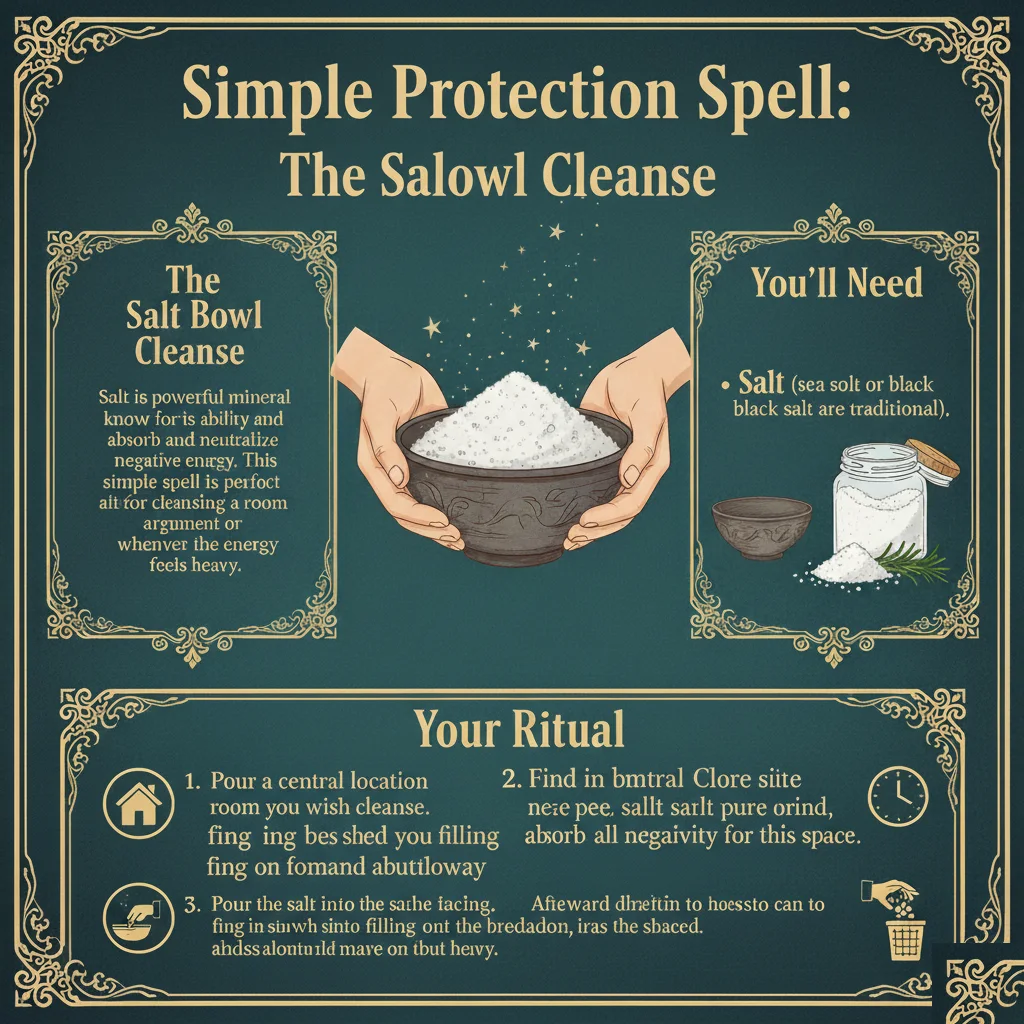
Simple Protection Spell: The Salt Bowl Cleanse
Salt is a powerful mineral known for its ability to absorb and neutralize negative energy. This simple witch spell is perfect for cleansing a room after an argument or whenever the energy feels heavy.
- You’ll Need: A small bowl and salt (any kind will do, but sea salt or black salt are traditional).
- Instructions:
- Find a central location in the room you wish to cleanse.
- Pour the salt into the bowl, filling it about halfway.
- Hold the bowl in your hands. Close your eyes and state your intention aloud or in your mind. For example: “Salt of the earth, pure and bright, absorb all negativity from this space. Leave only peace and light”.
- Place the bowl in its spot and leave it for a few hours or up to a day.
- Afterward, dispose of the salt outside of your home (in an outdoor trash can or by flushing it), visualizing it taking all the absorbed negativity with it. Do not consume this salt.
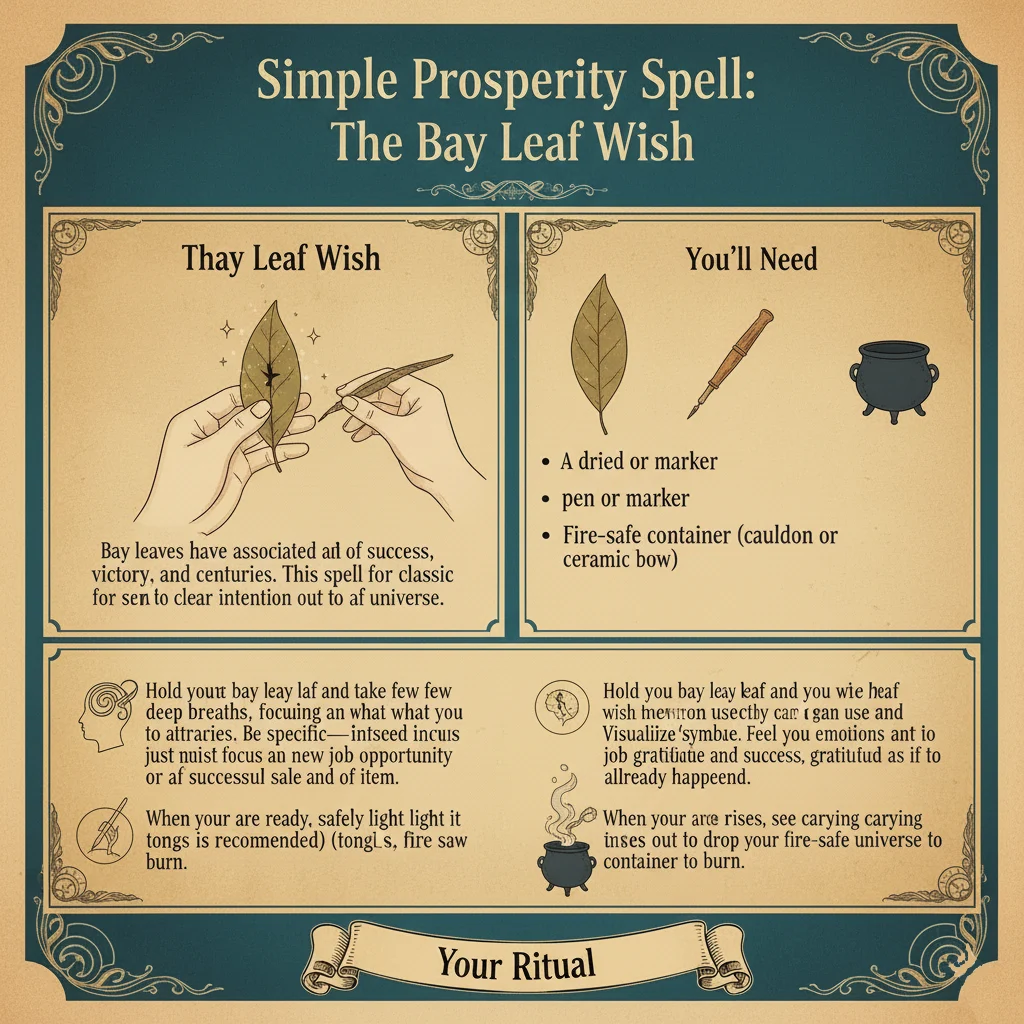
Simple Prosperity Spell: The Bay Leaf Wish
Bay leaves have been associated with success, victory, and manifestation for centuries. This witchcraft spell is a classic for sending a clear intention out into the universe.
- You’ll Need: A dried bay leaf, a pen or marker, and a fire-safe container (like a cauldron or ceramic bowl).
- Instructions:
- Hold the bay leaf and take a few deep breaths, focusing on what you wish to attract. Be specific—instead of just “money,” you might focus on a new job opportunity or the successful sale of an item.
- Write your wish directly onto the leaf. You can use a word (“Prosperity”), a symbol (like a dollar sign), or a specific amount.
- Hold the leaf and visualize your wish coming true. Feel the emotions of success and gratitude as if it has already happened.
- When you are ready, safely light the bay leaf (using tongs is recommended) and drop it into your fire-safe container to burn.
- As the smoke rises, see it carrying your intention out into the universe to manifest.
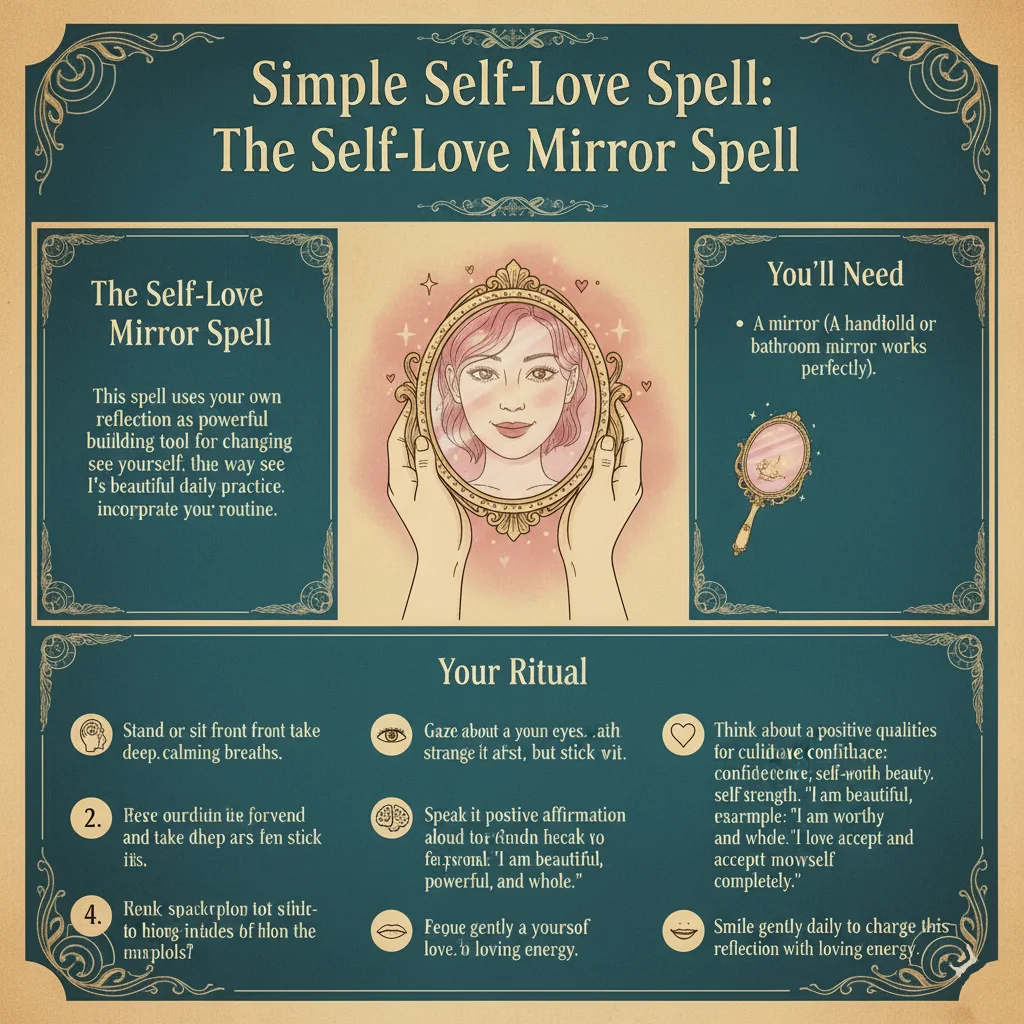
Simple Self-Love Spell: The Self-Love Mirror Spell
This spell uses your own reflection as a powerful tool for building confidence and changing the way you see yourself. It’s a beautiful daily practice to incorporate into your routine.
- You’ll Need: A mirror (a handheld or bathroom mirror works perfectly).
- Instructions:
- Stand or sit in front of the mirror and take three deep, calming breaths.
- Gaze into your own eyes. It might feel strange at first, but stick with it.
- Think about the qualities you want to cultivate: confidence, self-worth, beauty, strength.
- Speak a positive affirmation aloud to your reflection. Make it personal and powerful. For example: “I am worthy of love and respect. I am beautiful, powerful, and whole. I love and accept myself completely.”
- Smile gently at yourself. Repeat this daily to charge your reflection with loving energy.
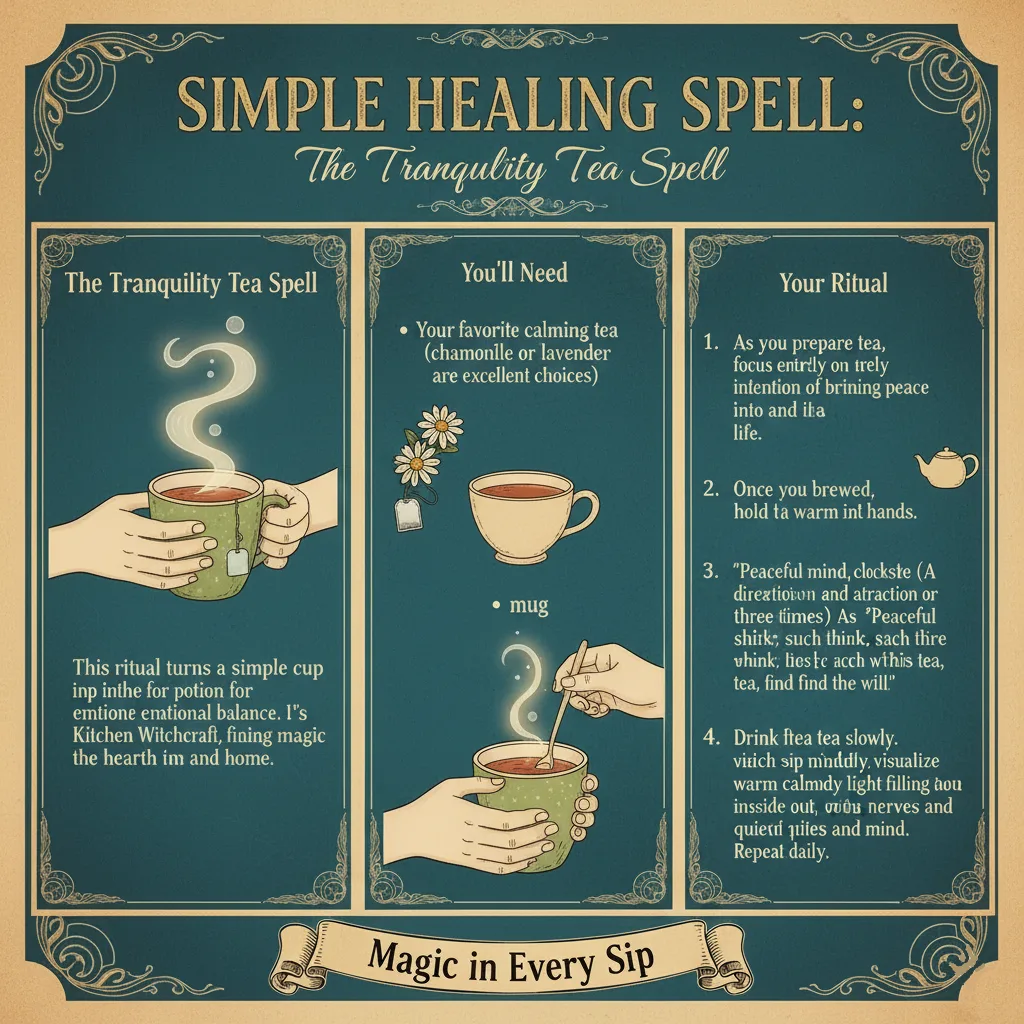
Simple Healing Spell: The Tranquility Tea Spell
This ritual turns a simple cup of tea into a potion for calm and emotional balance. It’s a perfect example of Kitchen Witchcraft, finding magic in the hearth and home.
- You’ll Need: Your favorite calming tea (chamomile or lavender are excellent choices) and a mug.
- Instructions:
- As you prepare your tea, focus entirely on your intention of bringing peace into your life.
- Once the tea is brewed, hold the warm mug in your hands.
- Stir the tea clockwise (the direction of attraction and manifestation) three times. As you stir, whisper or think an incantation, such as: “Peaceful mind, calm and still, with this tea, I find my will”.
- Drink the tea slowly and mindfully. With each sip, visualize a warm, calming light filling your body from the inside out, soothing your nerves and quieting your mind.
List of Spells Wicca: Magic with a Moral Compass
While many people use the terms “witch” and “Wiccan” interchangeably, it’s important to understand the distinction. Witchcraft is a practice or a craft, while Wicca is a specific, modern neopagan religion. Wicca is an earth-based faith that typically involves the reverence of both a God and a Goddess, who represent the masculine and feminine aspects of the divine and nature. Wiccans celebrate the changing of the seasons through eight festivals known as Sabbats, which make up the “Wheel of the Year”. While most Wiccans practice witchcraft, not all witches are Wiccan.
What truly shapes the list of spells wicca practitioners use is its strong ethical framework. This moral compass ensures that magic is wielded with responsibility and care.
The Ethical Framework of Wiccan Magic
Two core principles guide a Wiccan’s magical practice, encouraging deep reflection on the potential consequences of every action.
- The Wiccan Rede: The most famous tenet of Wicca is the Rede, which states, “An it harm none, do what ye will”. In modern English, this translates to, “As long as you’re not hurting anyone, do what you want.” The word “rede” itself means “counsel” or “advice,” suggesting it’s a profound guideline rather than an absolute law. It prompts the practitioner to consider all possible outcomes of a spell—not just for others, but for themselves and the environment. It’s a call to act with mindfulness and compassion.
- The Threefold Law: This principle, also called the Rule of Three, posits that whatever energy a person sends out into the universe—be it positive or negative—will be returned to them threefold. Interpretations of this law vary. Some Wiccans believe it means the effect will return three times as strong or on three separate occasions. Another thoughtful interpretation is that every action affects you on three distinct levels: the physical (your body and environment), the emotional (your mind and feelings), and the spiritual (your soul and connection to the divine). This law serves as a powerful reminder of personal accountability.
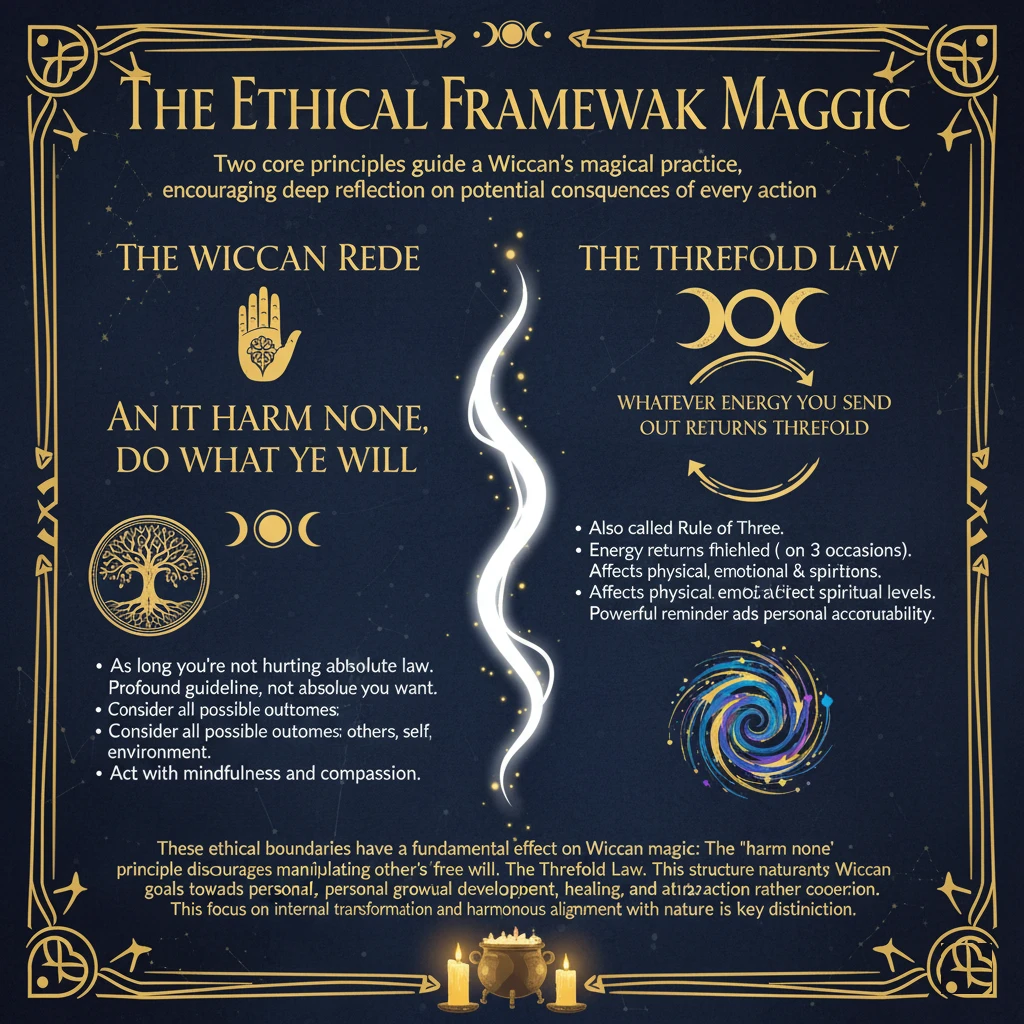
These ethical boundaries have a fundamental effect on the nature of Wiccan magic. The “harm none” principle actively discourages spells that would manipulate or control another person’s free will, even for seemingly good reasons (like forcing someone to stop a bad habit). The Threefold Law adds a layer of direct, personal consequence, acting as a strong deterrent against harmful workings. This structure naturally orients Wiccan spellcraft toward proactive and self-focused goals: personal growth, healing, spiritual development, and attraction (drawing positive things to yourself) rather than coercion (forcing your will onto others). This focus on internal transformation and harmonious alignment with nature is a key distinction that explains the why behind the types of spells commonly found in a Wiccan’s Book of Shadows.
Wiccan Spell Examples
These spells are designed to align with the “harm none” philosophy and foster a positive connection with oneself and the world.
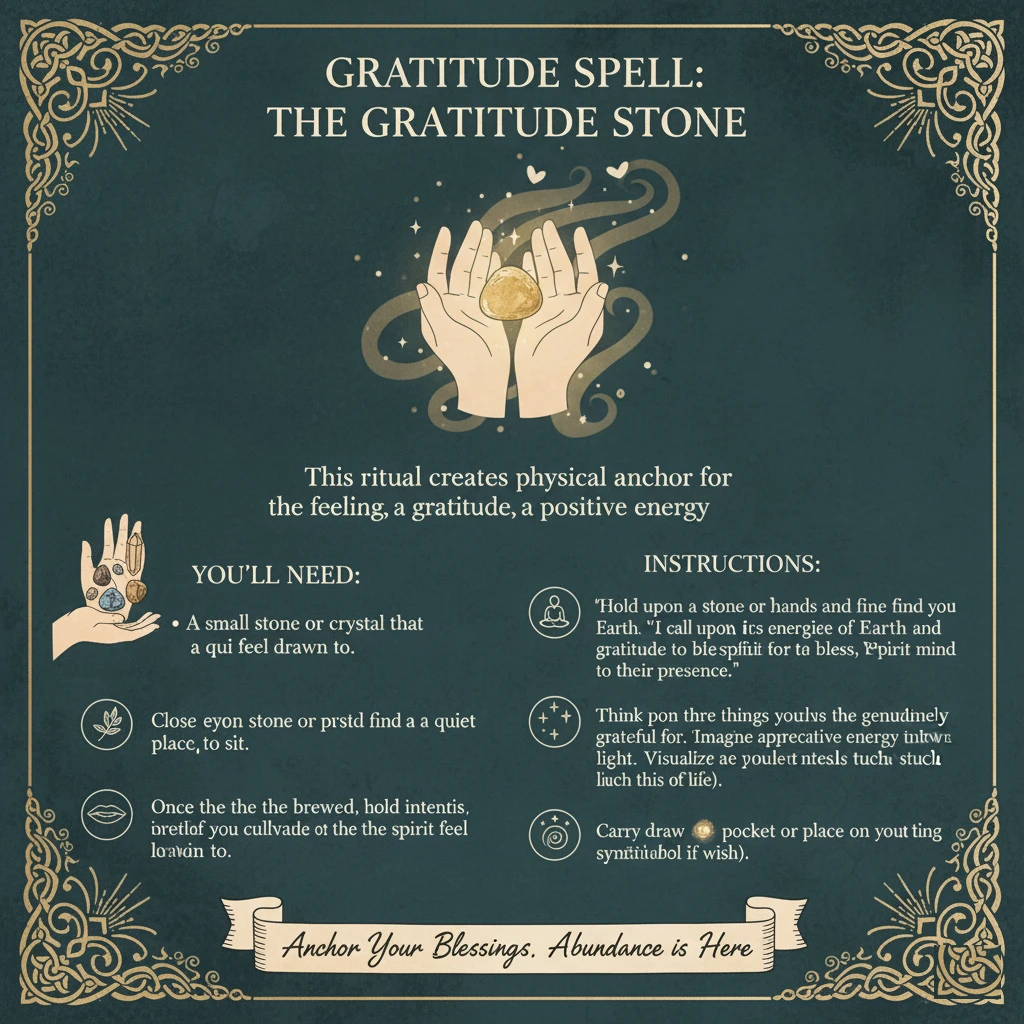
Gratitude Spell: The Gratitude Stone
This spell creates a physical anchor for the feeling of gratitude, a powerful and positive energy.
- You’ll Need: A small stone or crystal that you feel drawn to.
- Instructions:
- Hold the stone in your hands and find a quiet place to sit.
- Close your eyes and focus on your intention to cultivate gratitude. You can say a simple invocation like, “I call upon the energies of the Earth and the spirit of gratitude to bless this stone with their presence”.
- Think of three things you are genuinely grateful for. As you focus on each one, imagine pouring that warm, appreciative energy into the stone. Visualize it glowing with a golden light.
- You can draw a small symbol of gratitude on the stone if you wish (a heart, a spiral).
- Carry this stone in your pocket or place it on your altar. Hold it whenever you need a reminder of the abundance already present in your life.
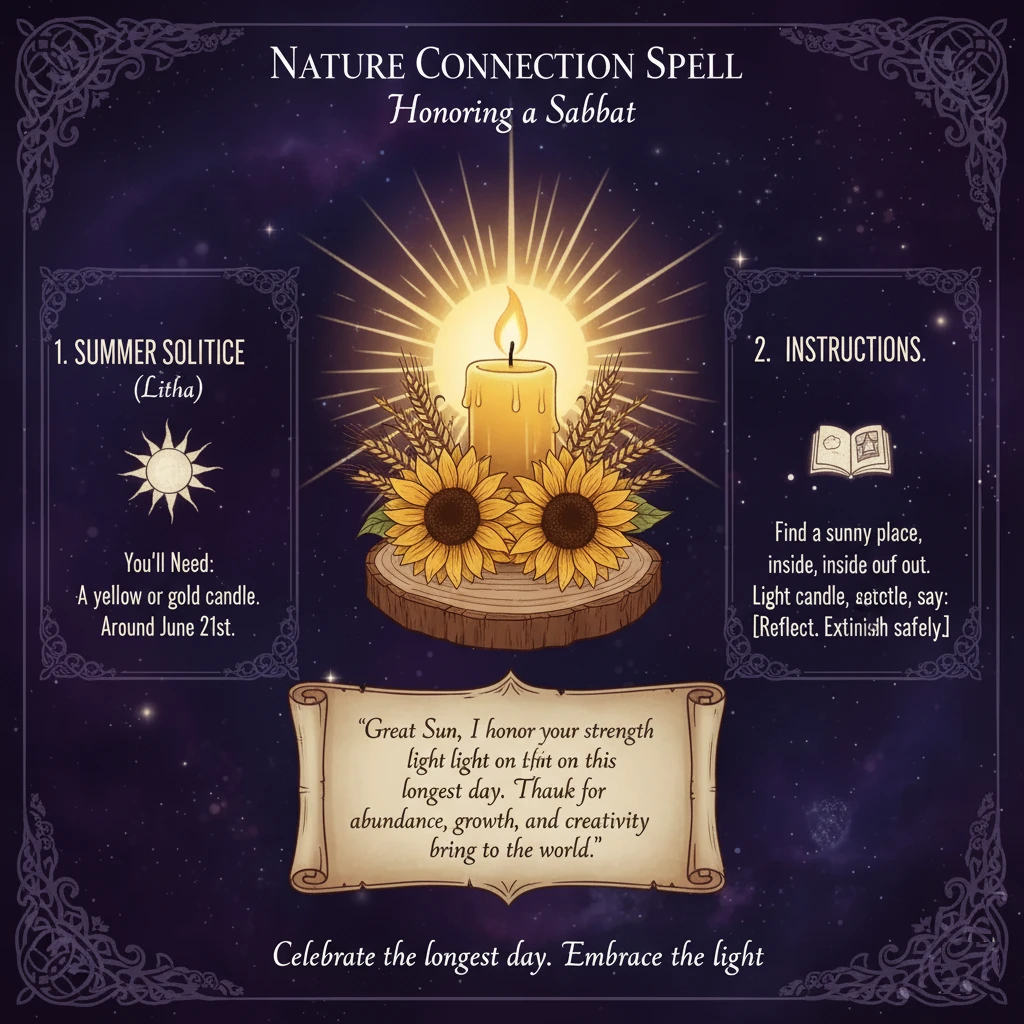
Nature Connection Spell: Honoring a Sabbat
Wiccans mark the turning of the seasons with celebrations. This is a simple way to honor the Summer Solstice (Litha), the longest day of the year.
- You’ll Need: A yellow or gold candle.
- Instructions:
- On or around June 21st, find a place where you can feel the sun’s warmth, either outdoors or by a sunny window.
- Light the candle, saying, “Great Sun, I honor your strength and light on this longest day. Thank you for the abundance, growth, and creativity you bring to the world”.
- Spend a few moments in quiet reflection, feeling the sun’s energy. Meditate on what you want to grow and bring to fullness in your own life.
- When you are finished, safely extinguish the candle.
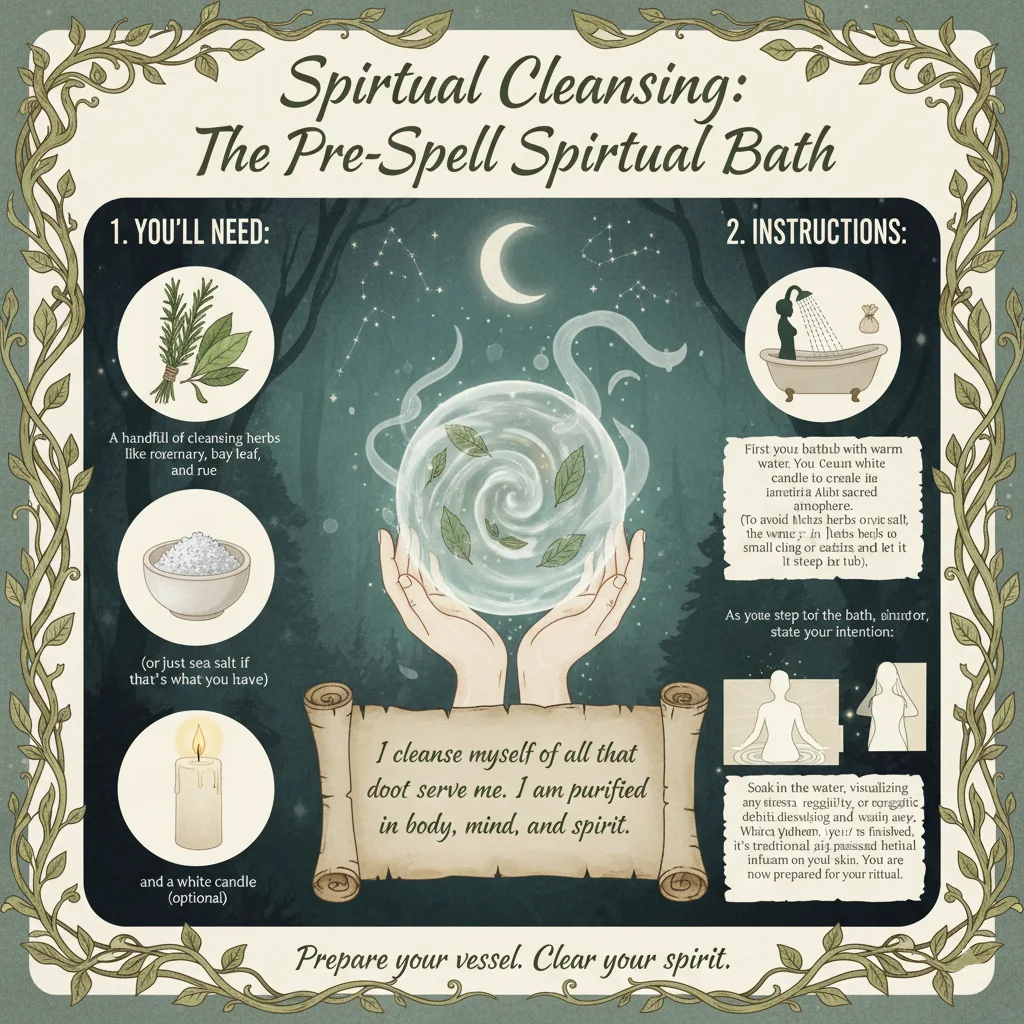
Spiritual Cleansing: The Pre-Spell Spiritual Bath
Many Wiccans perform a ritual cleansing before spellwork to purify their body and spirit, ensuring they approach their magic from a clear and centered space.
- You’ll Need: A handful of cleansing herbs like rosemary, bay leaf, and rue (or just sea salt if that’s what you have), and a white candle (optional).
- Instructions:
- First, take a normal shower to physically cleanse your body.
- Fill your bathtub with warm water. You can light a white candle to create a sacred atmosphere.
- Add the herbs or salt to the water. (To avoid a messy cleanup, you can place the herbs in a small cloth bag or sachet and let it steep in the tub).
- As you step into the bath, state your intention: “I cleanse myself of all that does not serve me. I am purified in body, mind, and spirit.”
- Soak in the water, visualizing any stress, negativity, or energetic debris dissolving and washing away.
- When you are finished, it’s traditional to air dry if possible, allowing the herbal infusion to remain on your skin. You are now prepared for your ritual.
Ancient Witch Spells List
Magic is not a modern invention; it is an ancient practice woven into the fabric of human history. Long before the rise of modern witchcraft, people across civilizations used spells to navigate the challenges of daily life, seeking protection, love, and advantage over their rivals. These ancient practices or even some ancient spells show a remarkable focus on tangible outcomes, using the materials and beliefs of their time to shape reality.
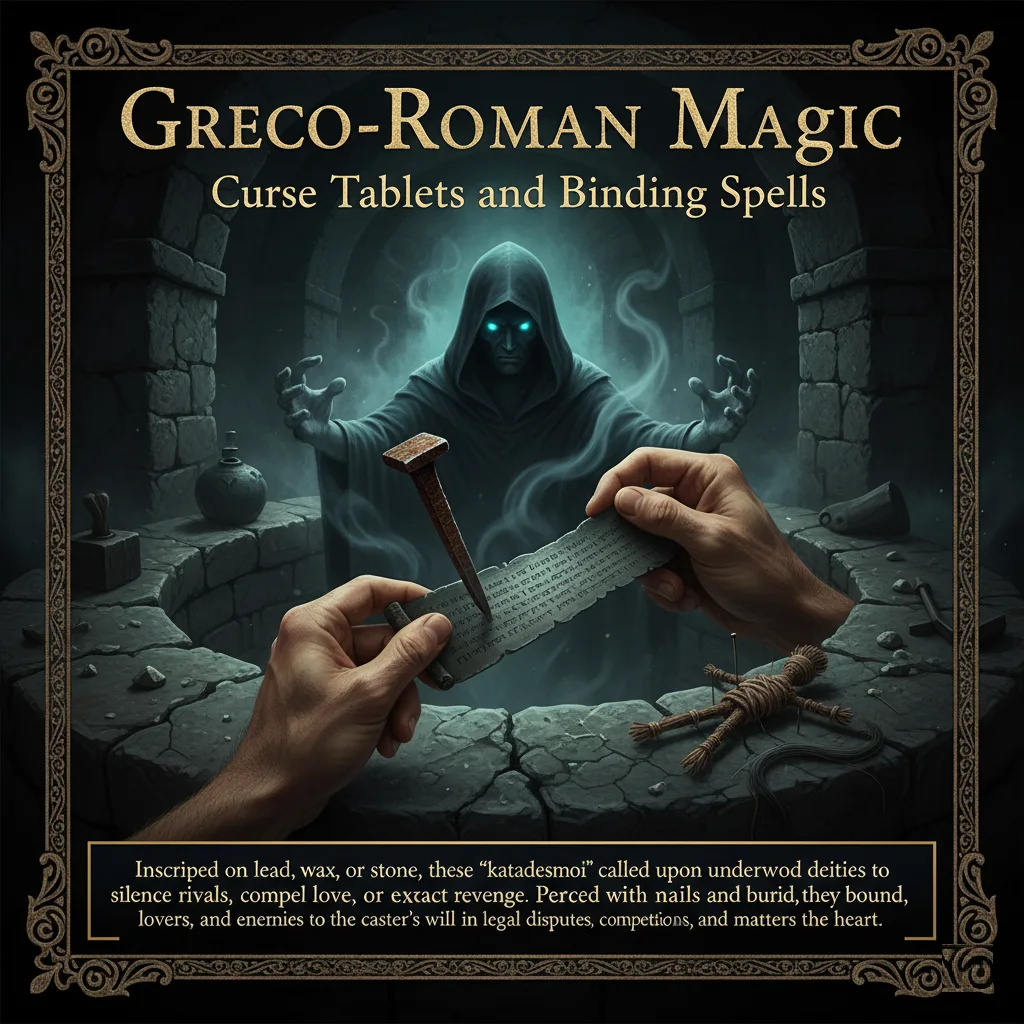
Greco-Roman Magic: Curse Tablets and Binding Spells
In the ancient Greek and Roman worlds, if you had a grievance with someone, you could commission a “curse tablet”. Known as katadesmoi in Greek or defixiones in Latin, these were spells inscribed on thin sheets of lead, wax, or stone. The process was a powerful ritual: an incantation was written to a chthonic (underworld) deity like Hecate or Persephone, asking them to act against a target. The tablet would then be folded, rolled, pierced with an iron nail, and deposited in a place believed to be a conduit to the underworld, such as a well or a grave. To strengthen the spell’s connection to the victim, personal items like hair, bits of clothing, or even small figurines resembling the target (sometimes bound or pierced with needles) were often included.
These binding spells were used for a wide range of purposes :
- Legal Disputes: To “bind the tongue” of an opponent in a court case, causing them to forget their words or become confused.
- Competitions: To inhibit the performance of a rival in athletic games or theatrical performances.
- Love and Lust: Erotic spells were common. Aggressive erôs magic, typically used by men, aimed to inflict an uncontrollable, torturous passion on a woman to force her to leave her family for him. In contrast, philia magic, often used by women, was meant to create affection and protect an existing relationship.
Ancient Egyptian Magic: Amulets and Ritual Protection
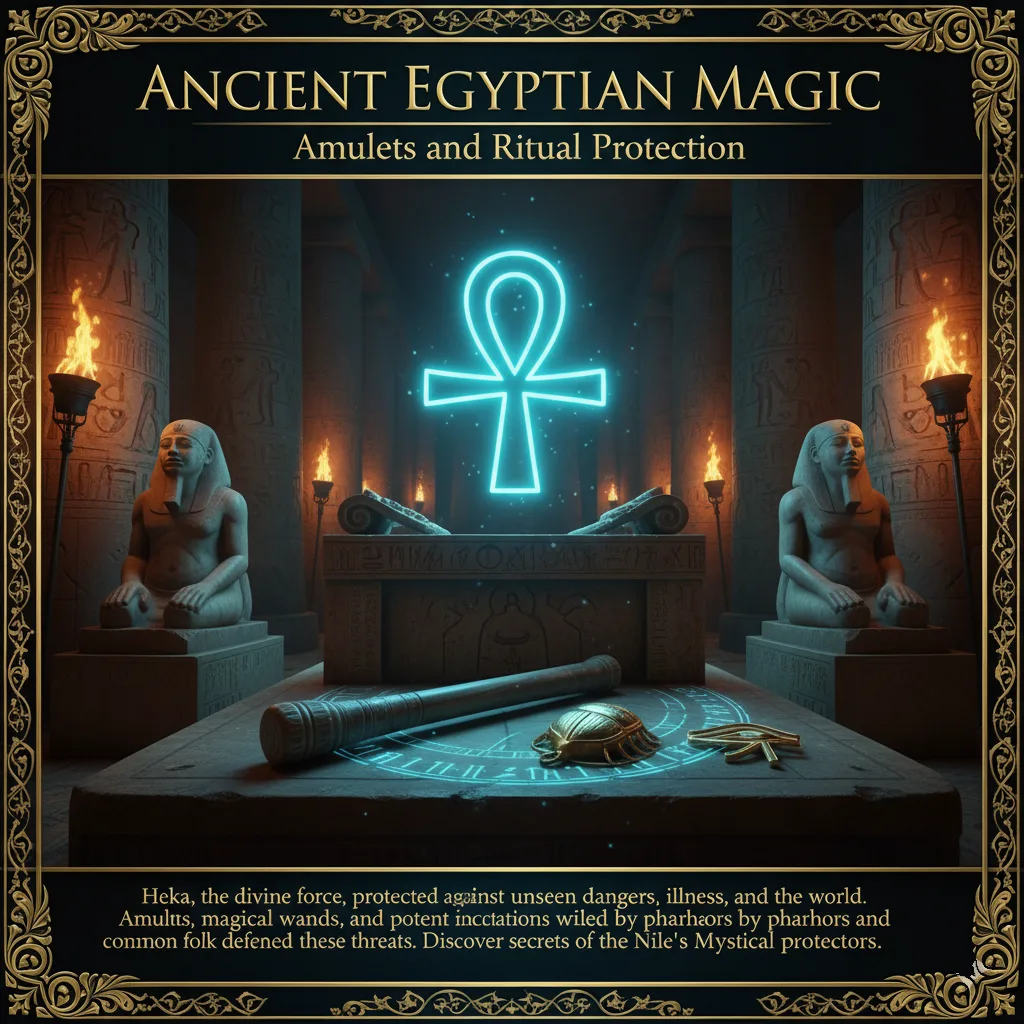
In ancient Egypt, magic, known as Heka, was a fundamental force of the universe, wielded by gods, pharaohs, and common people alike. It was primarily a tool for protection and healing, a defense against a world filled with dangers both seen and unseen. Protective (apotropaic) magic was essential for warding off venomous creatures like snakes and scorpions, as well as illness and evil spirits.
Key elements of ancient Egyptian spellcraft included:
- Amulets: These were essential magical accessories. The most famous is the Wadjet-eye (or Eye of Horus), a powerful symbol of protection, health, and restoration. Amulets were also made in the shape of protective deities like the dwarf-god Bes and the hippopotamus-goddess Taweret, who guarded mothers and children.
- Magical Wands: Often carved from the ivory tusks of a hippopotamus—an animal whose strength and ferocity were thought to scare away demons—these wands were used to draw protective circles around vulnerable people, such as women in childbirth.
- Spoken Incantations: Spells were a combination of spoken words (djed medu), specific gestures, and physical objects. Love spells could be particularly intense; one surviving text contains a threat to burn the god Osiris if the caster’s desired lover is not brought to him.
European Folk Magic and Medieval Grimoires
Ancient magical traditions also thrived across Europe. Early rituals often centered on community protection, such as the “need-fire,” which was kindled by friction to ward off disease from livestock. During festivals like Beltane and Samhain, cattle were driven between two large bonfires while incantations were chanted to ensure their health.
Later, during the Middle Ages, this knowledge was compiled into grimoires—textbooks of magic. Famous examples like the Key of Solomon, The Grimorium Verum, and The Picatrix contained complex spells and rituals. These books provided instructions for summoning and controlling spirits, angels, and demons, as well as spells for divination, finding wealth, inspiring love, and ensuring protection.
List of Spells and How to Cast: The Art of Making Magic Happen
You have a desire, you have an intention, and now you’re ready to make magic. While every spell is unique, the underlying process of casting is universal. It’s a structure that helps you gather, focus, and direct your energy effectively. This section provides a step-by-step guide that can be applied to any of the spells in this article or any you create yourself. Remember, the tools are helpful, but the true power comes from within you—your will, your focus, and your emotion are the main ingredients in any working.
The Five Essential Steps of Spellcasting
Step 1: Clarify Your Intention
This is the single most important step in any magical working. Without a clear intention, your energy has no direction. Your goal should be specific, clear, and framed in a positive, active way.
- Vague Intention: “I want more money.”
- Powerful Intention: “I open myself to receive new and unexpected opportunities for financial abundance and security”. Before you begin, write your intention down. Say it aloud. Make sure it feels right and truly represents what you want to manifest.
Step 2: Gather Your Tools & Correspondences
Tools are not the source of power; they are amplifiers and focal points for your power. For beginners, simplicity is key. You don’t need a formal athame or a fancy cauldron. Start with the basics.
- A Candle: White candles can be used as a substitute for any color and represent purity and all possibilities.
- Herbs/Oils: A pinch of rosemary for protection or cinnamon for prosperity can add a layer of energy.
- Paper and Pen: For writing down intentions,witch sigils, or names.
- A Fire-Safe Dish: To safely burn items. As you advance, you can learn about correspondences—the energetic associations of colors, herbs, crystals, and planetary hours—to make your spells more layered and potent. For example, working a love spell on a Friday (Venus’s day) with a pink candle (the color of romance) and rose quartz (the stone of love) aligns multiple streams of energy toward your goal.

Step 3: Prepare Your Space & Self
Creating a sacred space tells your subconscious mind and the universe that you are stepping out of the mundane and into the magical.
- Cleanse Your Space: Before you begin, clear the area of both physical clutter and stagnant energy. You can do this by sweeping with a broom (a besom), burning cleansing incense like sage or frankincense, ringing a bell, or lightly sprinkling salt water. As you do so, visualize any distracting energies being pushed out of the room.
- Purify Yourself: It’s also important to cleanse your own energy. This can be as simple as washing your hands and face with intention or taking the full ritual bath described earlier. Meditation and deep breathing can help clear your mind of the day’s worries.
- Cast a Circle: Casting a circle is the act of creating an energetic container for your spell. It serves as both a protective barrier from outside influences and a space to build and concentrate power. A simple way to do this is to stand in the center of your space and, using your finger or a wand, point toward the floor and visualize a ring of protective white or blue light emerging as you turn in a full clockwise circle. State your intention: “I cast this circle of protection. Only love and positive energy may enter”.
Step 4: Raise and Direct Energy
This is the active part of the spell, where you generate the power needed to send your intention out into the world. This is the embodiment of “To Will” from the Witches’ Pyramid—the spark of manifestation.
- Raising Energy: Energy can be raised in many ways. Choose what feels natural to you. Common methods include:
- Chanting or Singing: Repeating your intention or a rhyming incantation over and over.
- Dancing or Drumming: Using rhythm to build a trance-like state.
- Visualization: Intensely picturing your desired outcome. Imagine the energy building within you like a glowing ball of light.
- Directing Energy: Once you feel the energy has reached a peak (you might feel a tingling sensation, a sense of heat, or intense focus), you need to direct it. This is often done by focusing all of that built-up power into one of your tools—anointing a candle, charging a crystal, or stirring a potion. The final act of the spell releases this focused energy. This could be lighting the charged candle, burying a spell jar, or burning the paper with your intention written on it.
Step 5: Release and Ground
A spell needs a clear ending. This step ensures the work is complete and brings you safely back to your normal state of consciousness.
- Closing the Spell: Once the energy is released, state firmly that the spell is done. Use a traditional phrase like “So mote it be” or a simple one like “And so it is” or “It is done”. This acts as a seal on your work.
- Giving Thanks: Thank any deities, spirits, or elemental energies you may have invited into your circle for their presence and aid.
- Grounding: After raising a lot of energy, you may feel light-headed or “buzzy.” Grounding is the process of releasing this excess energy back into the earth. The simplest way is to place your palms flat on the floor or ground and visualize the extra energy flowing out of you and into the earth. Eating a small piece of food, like bread or a cookie, is also a very effective way to ground yourself.
- Opening the Circle: Just as you cast the circle, you must formally open it. Standing in the center again, turn counter-clockwise and visualize the light being drawn back into you or dissipating. Thank the protective energies and declare, “The circle is open, but never broken.”
Black Magic Spell List: Understanding the Shadows
This section is provided for educational purposes only. A complete understanding of magic requires acknowledging all its facets, including those that are often feared or misunderstood. This website does not endorse or provide instructions for harmful magic. The focus here is on defining these practices to promote ethical awareness and personal responsibility.
The line between “white” and “black” magic is not defined by specific tools, ingredients, or rituals, but by one thing: intent. So-called black magic, or dark magic, is any magical act performed with the intent to cause harm, to control or manipulate another person against their free will, or to achieve a selfish goal at the direct expense of someone else.
It’s a common misconception that black magic draws from a different, inherently “evil” source of power. In truth, the mechanics of magic—the focusing of will and direction of energy—are neutral, much like electricity. Electricity can be used to light a hospital or to power an electric chair; the energy itself is impartial, but its application is dictated by the user’s intent. Positive magic uses this universal process for creation, healing, and growth. Dark magic inverts this process, applying the same principles toward restriction, control, and destruction. This shifts the conversation from a simplistic good-versus-evil narrative to a more nuanced and vital discussion of ethics, consequence, and personal responsibility.
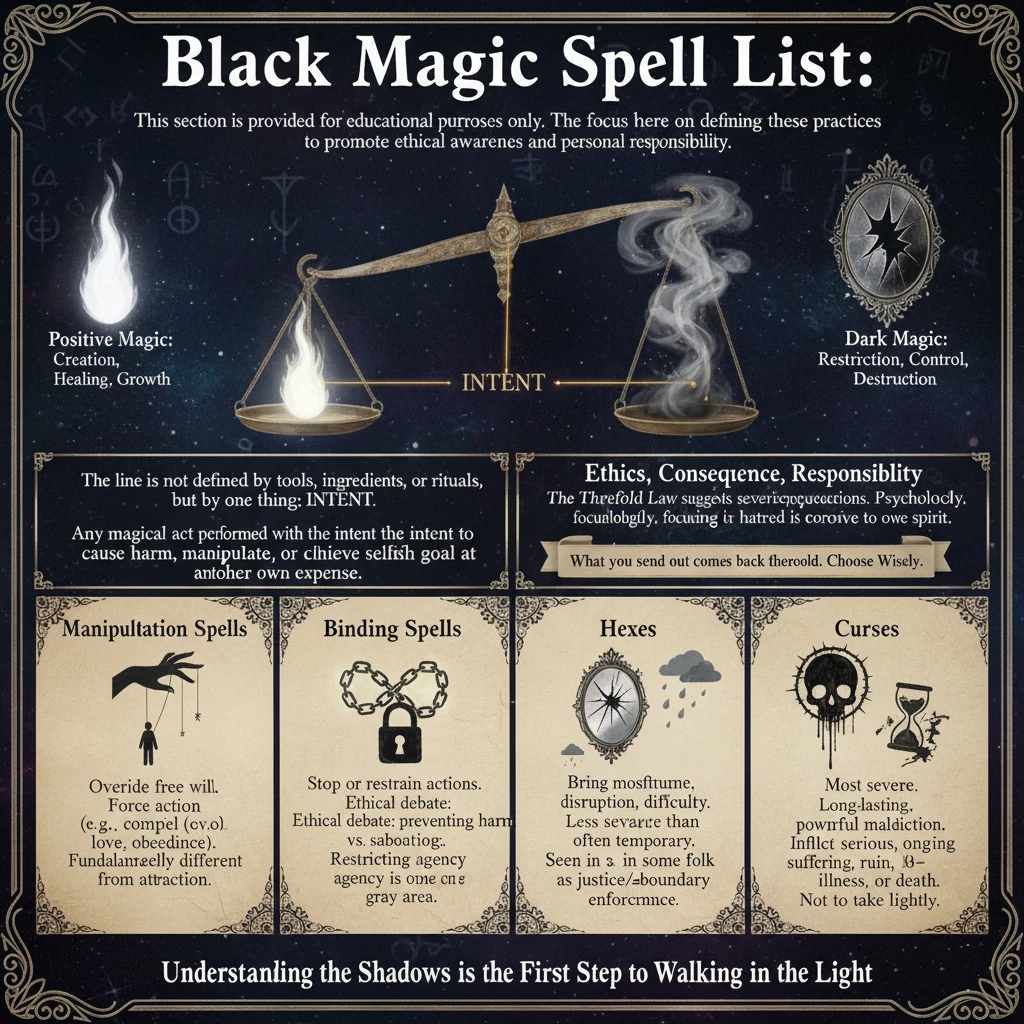
Engaging in such practices is an ethical minefield. From a magical perspective, laws like the Threefold Law suggest severe karmic repercussions. From a psychological standpoint, focusing one’s energy on hatred, control, or harm can be corrosive to one’s own spirit, trapping the caster in a cycle of negativity.
To fulfill the need for a black magic spell list, here are the primary categories of such workings, defined by their intent. This is not a “how-to” guide but an overview to help you recognize and understand the dark magic spells list and evil spells list concepts.
Manipulative & Domination Spells
These spells are designed to override a person’s free will and force them to act according to the caster’s wishes. This can include compelling someone to fall in love, to obey commands, or to make decisions that benefit the caster. These are fundamentally different from attraction spells, which work by drawing opportunities or like-minded people into your life without violating anyone’s autonomy.
Binding Spells
A binding spell is intended to stop or restrain a person from taking certain actions. This is an area of significant ethical debate. A binding could be used defensively to prevent a known abuser from causing further harm. However, it could also be used maliciously to sabotage a rival’s career or creative project. The intent to restrict another’s agency, even for seemingly just reasons, places it in a gray area that many practitioners avoid.
Hexes
A hex is a spell intended to bring misfortune, disruption, and general difficulty into a target’s life. Hexes are generally considered less severe than curses and are often temporary. They might be cast to cause someone to experience a string of bad luck, social awkwardness, or minor financial setbacks. In some folk traditions, hexing is seen as a tool of justice or boundary enforcement, used against those who have caused significant harm and will not stop.
Curses
Curses are the most severe and malicious form of magical attack. A curse is a long-lasting and powerful malediction intended to inflict serious, ongoing suffering, ruin, illness, or even death upon a person, family, or place. History is filled with examples, from ancient Roman curse tablets (defixiones) that were inscribed on lead and buried in graves to harm rivals, to powerful spoken maledictions like the “Curse of Cromwell” in Ireland, which was said to bring destruction upon its target. These are not to be taken lightly, representing the most destructive application of magical intent.
What Makes a Spell “Work”? Understanding Magical Intent
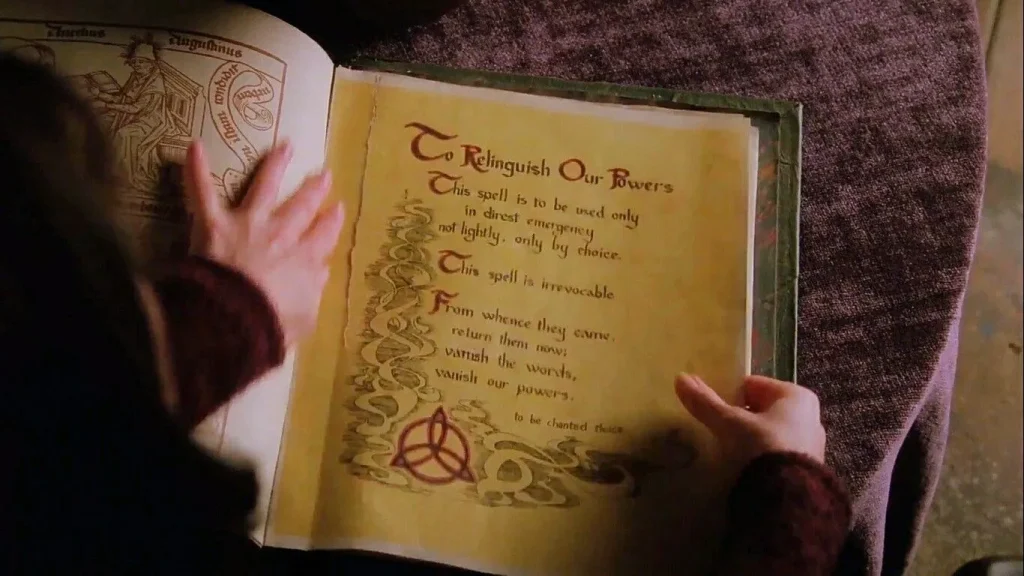
Before diving into any list of spells, it’s crucial to understand the fundamental principles that make magic effective. When people search for a “list of spells that work,” they’re often looking for reliable results. While there’s no “one-size-fits-all” guarantee, true magical efficacy comes from:
- Clear Intent: Knowing precisely what you want to achieve.
- Focused Energy: Directing your personal power towards that intent.
- Belief: Trusting in the process and your own abilities.
- Action (often mundane): Magic works best when coupled with practical steps in the physical world.
Every spell on our list of spells is presented with this understanding in mind, emphasising the spiritual and energetic components necessary for success.
What People ask about list of spells
How can I ensure that my spells work?
The efficacy of spells is often linked to the clarity of your intention, the quality of your focus during the ritual, and the strength of your belief in the magic you are working with.
Are there any ethical considerations with casting spells?
Yes. It’s fundamental to respect free will and avoid manipulating others. Spells should aim for the highest good of all involved and not bring harm.
Can spells be customized to fit my specific needs?
Absolutely. Spells are very adaptable and may be modified with different components or words to better suit your intentions and available resources.
By harnessing the power of these spells, practitioners can weave their desires into being—always with mindfulness and ethically founded intentions. Magic is a truly personal experience, and through these spells, you are invited to create changes that resonate deeply with your journey.
Conclusion: The Magic is Within You
Your journey into the world of spellcraft is a deeply personal one. This guide has offered you a map—a list of spells, techniques, and ethical considerations—but you are the one who will walk the path. The most profound discovery you will make is that the true power of witchcraft does not lie in ancient texts, expensive crystals, or secret incantations. It resides within you.
The most potent magic is born from your focused intention, your unwavering will, and your connection to the world around you. Start small. Choose a simple spell that resonates with you and practice it with sincerity. Keep a journal of your experiences, noting what works, what doesn’t, and how you feel. Trust your intuition—it is your most reliable magical tool.
This spells list is just the beginning. The most powerful and meaningful spells you will ever cast are the ones you adapt, create, and discover for yourself. May your path be filled with wisdom, empowerment, and a touch of everyday magic. So mote it be.
Since the admin of this site is working, no hesitation very rapidly it will
be well-known, due to its quality contents.
Every line seems to carry a deeper meaning, as if the words are part of a larger conversation about life itself.
Thanks for finally writing about > A Comprehensive
List of Spells and Their Enchanting Details – Witch symbols < Liked it!
Pingback: Is White Magic Haram in Islam? - Witch symbols
Pingback: White Magic Spells – Beginner’s Guide to Positive Energy - Witch symbols