

Magic wasn’t always a fantasy found in books or films for ancient civilisations; it was real power. Across Egypt, Mesopotamia, Greece, and Rome, ancient spells and ancient spells and rituals shaped daily life. These practices, preserved in every ancient spellbook and ancient witch spells list, were used for healing, love, protection, and justice.
Each ancient magic spell reflected humanity’s timeless desire for control, hope, and connection with the unseen. Even today, exploring an ancient spells list reveals how magic once served as the original technology of faith and survival.
What Were Ancient Magic Types Really For?
To understand the world of ancient spells, one must first forget the neat boxes we use today. In antiquity, the lines we draw between “religion,” “science,” and “magic” simply did not exist. These were not competing ideas but different facets of a single, unified worldview. In Mesopotamia, for example, a doctor treating a sick patient would prescribe both medicinal herbs and magical formulas to be recited, seeing no conflict between the two. Similarly, Egyptian medical papyri are filled with both sophisticated anatomical observations and powerful incantations to banish disease-causing demons.
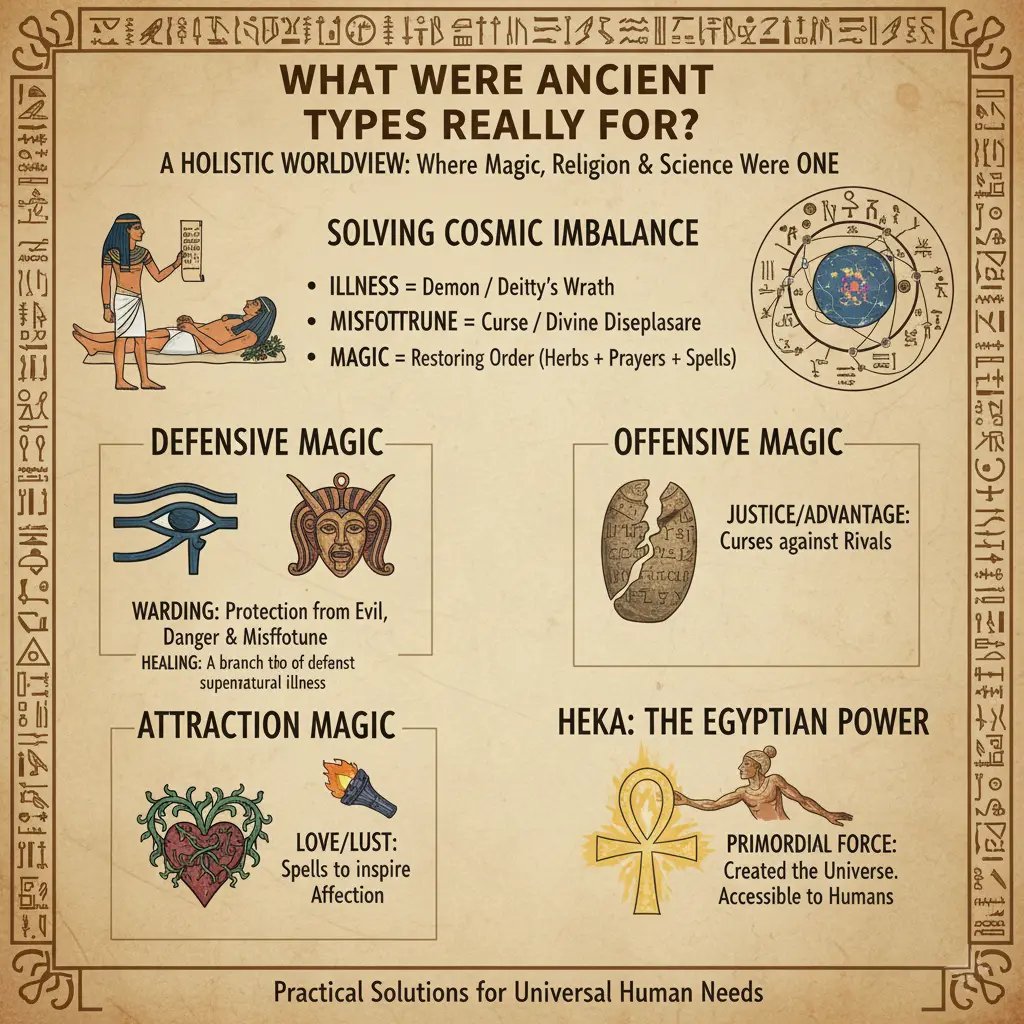
This blending happened because ancient people saw the universe as one interconnected system. They believed that a physical illness, a punishment from an angry god, or a curse from a rival were not separate problems but different symptoms of the same cosmic imbalance. A fever could be caused by a demon, a plague by a displeased deity, or a failing business by a competitor’s curse. The solution, therefore, had to be just as holistic. A healing ritual wasn’t just “magical thinking”; it was a comprehensive approach to restoring order. The practitioner might use herbs to treat the body, prayers to appease the gods, and an ancient magic spell to expel the malevolent spirit.
The main Ancient magic types directly addressed these universal human needs:
- Defensive Magic: Also known as apotropaic magic, this was used to ward off evil, danger, and misfortune.
- Healing Magic: A crucial branch of defensive magic used to cure illnesses, which were often seen as supernatural in origin.
- Offensive Magic: This was used to seek justice or gain an advantage over rivals, most notably through curses.
- Attraction Magic: Spells designed to inspire love, lust, or affection in another person.
In Egypt, all of this was powered by a core concept known as Heka. Heka was not just magic; it was the fundamental, primordial force that the gods used to create the universe, and it continued to sustain the world every day. Crucially, this power was also accessible to human beings, allowing them to influence the world around them.
A Snapshot of Magic Across the Ancient World
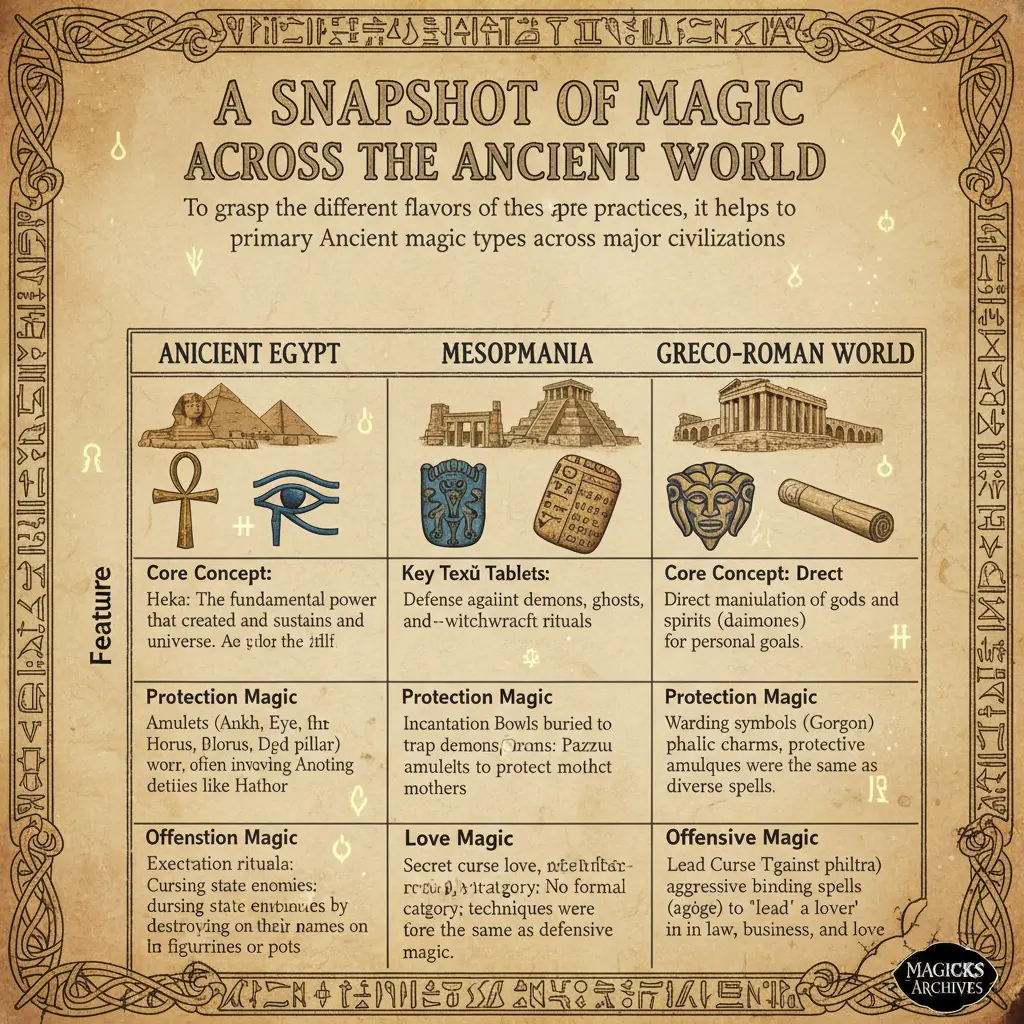
To grasp the different flavors of these practices, it helps to compare the primary Ancient magic types across the major civilizations.
7 Ancient Spells You Can Understand
While many ancient rituals are lost to time, some have survived in texts, giving us a direct look at how our ancestors tried to shape their world. Here are seven examples of real spells from different cultures, showing the variety and practicality of ancient magic.
1. A Simple Warding Spell for Personal Protection
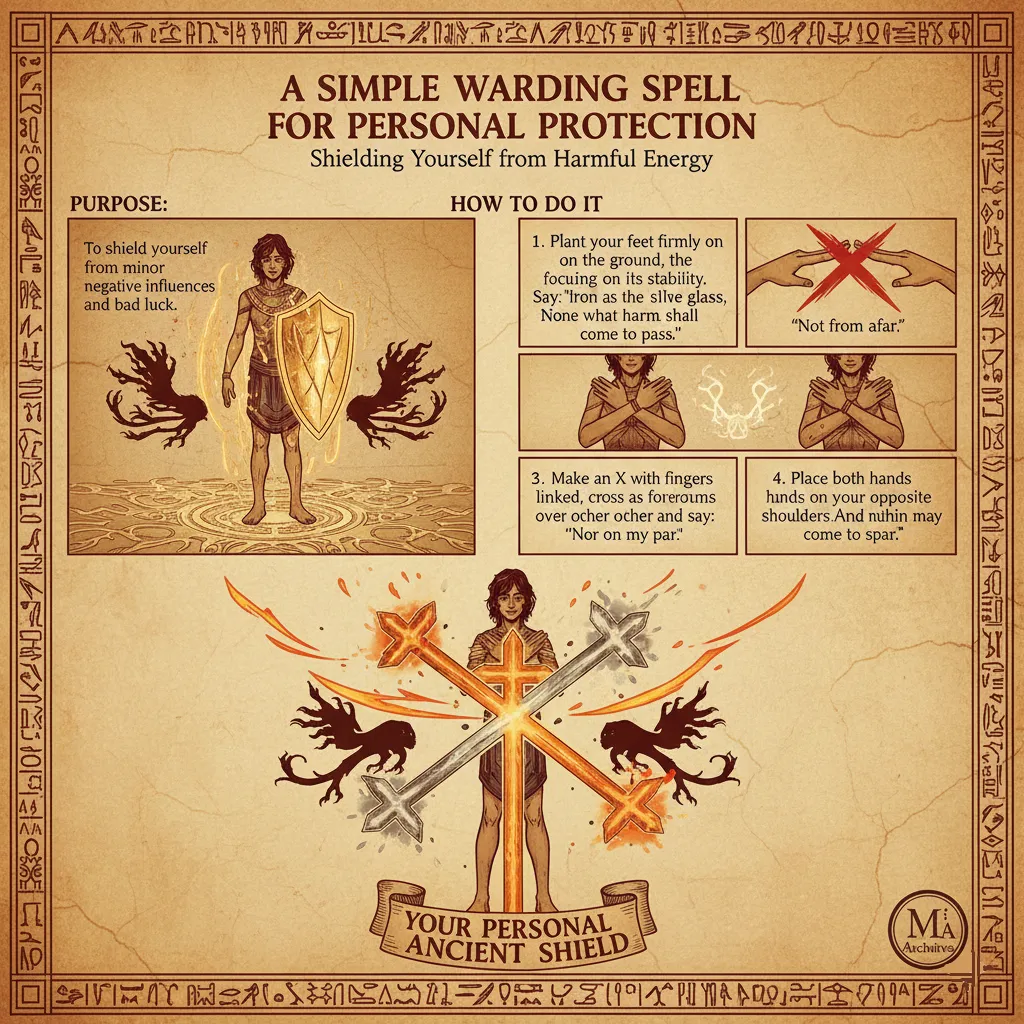
This quick and simple warding spell uses words and gestures to create a personal shield against harmful energy.
- Purpose: To shield yourself from minor negative influences and bad luck.
- How to do it:
- Plant your feet firmly on the ground, focusing on its stability. Say: Iron as the blade, silver as the glass, None what harms shall come to pass.
- Make an X with your fingers in front of you and say: Not from afar.
- Keeping your fingers linked, cross your forearms over each other and say: Nor on my par.
- Place both hands on your opposite shoulders and say: And none within may come to spar.
- As you speak, visualize three crosses forming over your body—one as hard as iron, the other as reflective as silver—locking into place to protect you.
2. A Greco-Roman “Excellent Love Charm”
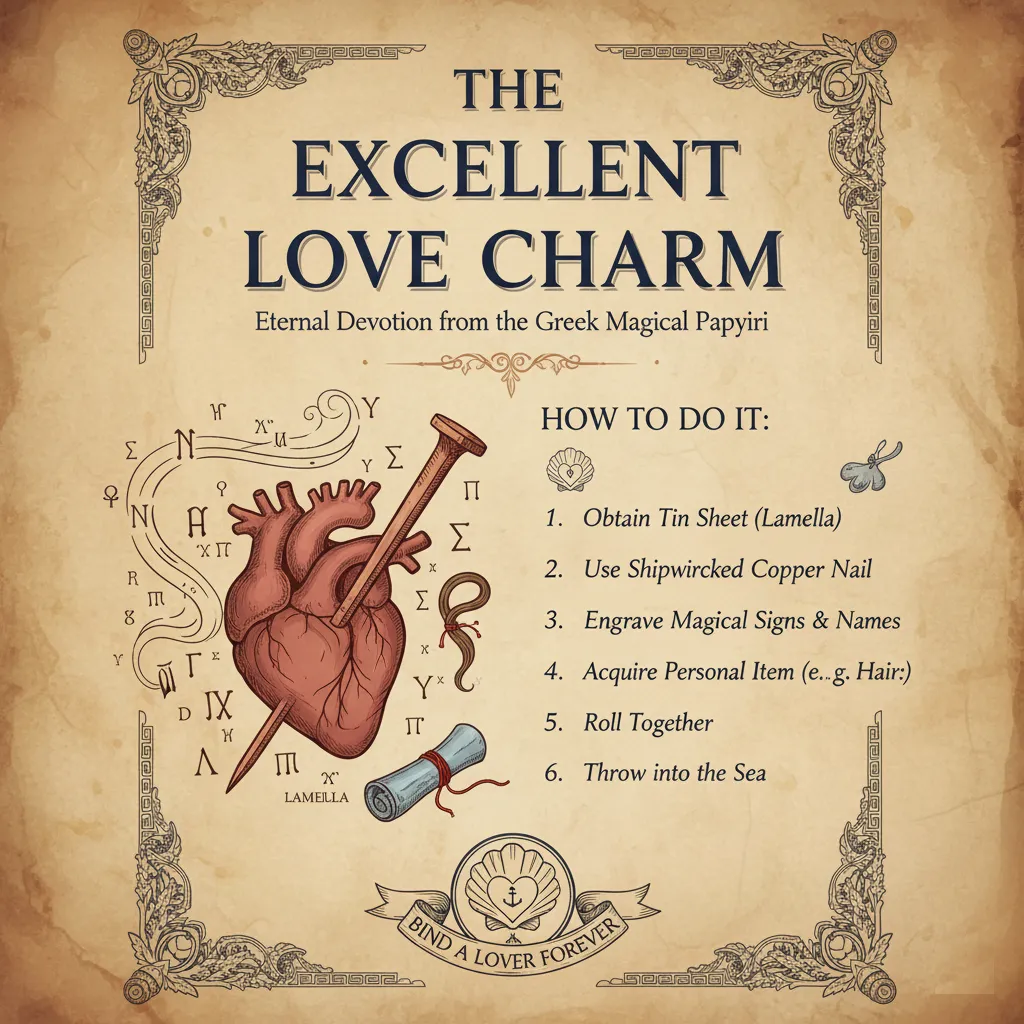
Found in the Greek Magical Papyri, this spell was designed to bind a lover to you permanently. It required very specific and symbolic components.
- Purpose: To secure the eternal love of a specific person.
- How to do it:
- Obtain a thin sheet of tin, known as a lamella.
- Find a copper nail from a shipwrecked vessel. This was considered a powerful tool for writing.
- Using the copper nail, engrave magical signs and names onto the tin sheet.
- Acquire a personal item from your target, such as a lock of hair or a piece of their clothing.
- Roll the engraved tin sheet up with the personal item inside.
- Throw the rolled-up charm into the sea to activate its power.
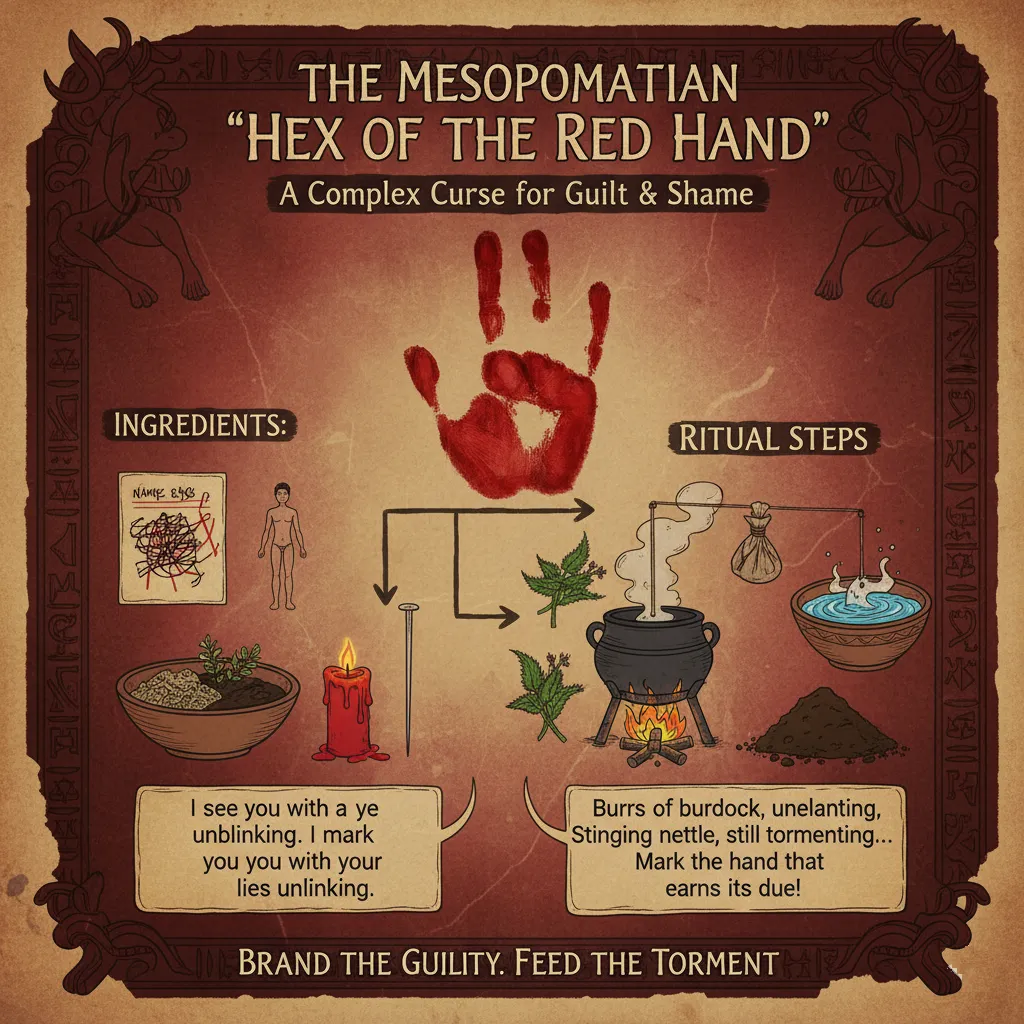
3. The Mesopotamian “Hex of the Red Hand”
This is a complex and aggressive curse meant to punish someone for their wrongdoings. It uses symbolic ingredients to mark the target and cause them torment.
- Purpose: To brand a person with guilt and shame for their crimes.
- How to do it:
- On a square piece of paper, write the victim’s name in the center with red ink.
- Using black ink, write down all of their wrongdoings, surrounding their name.
- Mix the herb eyebright with soil from a crash site in a bowl, chanting: I see you with an eye unblinking. I mark you with your lies unlinking.
- Scatter this mixture over the name. If you have a personal item (taglock) from the victim, add it now.
- Fold the paper into a small parcel and seal it shut with wax from a red candle.
- Pierce the parcel with a pin, saying: I pierce this hand, And lay the brand. Red as my fury and red as the crime.
- Place the parcel on red cloth and scatter it with stinging nettle, burrs, courthouse soil, and wood squill over it.
- Tie the cloth into a bundle. Suspend it between a fire (like a burning kettle) and a bowl of saltwater.
- Chant: Burrs of burdock, unrelenting, Stinging nettle, still tormenting. With soil, guilt upon your name, Wood squill bows your head in shame. Burn and rue, burn and rue, Mark the hand that earns its due!
- Dunk the bundle back and forth between the fire and the saltwater while repeating the final lines. The bundle can be kept and “fed” with saltwater to extend the curse’s duration.
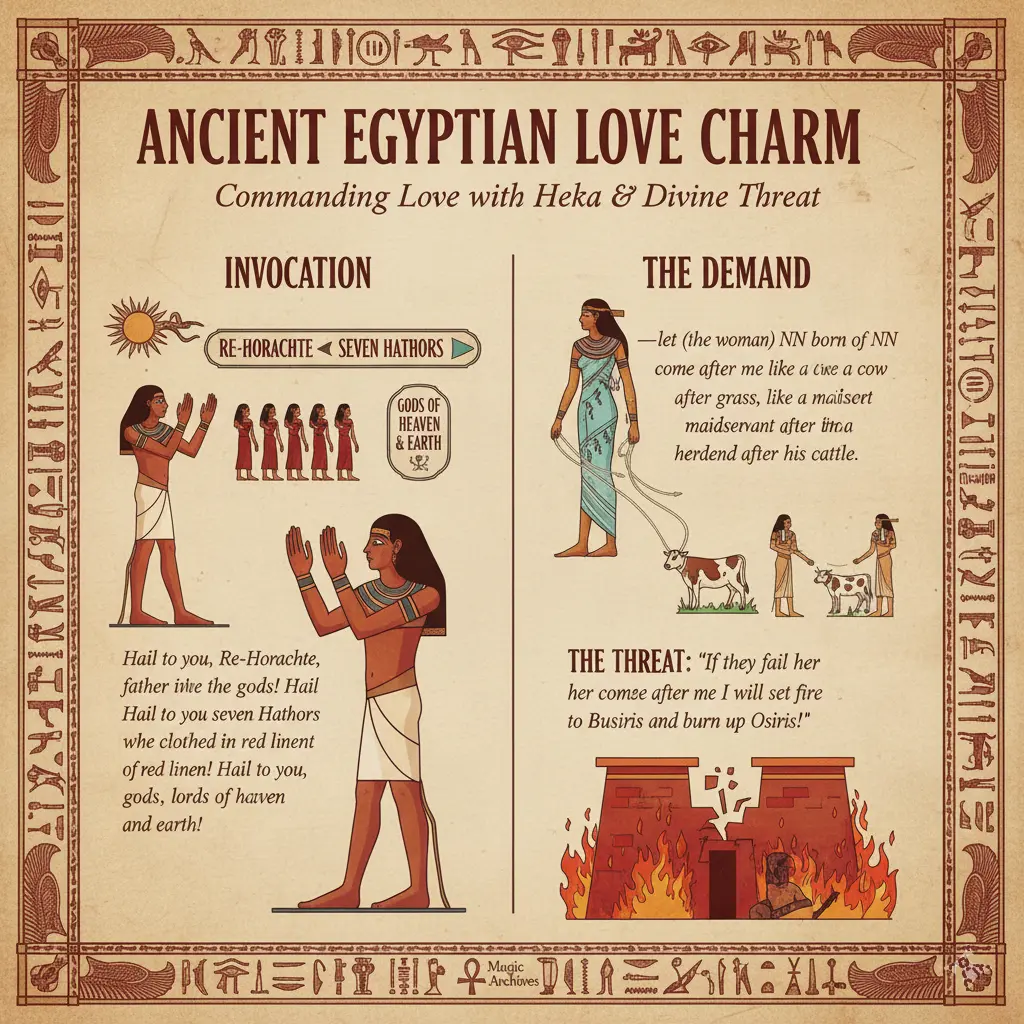
4. An Ancient Egyptian Love Charm “Ancient Egyptian love spell”
This spell, recorded on papyri, calls upon powerful gods to make a target fall in love. It is notable for including a direct threat to the gods if they fail to comply, a common feature of Egyptian magic (heka).
- Purpose: To force a specific person to come after you with the desire of a lover.
- How to do it:
- Face the direction of the rising sun and recite the invocation: Hail to you, Re-Horachte, father of the gods! Hail to you, seven Hathors who are clothed in wrappings of red linen! Hail to you, gods, lords of heaven and earth!
- State your demand clearly, inserting the name of your target and their mother’s name: —let (the woman) NN born of NN come after me like a cow after grass, like a maidservant after her children, like a herdsman after his cattle.
- End the spell with a threat to motivate the gods: If they fail to make her come after me I will set fire to Busiris and burn up Osiris!
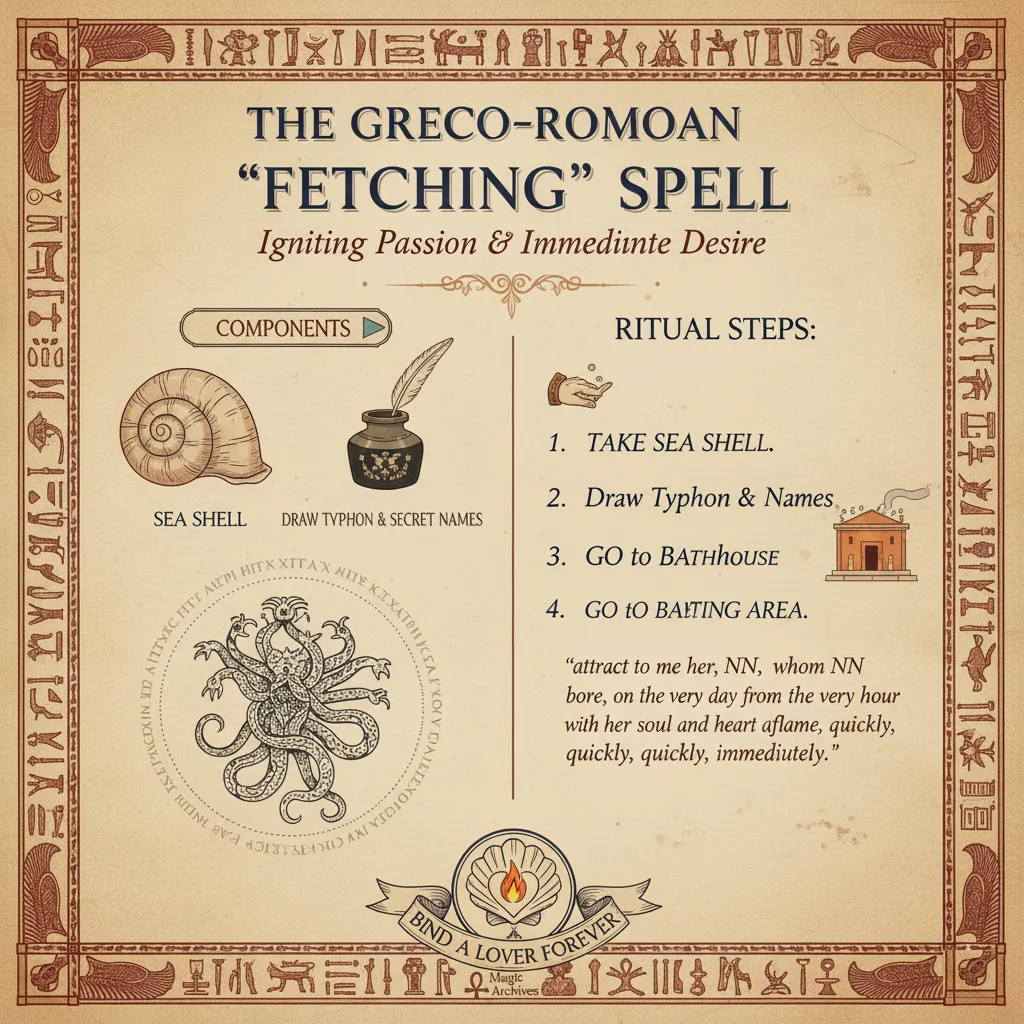
5. A Greco-Roman “Fetching” Spell with a Seashell
This ritual, also from the Greek Magical Papyri, was designed to attract a target to you immediately, inflaming them with passion. It invokes the powerful and chaotic entity Typhon.
- Purpose: To make someone desire you and come to you immediately.
- How to do it:
- Take a shell from the sea.
- Using myrrh ink, draw a figure of the god Typhon on the shell.
- In a circle around the figure, write Typhon’s secret names.
- Take the shell to a bathhouse and throw it into the heating area of a bath.
- As you throw it, continuously recite the following words: attract to me her, NN, whom NN bore, on this very day from this very hour on, with her soul and heart aflame, quickly, quickly; immediately, immediately.
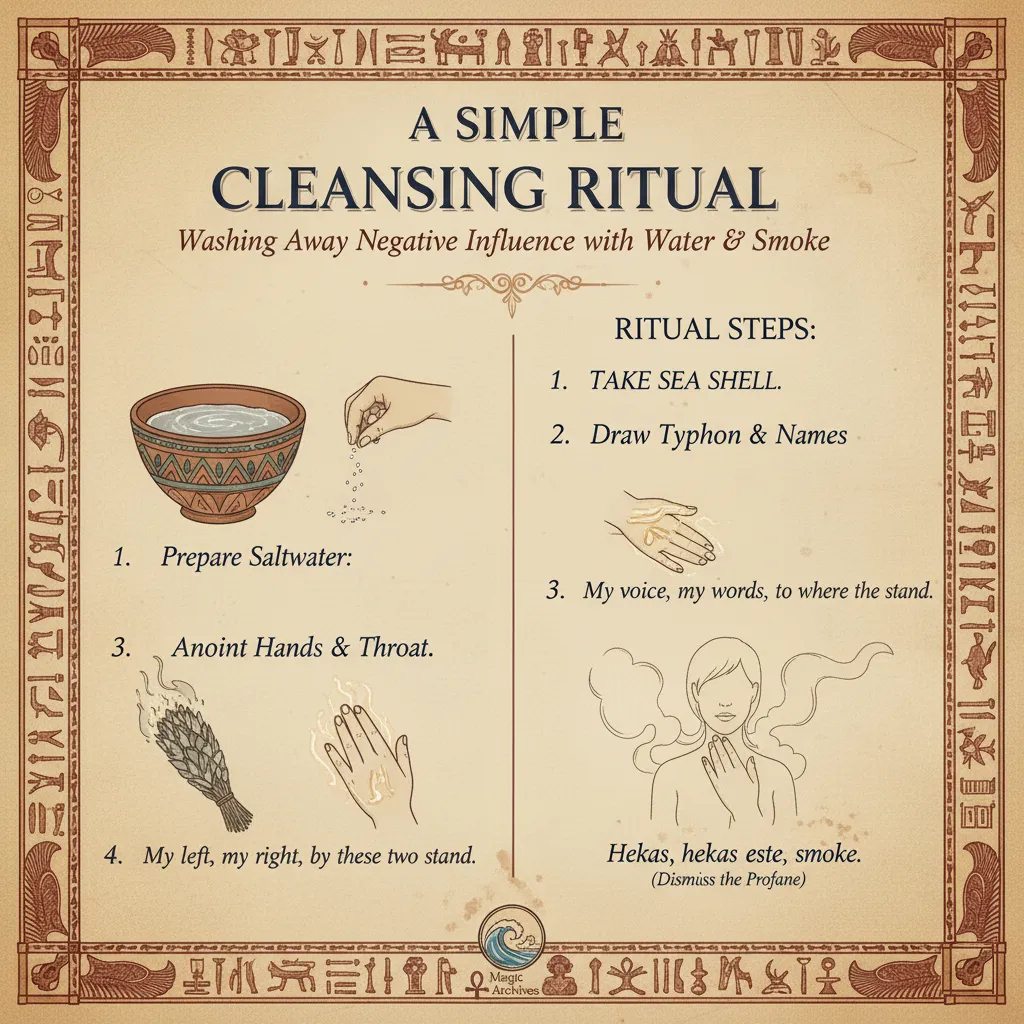
6. A Simple Cleansing Ritual
This “swifting ritual” was designed to wash away unwanted magical influence or negative energy using the purifying power of saltwater.
- Purpose: To cleanse yourself of lingering negative or magical effects.
- How to do it:
- Prepare a bowl of saltwater.
- Dip your fingers into the water and anoint the palms of your hands, saying: My left, my right, by these two hands.
- Anoint your throat and say: My voice, my words, to where I stand.
- Light sage and pass the smoke over your body while repeating the ancient Greek phrase: Hekas, hekas, este, bebeloi. (A phrase used in ancient mysteries to dismiss the profane).
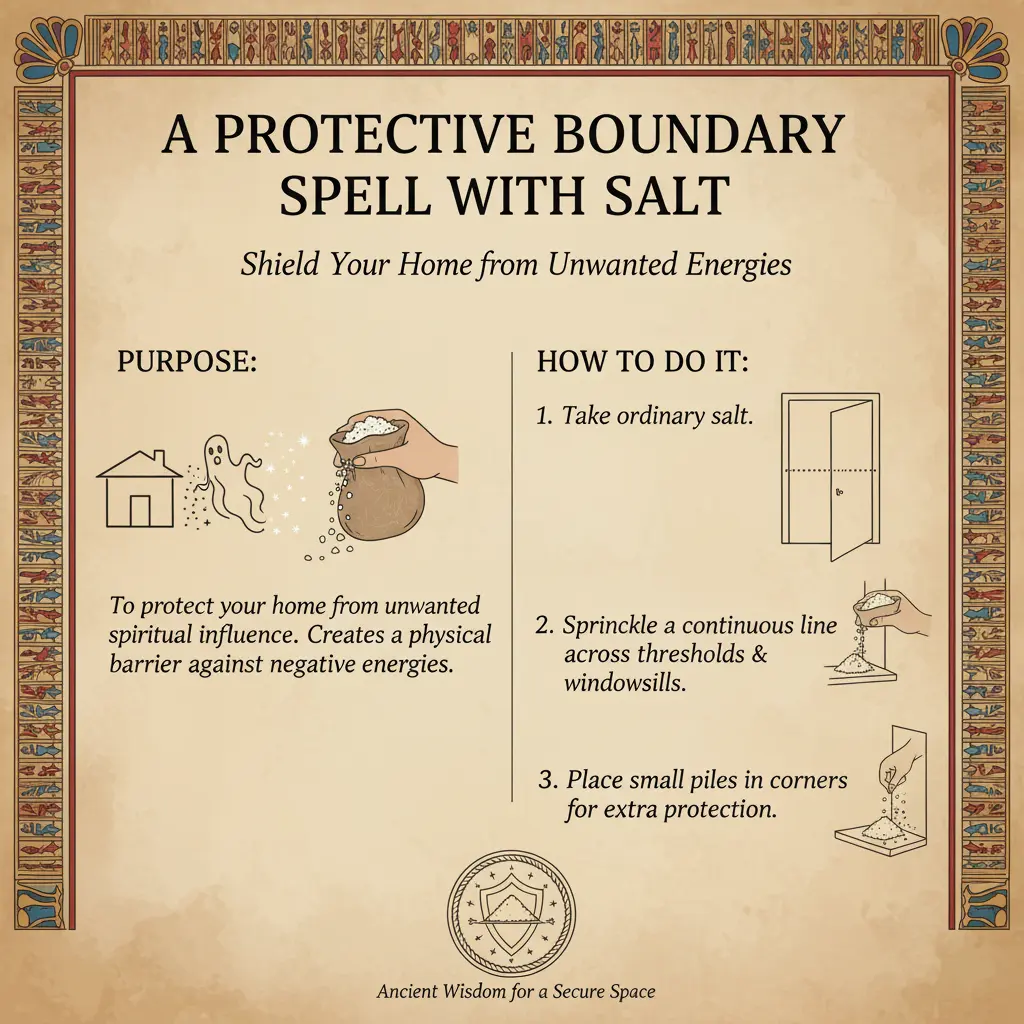
7. A Protective Boundary Spell with Salt
One of the oldest and most universal forms of protection magic involves creating a physical barrier with salt to prevent negative spirits or energies from entering a space.
- Purpose: To protect your home from unwanted spiritual influences.
- How to do it:
- Take ordinary salt.
- Sprinkle a continuous line of salt across the inside of all thresholds to your home (doorways) and on all windowsills.
- For extra protection, you can also place a small pile of salt in the corners of each room.
- The salt is believed to absorb negativity and create a boundary that harmful energies cannot cross.
A Journey Through the World of Ancient Witchcraft Spells
Magic was woven into the fabric of daily existence, a constant presence that helped people face the challenges of life. From protective charms to aggressive curses, ancient witchcraft spells were deployed for intensely practical reasons.
Shielding the Soul: Ancient Spells for Protection
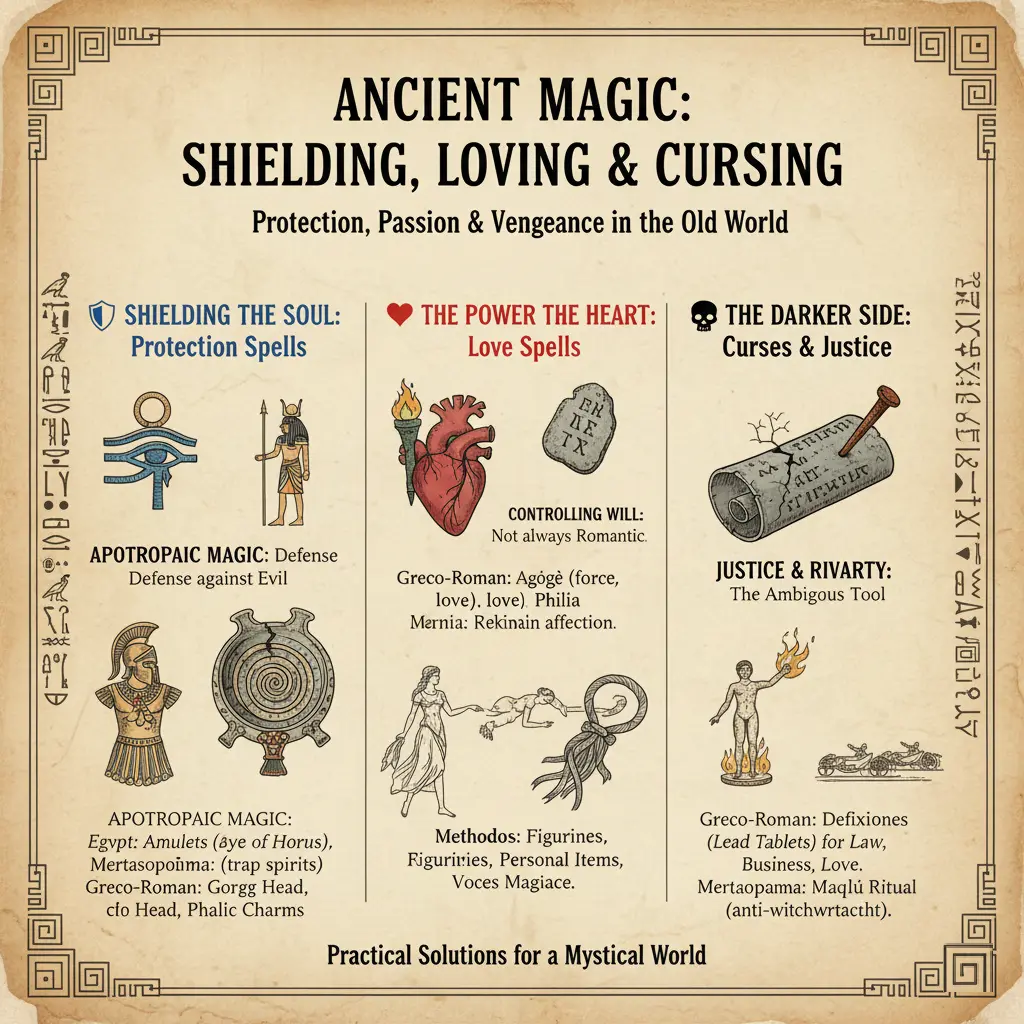
In a world filled with disease, natural disasters, and unseen dangers, protection was a primary concern. Apotropaic magic was the ancient equivalent of a home security system, an insurance policy, and a spiritual vaccine all rolled into one. Practitioners used a variety of ancient witchcraft spells and objects to create a shield against harm.
In Egypt, amulets were everywhere. Small charms like the Ankh (symbol of life), the Djed pillar (stability), and the famous Wedjat Eye of Horus were worn by both the living and the dead to ensure health and protection from evil forces. In Mesopotamia, a common practice was to bury ceramic “demon bowls” upside down under the threshold of a house. These bowls, often inscribed with a spiraling spell, were believed to act as supernatural traps, capturing any evil spirit that tried to enter the home. Across the Greco-Roman world, frightening images were used to repel harm. The terrifying, snake-haired head of the Gorgon Medusa was a popular motif, carved onto soldiers’ armor, public buildings, and front doors to ward off evil. Similarly, thousands of small, phallic-shaped amulets have been found, believed to bring good luck and protect the wearer from misfortune.
The Power of the Heart: Unlocking Ancient Love Spells
Few human desires are as powerful as the quest for love, and it is no surprise that this was one of the most popular applications of magic. However, ancient love spells were often far from the gentle, romantic notions we have today. They were frequently aggressive, demanding, and aimed at asserting control over another person’s will.
The Greek Magical Papyri are filled with examples of agōgē spells, a term that literally means “a leading.” The goal of these rituals was to forcefully lead, or even drag, the target to the spellcaster. One such spell invokes the moon goddess Selene to send an angel to drag the victim “by their feet and hair,” causing them to be “fearful and sleepless” with love until they complied. This aggressive magic stands in contrast to philia spells, which were often used by women to maintain affection or calm a philandering husband.
These rituals often required specific ingredients and actions. Practitioners used figurines to represent their target, personal items like a lock of hair or a piece of clothing to create a magical link, and powerful incantations known as voces magicae—seemingly nonsensical words believed to hold inherent power. Deities associated with love and passion, such as Aphrodite in Greece or Hathor in Egypt, were frequently called upon to lend their power to the spell. Mesopotamia also had a well-developed genre of ancient love spells, used to spark new love, rekindle a dying flame, or even ensure a partner’s sexual potency.
The Darker Side: Understanding Ancient Black Magic Spells
What we now call “black magic” was understood differently in the ancient world. The modern distinction between “white” and “black” magic was often blurry; magic was simply a tool, and its morality depended on the user’s intent and social context. When someone used magic to harm another, they often saw it not as an act of evil, but as a legitimate form of justice or a way to level an unfair playing field.
The most common form of these ancient black magic spells was the curse. Archaeologists have uncovered over 1,600 Greco-Roman curse tablets, known as defixiones. These were thin sheets of lead—a metal chosen for its cold, heavy properties—inscribed with the victim’s name and the misfortune the spellcaster wished upon them. The curses were incredibly specific, often “binding” various body parts of the victim to prevent them from functioning: “I bind the tongue of Cittos,” reads one tablet, targeting a rival craftsman, “his work, his soul, his mind”. These tablets were then rolled up, often pierced with a nail, and deposited in places thought to be close to the underworld, such as graves, wells, or sanctuaries.
These weren’t just for dramatic, personal revenge. Curses were used in highly practical situations. A person might curse the opposing lawyer before a trial, a merchant might curse a competing shopkeeper, and a gambler would curse a rival charioteer and his horses before a race. In Mesopotamia, while there was no formal category of ancient black magic spells, people clearly feared the work of malicious sorcerers. This is evident from complex anti-witchcraft rituals like the Maqlû, a nine-tablet ceremony that involved creating and burning an effigy of the anonymous witch to break their power and send the evil back to them.
The Ultimate Ancient Witch Spells List and Their Meanings
For those searching for an ancient witch spells list, it’s important to understand that these were not simple recipes. Each spell was part of a complex belief system, and its meaning was tied to a specific cultural worldview. Looking at an ancient spells list is like opening a window into the hopes, fears, and daily struggles of people who lived thousands of years ago.
From Egypt’s Tombs: An Ancient Spells List for the Afterlife
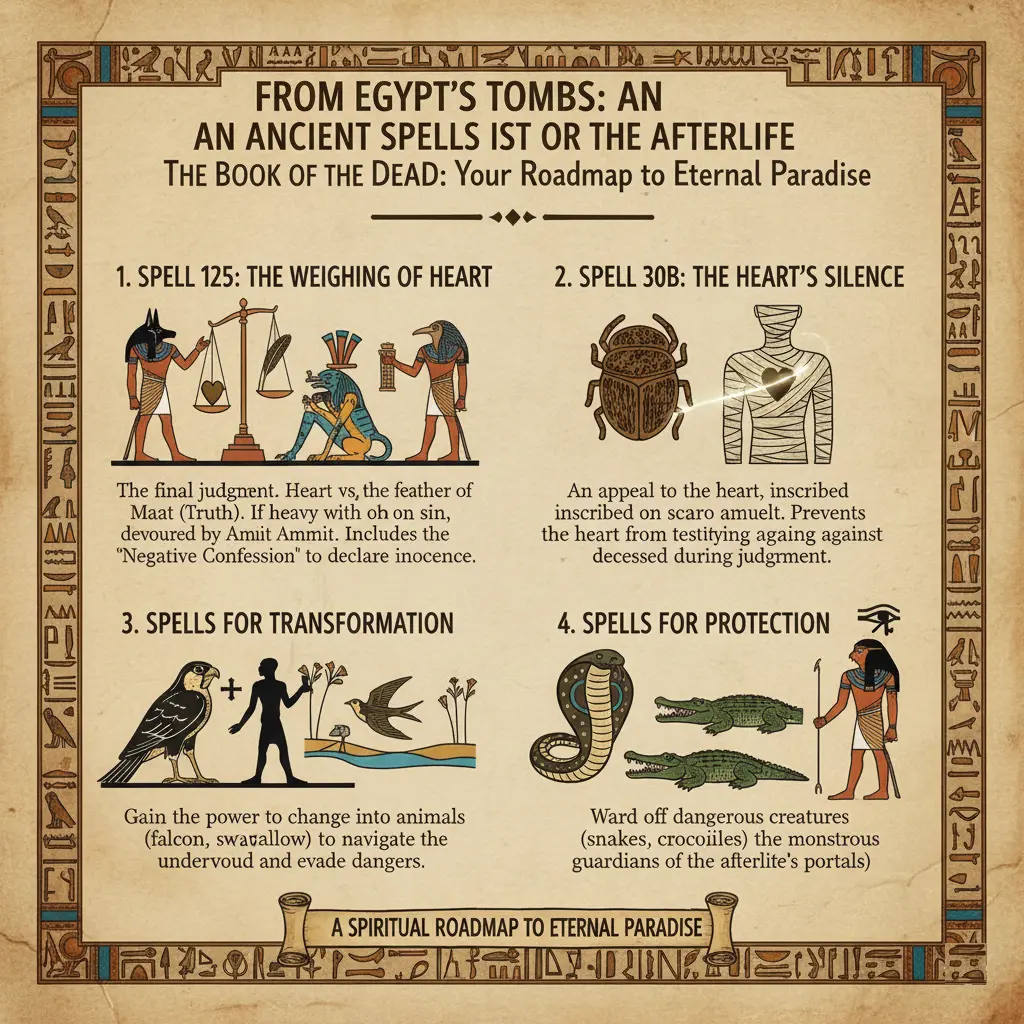
The most famous collection of Egyptian spells is the Book of the Dead. This wasn’t a single, standardized text but a customized collection of spells chosen by or for an individual to guide them through the perilous journey of the afterlife. This ancient witch spells list and their meanings was a spiritual roadmap, designed to help the soul overcome obstacles and achieve eternal paradise.
Some of the most crucial spells included:
- Spell 125: The Weighing of the Heart. This was the final judgment. The deceased’s heart was weighed on a scale against the feather of Ma’at (truth and justice). If the heart was heavy with sin, it was devoured by a monster named Ammit. This spell provided the “Negative Confession,” a list of sins the deceased could declare they had not committed, ensuring a favorable outcome.
- Spell 30B: For Not Letting a Deceased’s Heart Create Opposition. The Egyptians believed the heart was the seat of intelligence and memory. This spell was an appeal to one’s own heart, inscribed on a scarab amulet placed over the mummy’s chest, preventing it from testifying against the deceased during the weighing ceremony.
- Spells for Transformation: Other spells gave the deceased the power to transform into different animals, such as a falcon or a swallow, allowing them to navigate different parts of the underworld and avoid dangers.
- Spells for Protection: Numerous spells were designed to ward off dangerous creatures like snakes and crocodiles or to overcome monstrous gatekeepers who guarded various portals in the afterlife.
From Greece’s Markets: An Ancient Spells List for Daily Life
While the Egyptians focused heavily on the afterlife, the Greek Magical Papyri (PGM) show a magical tradition deeply concerned with the problems of this world. The PGM is considered the greatest surviving collection of ancient spells, a practical handbook filled with rituals for every imaginable situation. This ancient spells list reveals the mundane and relatable concerns of people in Greco-Roman Egypt.
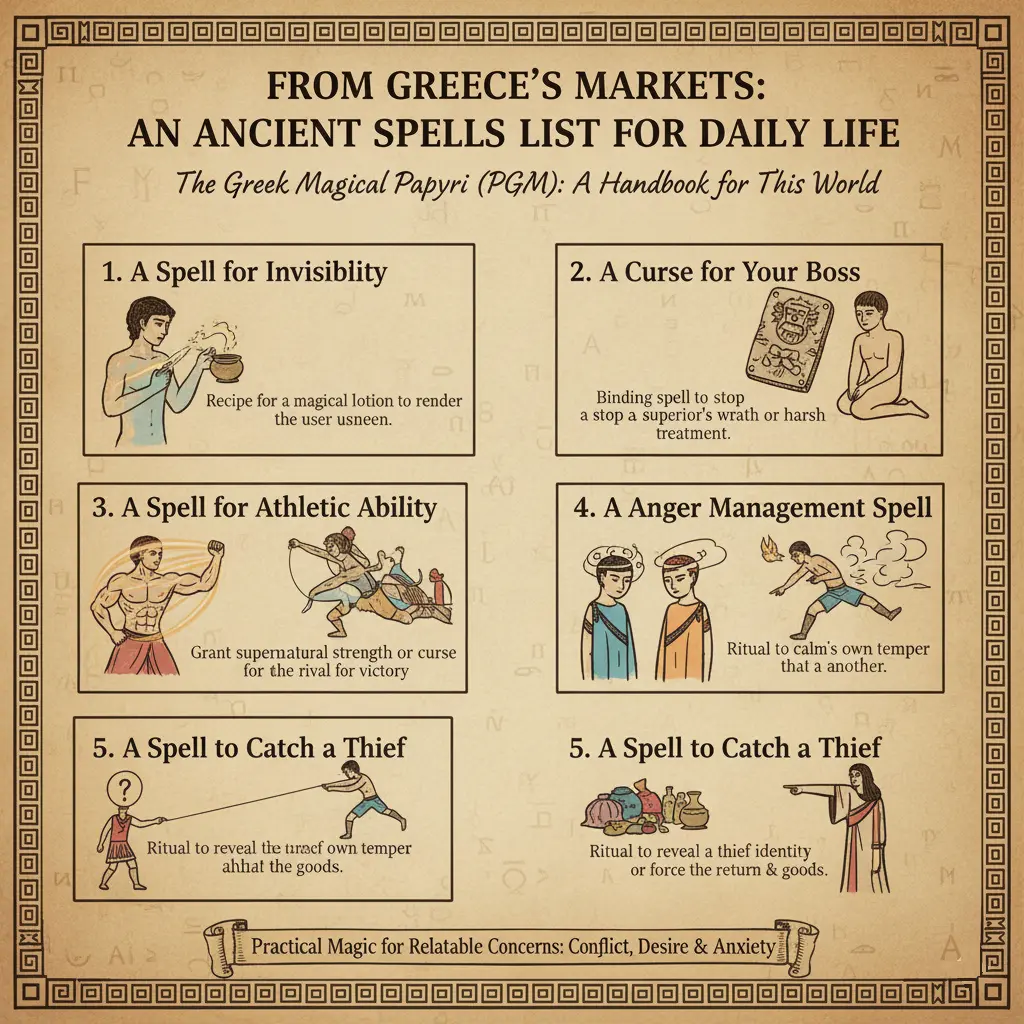
Examples from the PGM include:
- A Spell for Invisibility: A recipe for a lotion that, when applied, would supposedly render the user invisible.
- A Curse for Your Boss: A binding spell designed to stop a superior from being angry or treating the user harshly.
- A Spell for Athletic Ability: Instructions to give a competitor supernatural strength or to curse an opponent to ensure victory.
- An Anger Management Spell: A ritual to calm one’s own temper or that of another person.
- A Spell to Catch a Thief: Rituals designed to reveal the identity of a thief or force them to return stolen goods.
This collection demonstrates that the purpose of an ancient magic spell was often incredibly down-to-earth, addressing the same kinds of social conflicts, desires, and anxieties we experience today.
Secrets of the Ancient Spellbook
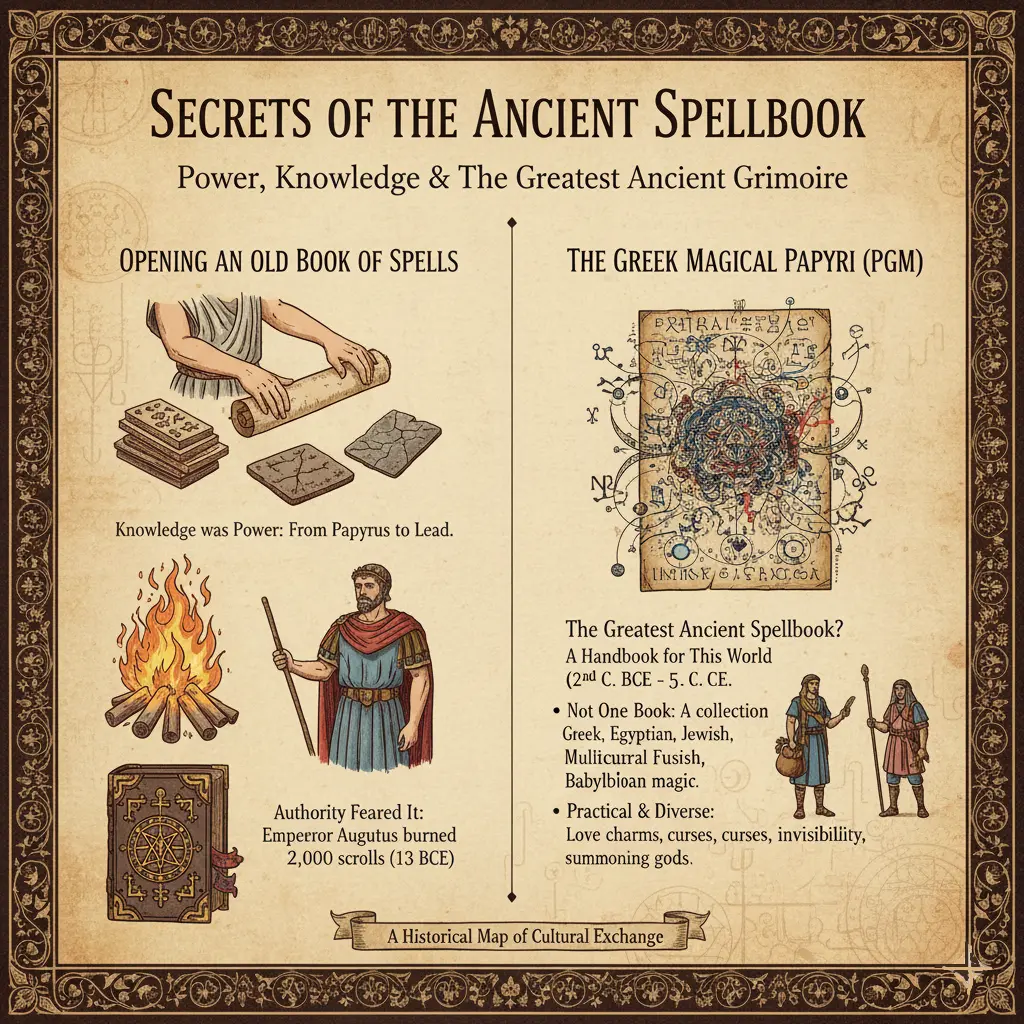
The transmission of magical knowledge relied heavily on written texts. These collections of spells, rituals, and arcane secrets—what we might call an ancient spellbook—were considered objects of immense power, containing the keys to influencing the supernatural world.
Opening an Old Book of Spells
Magical knowledge was recorded on various materials, from papyrus scrolls in Egypt to clay tablets in Mesopotamia and lead sheets in Rome. An old book of spells was a repository of powerful, and often secret, information. This knowledge was so potent that authorities sometimes viewed it with fear. The Roman emperor Augustus, for instance, famously ordered the burning of over 2,000 magical scrolls in 13 BCE, fearing their potential to disrupt social order. This act of suppression highlights just how seriously the power contained within an old book of spells was taken. This tradition of the grimoire continued for centuries, leading to famous medieval and Renaissance texts like the Key of Solomon, which claimed to hold the secrets of the biblical king.
The Greek Magical Papyri: The Greatest Ancient Spellbook?
Perhaps the most important surviving ancient spellbook is not a single book at all, but the collection known as the Greek Magical Papyri (PGM). These texts, dating from the 2nd century BCE to the 5th century CE, appear to be a mix of working manuals for traveling magicians and compilations gathered by scholars. The diversity of the content is staggering, ranging from complex, multi-day rituals for summoning gods and demons to simple folk remedies, love charms, curses, and even parlor tricks.
The PGM is a perfect window into the multicultural world of Greco-Roman Egypt. The spells are written in a mix of languages—Greek, Demotic Egyptian, and Old Coptic—and they freely blend traditions, calling on Greek, Egyptian, Jewish, and even Babylonian deities, sometimes in the same ritual. This reveals that ancient magic was not a rigid, dogmatic system. Practitioners were pragmatists, borrowing whatever words, symbols, or deities seemed most powerful, regardless of their origin. An ancient spellbook like the PGM is therefore more than a list of spells; it is a historical map of cultural exchange, showing how ordinary people participated in the fusion of great empires, creating a new, hybrid system of magic that was uniquely their own.
The Anatomy of an Ancient Magic Spell
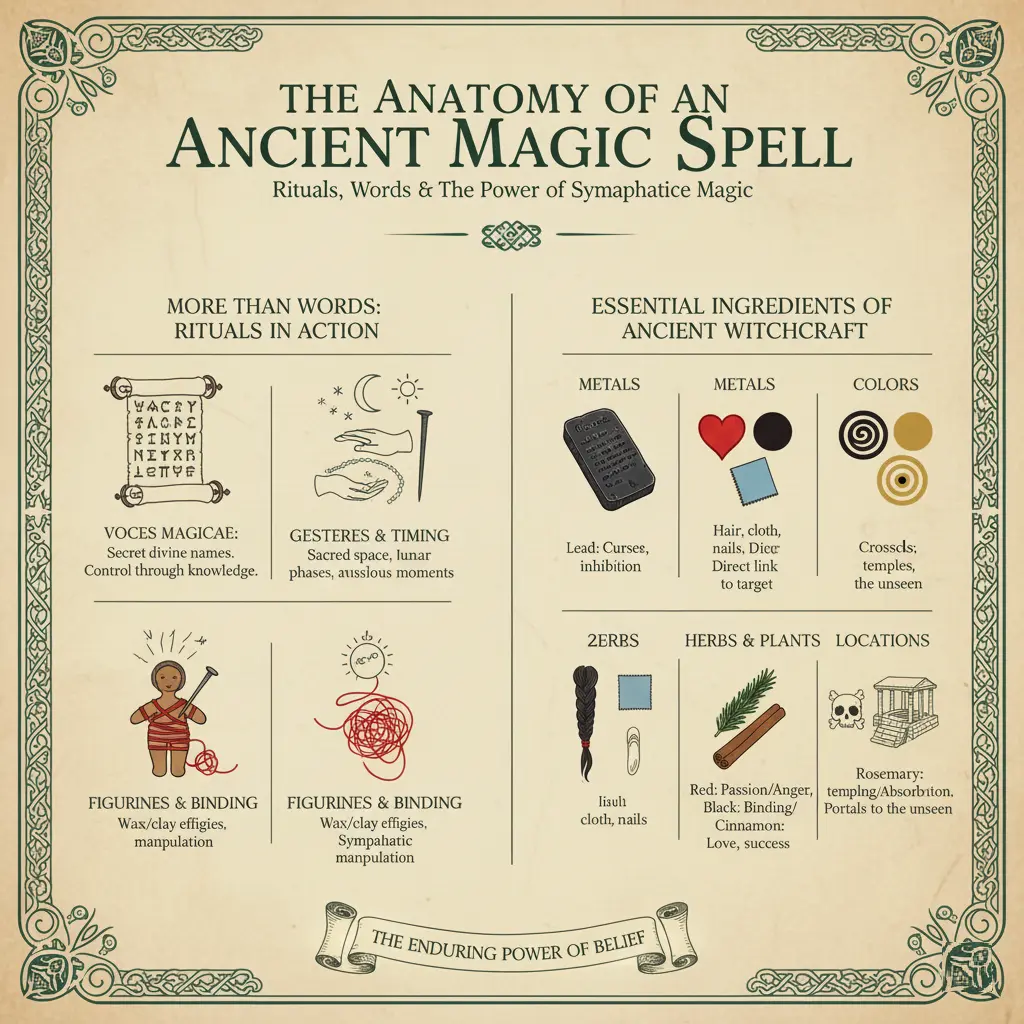
Casting a spell in the ancient world was a deliberate and complex act. Ancient spells and rituals were not just about reciting a few rhyming words; they were carefully orchestrated performances designed to focus intention and channel supernatural power.
More Than Words: Ancient Spells and Rituals in Action
Words, both spoken and written, were at the heart of magic. The Egyptians believed that words had the power to create reality, a principle that underpinned all of their magical practices. In the Greco-Roman world, spells often included voces magicae, strange and untranslatable words that were believed to be the true names of divine forces, holding a power that human language could not capture. Knowing the secret name of a god or spirit was thought to grant the magician control over it.
But words were only part of the equation. Ancient spells and rituals required specific actions to be effective. A curse was not just spoken; it was inscribed on lead, pierced with a nail, and buried in a grave to place it in the realm of the dead. A protective spell might involve drawing a magic circle with salt to create a sacred, shielded space. A love spell could require molding a wax or clay figurine of the target, binding its limbs to symbolically bind its will. The timing of the ritual (such as during a full moon) and the location (a crossroads, a temple, a cemetery) were also chosen for their symbolic significance and power.
The Essential Ingredients of Ancient Witchcraft
The materials used in ancient witchcraft spells were chosen for their symbolic properties. Every ingredient had a purpose and contributed to the spell’s power.
- Metals: Lead was a common choice for curse tablets because it was a dark, cold, and heavy metal. Its physical properties were thought to magically weigh down the victim, inhibiting their actions and spirit.
- Personal Items: To ensure a spell reached its target, magicians used what is sometimes called a “taglock”—a piece of the victim’s hair, a nail clipping, or a scrap of their clothing. This created a direct, sympathetic link between the ritual and the person it was aimed at.
- Herbs and Plants: A vast number of plants were used in magic for their inherent properties. Rosemary was associated with protection and purification, while cinnamon was used in spells for love, success, and power.
- Colors: Colors carried deep symbolic meaning. Red might be used in a love spell to incite passion or in a curse to represent anger and violence. Black was often associated with curses and binding but could also be used in protective magic to absorb and neutralize negative energy.
- Figurines: Small dolls made of wax, clay, or lead were used to represent the target of a spell. By manipulating the figurine—binding it, piercing it, or anointing it—the magician believed they were directly affecting the person it represented.
The Enduring Power of Ancient Belief
The world of ancient spells is a fascinating glimpse into a time when the veil between the physical and the supernatural was thin. For the people of Egypt, Mesopotamia, and the Greco-Roman world, magic was not a superstition but a rational and necessary tool for navigating the challenges of everyday life. From the grand funerary texts designed to secure eternal life to the simple curse scratched on a lead tablet to win a legal case, these practices reveal the deepest hopes and fears of our ancestors.
Studying these ancient spells and rituals does more than just teach us about the past. It shows us the enduring human desire for love, security, and a sense of control over our own lives. The whispers from these ancient traditions continue to captivate us today because they speak to something timeless within the human spirit. They remind us that for millennia, people have looked to the unseen world for answers, for power, and for hope.
Ancient Magic Spell

For centuries, the mysteries of ancient spells and rituals have intrigued humanity, blending myth, culture, and supernatural allure. From whispered incantations to deeply symbolic ceremonies, spells, and rituals have been embedded in cultures across the globe as tools for love, protection, prosperity, and divine communication. But what exactly are these practices, and how have they influenced the way we understand magic today?
If you’ve ever been captivated by tales of magical spellbooks, ancient love charms, or ceremonial rites, this article will be your ultimate guide. We’ll explore what ancient magic spells are, how rituals shaped civilizations, and even examine some real historical examples. By the end, you’ll have a solid understanding of these powerful traditions and their significance.
What Are Ancient Spells and Rituals?
At their core, spells and rituals are methods of focusing energy and intention toward achieving a specific outcome. Spells are often accompanied by spoken words, chants, or inscriptions, while rituals include a sequence of symbolic actions that align the physical and spiritual realms.
What Are Ritual Spells?
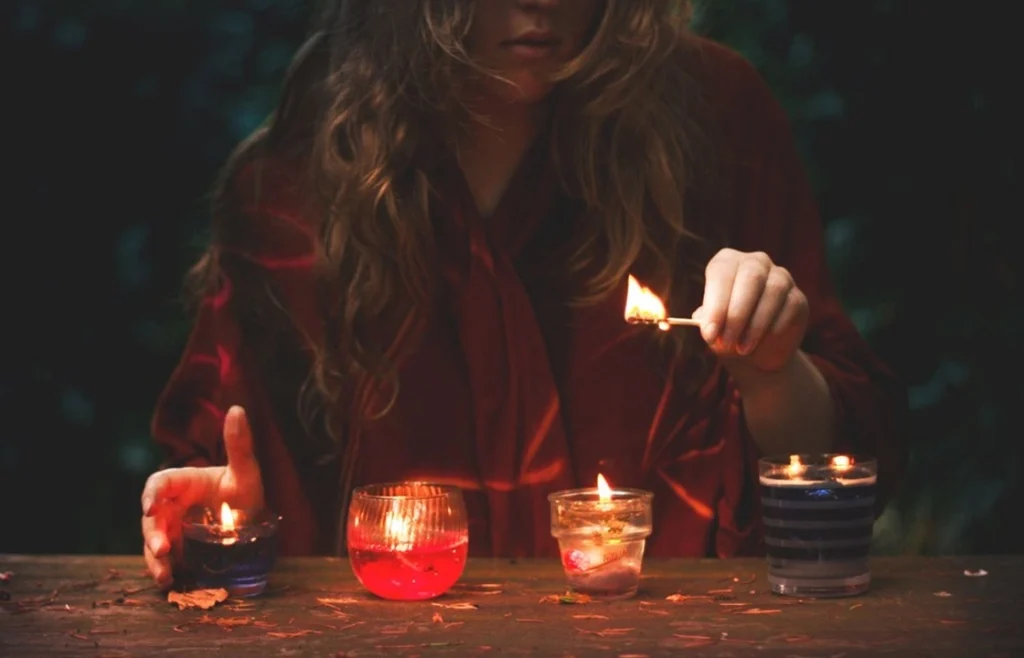
Ritual spells combine the power of repetitive actions with concentrated intent to amplify their effectiveness. These rituals often involve symbolic items—candles, herbs, oils, and crystals—all carefully selected to enhance the spell’s purpose. Examples of ritual spells include protection circles, purification ceremonies, and love-invoking chants.
What Are Ancient Rituals?
Ancient rituals, on the other hand, are deeply rooted in cultural and spiritual practices. These rituals often have a communal purpose, acting as rites of passage, harvest celebrations, or sacred ceremonies to connect with deities. They follow established patterns handed down through generations, such as Egyptian burial rites or Celtic seasonal festivals.
The Origins of Ancient Spells and Rituals
Ancient spells and rituals trace back thousands of years, reflecting the beliefs, customs, and needs of civilizations that shaped our world. From ancient Egypt to the Celtic tribes and beyond, the act of spell casting often intertwined with religion and the natural world. These rituals were more than mere incantations; they included intricate ceremonies, symbolic objects, and sacred environments. The blending of these elements aimed to harness unseen forces and align energies with a practitioner’s intent.
One fascinating aspect is the preservation of an ancient spells list—compilations of powerful and revered spells passed down through generations. These lists often contained spells for healing, protection, fertility, and, of course, love. One of the most enchanting examples is the ancient Egyptian love spell, a sophisticated practice steeped in mysticism and tied to the worship of gods like Hathor, the goddess of love and beauty.
Exploring Ancient Magic and Ritual Power
Magic and rituals are more than fantastical concepts; they hold deep cultural significance across various civilizations. Here’s how ancient societies tapped into magic’s ritualistic powers:
What Is Ancient Magic?
Ancient magic refers to practices designed to influence unseen forces in the world. Unlike modern-day notions of magic, which are often dismissed as superstition, ancient practitioners believed that magic was a science operating in harmony with nature’s laws. It was an essential part of healing, protection, and even governance.
Ancient Rituals Examples
- Egyptian Funerary Rituals: The preparation of the deceased for the afterlife included spells from the Egyptian Book of Spells (or Book of the Dead), recited to guide the soul safely.
- Celtic Samhain Festival: Marking the end of the harvest and the start of winter, this ancient ritual bridged the living and the spirit worlds.
- Roman Augury: Roman priests observed bird flight patterns, interpreting them as divine guidance for making important decisions.
Famous Ancient Spells and Their Purposes
Ancient Love Spells
Love spells have an enduring allure, with records of their use spanning multiple cultures. The Ancient Egyptian Love Spell, for instance, was a popular ritual composed of reciting sacred phrases while offering symbolic tokens to win a lover’s affection.
Other examples include:
- Celtic Love Charms: Using herbs like vervain or rose to attract or secure love.
- Ancient Binding Spells: Designed to bind lovers together eternally through incantations and symbolic bindings.
Ancient Magic Spellbooks
Many societies relied on spellbooks for the preservation of magical knowledge. Some famous ones include:
- The Egyptian Book of Spells (Book of the Dead): This ancient text contained instructions for navigating the afterlife.
- Old Books of Spells in European Traditions: Hidden grimoires often detailed recipes for potions, protective wards, and ceremonial guidance.
- Ancient Magic Spell Book of Babylon: Tablets and scrolls with inscriptions served as repositories of healing and protective spells.
Real Ancient Words of Spell Casting
Certain words and phrases have held magical significance over millennia. Consider these real, actual ancient words of spell casting:
- Abracadabra: Although now associated with modern magic tricks, this word has ancient origins as a healing spell in Gnostic practices.
- Open Sesame (Ali Baba and the Forty Thieves) may be fictional, but its foundation lies in ancient incantation forms.
- Ankh Udja Seneb (Life, Prosperity, and Health in Egyptian): A common invocation used in ancient Egyptian blessings.
What Is the Oldest Magic Word?
Determining the oldest magic word is difficult as oral traditions often predated writing. However, early words like abracadabra and inscriptions in Sumerian or Egyptian texts are among the earliest known examples.
Ritual Spells of Protection and Power
Ancient Spiritual Rituals for Protection
Across cultures, ritual spells aimed to guard individuals or communities from harm. Some notable examples include:
- Celtic Protection Spells: Combining symbols like knots and circles to ward off evil spirits.
- Ancient Binding Spells to contain hostile forces, often found on inscribed tablets.
- Ancient Black Magic Spells used in defensive measures against curses or enemies.
What Are the 4 Cursed Spells?
While ancient magic is often associated with positive intents, some spells were created to inflict harm or exact retribution. Notable examples include:
- Death Curse (Maledictio Mortis in Roman Magic)
- Curse Tablets aimed at rivals in Ancient Greece
- Binding Spells in voodoo traditions
- Hexes or Jinxes that interfere with luck or health.
Building Your Connection to Ancient Spells and Rituals
Can You Prepare a Ritual Spell?
Yes! Preparing a ritual spell involves a few key steps:
- Define Your Intent: Clearly articulate what you want to achieve (e.g., love, protection, inner peace).
- Gather Symbolic Items: Choose candles, herbs, crystals, or oils that align with your intent.
- Create A Sacred Space: Minimize distractions and set up a clean, quiet area for your ritual.
- Perform The Ritual: Follow through with your actions and chants, allowing the energy to flow.
- Close Your Space: This can include extinguishing candles, offering a prayer of thanks, or physically cleaning the area.
The Oldest Magic in the World
When we ask, What is the oldest magic in the world?, we’re really exploring the origins of belief systems. From ancient Mesopotamian invocations to the rituals of the African shamans, magic originated as humanity’s attempt to explain the mysteries of existence and harness the power of the universe.
Step Into the Magic
The world of ancient spells and rituals remains as enchanting as it is mysterious. From sacred rites to love charms, rituals continue to connect us with our past, offering a depth of meaning and power. Whether you’re studying ancient texts or crafting your own intention-filled ceremonies, these traditions invite you to bridge the spiritual and physical worlds.
If you’re curious to learn more, browse a local ancient spellbook for inspiration, or explore texts like the Egyptian Book of Spells. Whether you consider spells historical artifacts or tools for the present, the power of intent and ritual is timeless.
The Allure of Ancient Love Spells
Love spells have been a perennial favourite among practitioners of ancient magic. Whether from Egypt, Greece, or Rome, these ancient love spells were designed to attract a soulmate, strengthen relationships, or mend broken hearts. Far from superficial, love spells often required deep ritualistic practices involving objects like talismans, oils, and offerings.
The ancient Egyptian love spell, for example, would use symbolic items such as honey or flowers accompanied by delicate invocations to Hathor. The words and intention combined with these tokens created a powerful, heartfelt appeal to the divine forces governing love and attraction.
Ancient Spellbooks and Knowledge Preservation
Much of our understanding of magical practices comes from surviving spellbooks—repositories of human history and mystical thought. An ancient spellbook or old book of spells reflected the era and culture in which it was created. Written in various languages like Ancient Greek, Latin, or hieroglyphs, these texts provided instructions on everything from weather manipulation to personal protection. Among these practices, Forgiveness Spells and Rituals were often hidden between the lines, offering pathways to healing broken bonds, easing guilt, and restoring peace within communities and individuals.
The ancient magic spell book often acted as a sacred tool for sorcerers and priests, containing extensive collections of knowledge. These books featured spells for fertility, luck, or even ancient binding spells, which were used to restrict someone’s actions or intentions. Within this spectrum of magical wisdom, Forgiveness Spells and Rituals stood out as deeply transformative, helping practitioners release anger, dissolve grudges, and invite harmony into their lives. These texts often emphasized ethical boundaries, as the misuse of magic could invite misfortune, making forgiveness-based practices an essential counterbalance to harsher forms of spellwork.
Exploring Ancient Black Magic Spells
Within the broader spectrum of ancient rituals lies the forbidden realm of ancient black magic spells. These spells were controversial, intended to manipulate or harm others. They often required rare ingredients and elaborate rituals. Practiced in secrecy, these spells were feared yet respected for their potency.
However, it’s vital to understand that “black magic” does not inherently signify evil. Ancient civilizations often saw it as a tool for justice or retribution, used with caution due to the risks of unintended consequences.
Ancient Celtic and Druidic Traditions
The ancient Celtic spells provide yet another glimpse into the fascinating diversity of magical practices. The Celts, deeply connected to nature, used magic as a way to harmonize with their surroundings. Their rituals, often conducted by druids, involved elaborate ceremonies by sacred trees or stone circles. These spells frequently featured requests for bountiful harvests, protection in battle, or love.
The Celts also practiced ancient binding spells, intended to secure agreements, ensure loyalty, or ward off threats. These were typically accompanied by symbolic gestures, such as knot-tying, to physically represent the “binding” of a subject.
The Role of Ritual in Spell Casting
No spell is complete without a ritual. Ancient rituals acted as the stage for spell casting, involving specific steps and tools to amplify the practitioner’s intention. These could include altars, candles, incense, herbs, and personal items of significance. Every action—whether lighting a flame or reciting an incantation—served to focus energy and align with higher powers.
Interestingly, the effectiveness of a ritual often stemmed from the practitioner’s belief and intention. Magic, after all, is as much about the mind as it is about the materials used.
Discovering the Modern Significance of Ancient Magic
Today, the study of ancient spells and rituals is not merely academic. Modern practitioners and enthusiasts find inspiration and wisdom in these old ways. For many, reconnecting with these practices brings a sense of empowerment, peace, and connection to the past. Ancient texts such as the Egyptian book of spells and other ancient spellbooks continue to captivate readers, offering insights into universal human desires and fears.
Bridging the Past and the Present
The magic of ancient spells and rituals serves as a reminder of humanity’s enduring quest to understand and influence the world. Whether you’re drawn to a specific ancient magic spell, the allure of an ancient magic spell book, or simply the rich history behind these practices, there’s an undeniable sense of wonder in exploring this sacred tradition.
In an era where science and reason often dominate, ancient magic invites us to dwell in the realms of mystery, intuition, and possibility. Who knows what secrets lie waiting in an old book of spells or the whispered words of spell ancient passed down through the ages? By studying and respecting these practices, we honor the legacy of human imagination, belief, and the profound desire to shape our destinies. As we continue to explore and uncover the hidden wisdom of ancient spells, we also discover more about ourselves and our place in this vast universe. So let us keep the flame of ancient magic alive, for it offers us a connection to our past, and a path towards a future filled with infinite possibilities. So, let’s embark on this journey together, honouring the legacy of ancient spells and unlocking their secrets along the way.
Remember to approach these practices with respect and caution, as they hold immense power that should not be taken lightly. Let us continue to learn from the wisdom of our ancestors and incorporate them into our lives in meaningful ways. May the magic of ancient spells guide us towards love, prosperity, and harmony. Let us embark on this journey with an open mind and a willing heart, for the possibilities are endless.
Sources :
https://www.historyextra.com/period/ancient-egypt/ancient-egyptian-love-spells-how-to/
https://www.learnreligions.com/spell-books-of-the-world-2561975
https://exemplore.com/wicca-witchcraft/Ancient-Magic-Spellbook-An-Investigation-and-Guide
https://www.ancient.eu/article/780/an-insight-into-the-magic-spells-of-babylon/
https://balkanfolk.com/news.php?id=171992&lang=en
Pingback: Crystal Witches: A Friendly Guide to Witchcraft Crystals - Witch symbols