
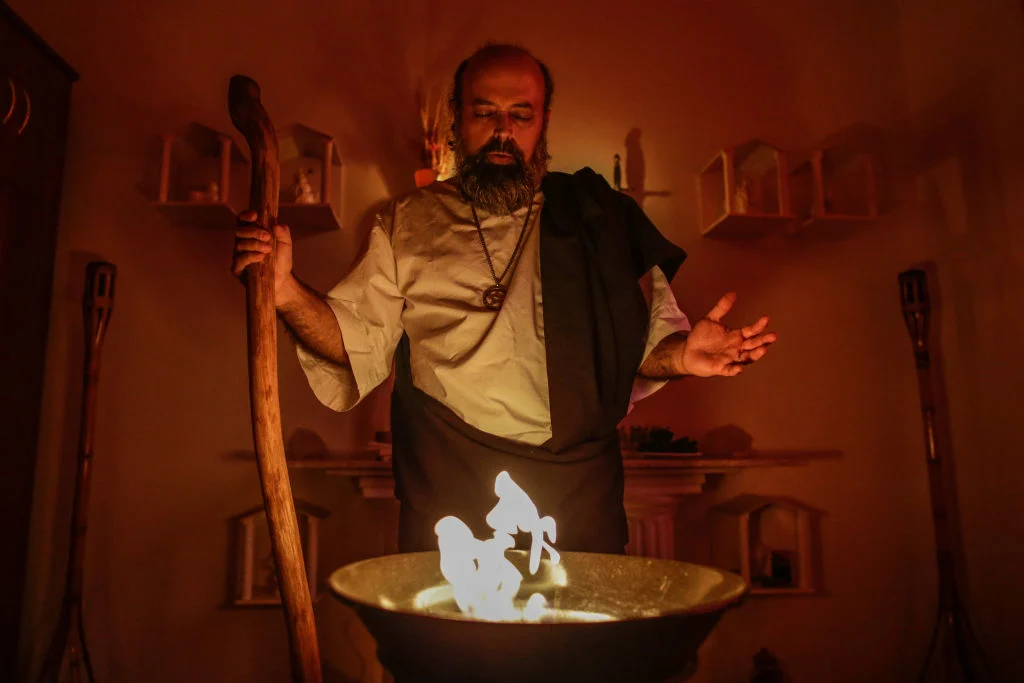
Paganism spells are rituals, intentions, and symbolic actions used within pagan traditions to connect with natural forces, spiritual energies, and the divine. They’re not like what you see in movies. No cauldrons exploding, no dramatic green smoke. A spell in paganism is closer to a focused prayer combined with action. It’s the practice of directing energy toward a specific purpose using tools like candles, herbs, crystals, and spoken words.
Simple as that.
If you’ve been curious about this path for a while, you’re not alone. Paganism is one of the fastest-growing spiritual movements in the US, UK, and Australia. People are leaving rigid religious structures and looking for something that feels more personal, more rooted in the earth, more real.
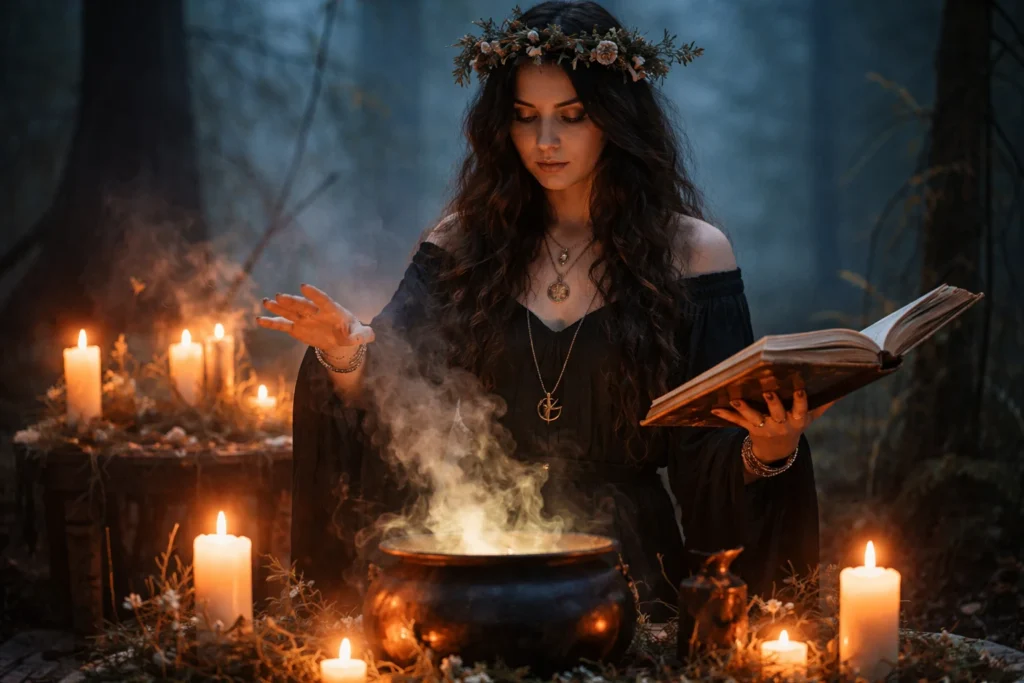
So let’s talk about it properly.
What Makes a Pagan Spell Different?
It Works With Nature, Not Against It
Paganism isn’t one single religion. It’s an umbrella term covering Wicca, Druidry, Heathenry, Hellenism, and dozens of other earth-based paths.
Spells within these traditions share one common thread. They work with nature. They respect the cycles of the moon, the seasons, and the elements. They don’t force anything. They invite.
That’s a big distinction.
A pagan spell isn’t demanding the universe hand you something. It’s more like planting a seed with intention and then doing the work to help it grow. The magic is part of the process, not a shortcut around it.
The Ethics Behind the Craft
Wicca, probably the most well-known pagan tradition in English-speaking countries, follows a specific ethical code. You’ve probably heard of it.
“An it harm none, do what ye will.”
That principle shapes how most Wiccan spells are built. There’s a strong emphasis on not manipulating other people’s free will and on taking responsibility for what you put out into the world.
Other pagan traditions are less codified. Norse paganism uses practices like runes and seidr. Greek reconstructionists might work with offerings and hymns to specific deities. The spellwork varies depending on the path you choose.
Types of Pagan Spells
1. Intention Spells
These are the simplest and best starting point for anyone new. You write down what you want to bring into your life, or what you want to release. Then you burn the paper, bury it, or place it on a small altar.
That’s it. You’ve cast a spell.
It sounds almost too simple. But the act of physically writing something and then releasing it is genuinely powerful, both psychologically and spiritually.
2. Candle Spells
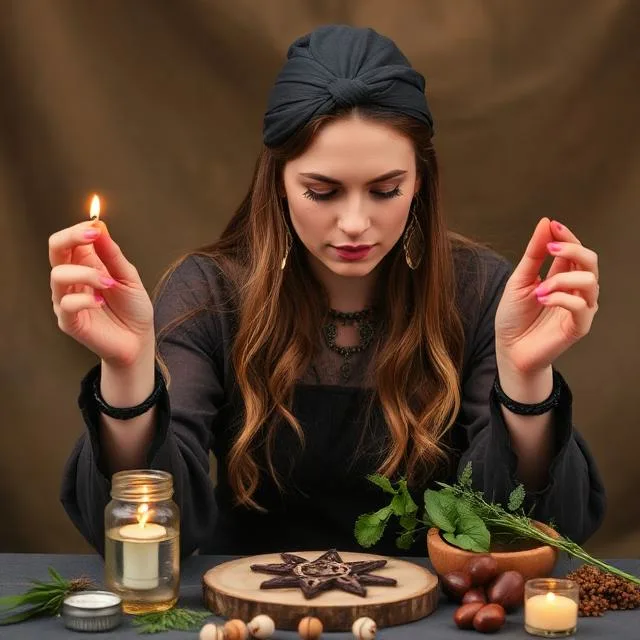
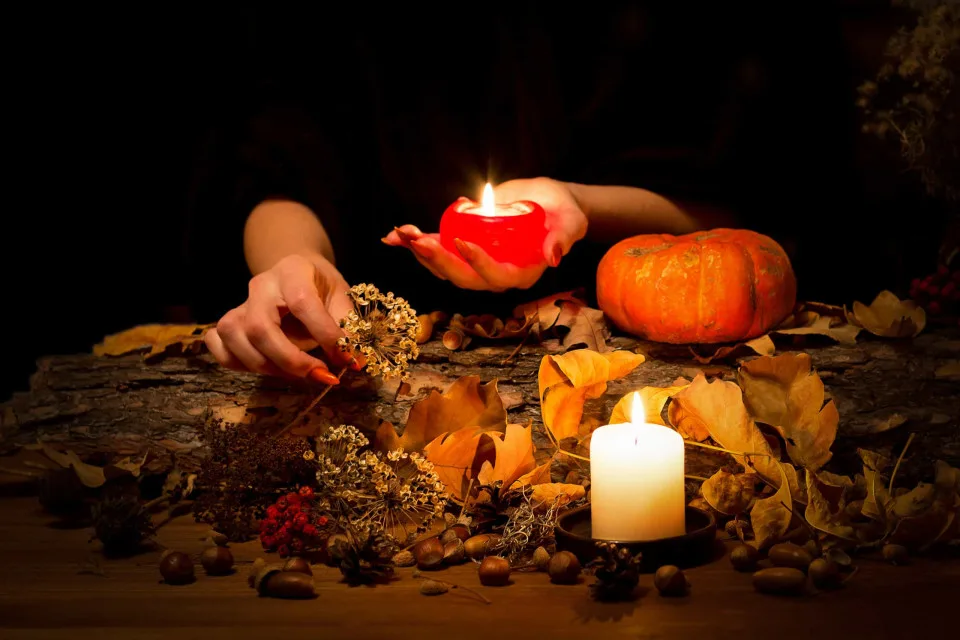
Candle spells are one of the most popular types of pagan spellwork for good reason. They’re easy to do, and they’re deeply symbolic.
Each candle color carries a traditional meaning:
- White for purification and new beginnings
- Green for abundance and growth
- Blue for healing and calm
- Red for courage and passion
- Black for banishing and protection
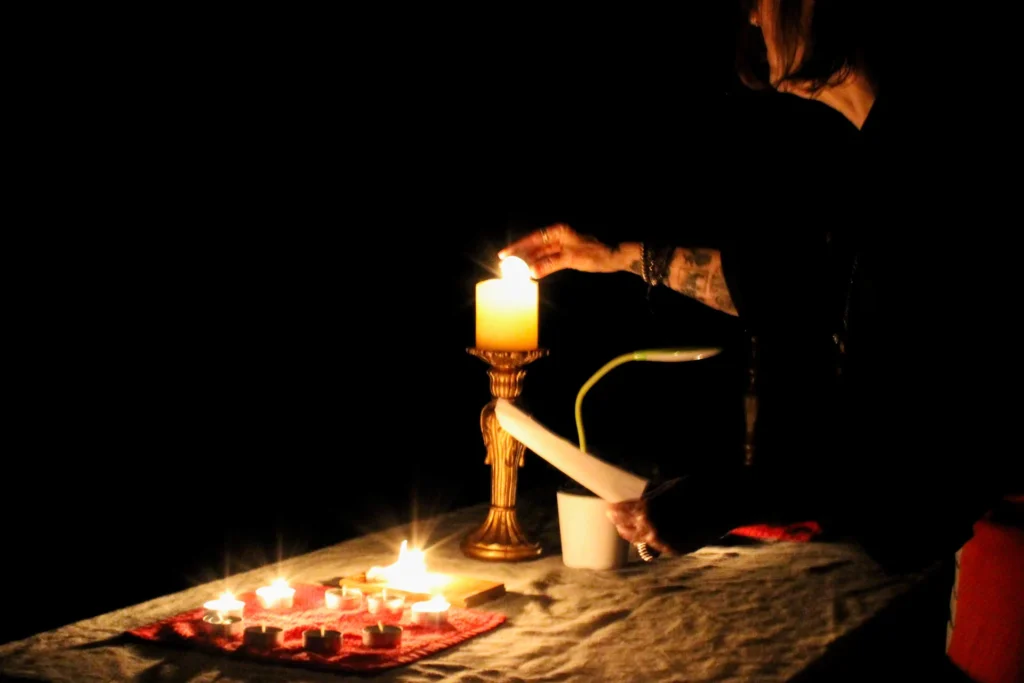
You light the candle, hold your intention clearly in mind, and let it burn. Some people carve words or symbols into the candle first. Some anoint it with oil. But the core of it is focused intention paired with a physical act.
3. Moon Spells
Moon spells are tied to the lunar cycle, and they’re incredibly effective for timing your intentions.
- New moon is for setting intentions and fresh starts
- Waxing moon is for building energy and growth
- Full moon is for manifesting and celebrating
- Waning moon is for releasing what no longer serves you
You don’t need anything special to start. Go outside on a full moon night, look up, and speak what you want to let go of. That counts.
4. Herb and Nature Spells
Working with plants is one of the oldest forms of pagan magic. Herbs carry natural energies that can amplify your intentions.
Lavender for calm. Rosemary for protection and memory. Basil for prosperity. Mugwort for dreams and intuition.
You can burn them, carry them in a small pouch, or use them in a bath ritual. The connection to the natural world is what makes these spells feel so grounded.
5. Protection Spells
Protection spells are common across almost every pagan tradition. They’re designed to create energetic boundaries around yourself, your home, or people you love.
A simple protection spell might involve a black tourmaline crystal placed near your front door, or a ring of salt around your space, paired with a clear spoken intention.
6. Healing Spells
We’ll go deeper on these shortly, but healing spells are focused on restoring wellbeing. They work with the body, the mind, and the emotions. They’re one of the most requested types of spells, especially among new practitioners.
Paganism Spells
Beginner Pagan Spells
Beginner Pagan Spells: Where to Actually Start
Keep It Simple at First
If you’re new to this, the best beginner pagan spells are the ones that feel natural to you. Don’t start with complicated rituals that require fourteen candles and a specific moon phase.
Honestly, that’s a fast way to get overwhelmed and quit before you even begin.
Start with a single candle, a quiet space, and five minutes of focus. That’s a real spell. Build from there.
Your First Candle Spell Step by Step
What You Need
- One candle in a color that fits your intention
- A quiet space where you won’t be interrupted
- Something to light it with
- A clear intention in your mind
What to Do
Light your candle. Take three slow breaths. Picture your intention as clearly as you can. Not vague wishful thinking. A specific, vivid image of what you want to bring in or release.
Speak it out loud if you can. Something like: “I release what holds me back. I welcome peace and clarity.”
Let the candle burn. Stay with it for a few minutes. Then go about your day and trust the process.
That’s a real beginner pagan spell. No drama required.
How to Make a Paganism Spell
Step 1: Get Clear on Your Intention
Before anything else, know exactly what you want. Vague spells get vague results. Be specific.
Not “I want more money.” Try “I am open to new opportunities for financial growth.” The energy shifts when you get precise.
Step 2: Choose Your Timing
Timing matters in pagan magic. The moon cycle is the most common framework.
Moon Phase Guide for Spells
- New moon: Start something new, set a goal
- Waxing moon: Build on it, take action
- Full moon: Celebrate, manifest, amplify
- Waning moon: Let go, banish, release
You can also work with days of the week. Monday connects to the moon and intuition. Friday connects to Venus and love. Saturday connects to Saturn and banishing.
Step 3: Gather Your Tools
You don’t need a lot. But having physical objects helps anchor your focus.
Pick items that feel right for your intention. A candle, a crystal, a handful of herbs, a piece of paper. These are your spell’s physical components.
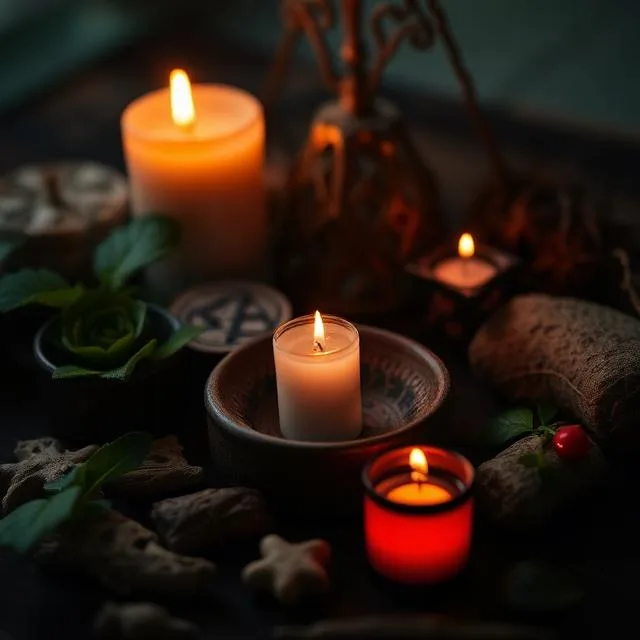
Common Correspondences to Know
- Crystals: Rose quartz for love, black tourmaline for protection, citrine for abundance
- Herbs: Lavender for calm, rosemary for protection, mint for prosperity
- Colors: Match your candle or cloth to the intention (see the candle color list above)
Step 4: Create Sacred Space
Before you cast a spell, create a calm, intentional environment. This doesn’t need to be elaborate.
Light a candle or some incense. Take a few deep breaths. Some practitioners cast a circle, which means they walk around their space clockwise while visualizing a protective boundary forming around them.
Others simply sit quietly and ground themselves by imagining roots growing from their body into the earth. Do what feels right for you.
Step 5: Cast the Spell
Now you bring it all together. Hold your intention firmly in your mind. Work with your chosen tools. Speak your words aloud, or write them down and burn them.
Feel the energy of what you’re doing. Don’t rush it. The focus and presence you bring to the spell is most of the work.
Step 6: Close and Release
When you’re done, close your space. If you cast a circle, walk it counterclockwise to release it. Blow out the candle or let it burn safely.
Then, and this is important, let go. Don’t obsess over whether the spell worked. Plant the seed and trust it. Doubt is the fastest way to unravel the work you just did.
Step 7: Record Everything
Write it down in a journal. What you did, when, what tools you used, how you felt, and what you noticed in the days that followed.
Over time, this becomes your personal pagan book of spells. Way more valuable than anything you’ll buy.
Healing Spell Pagan Practices: What You Should Know
What Healing Spells Are (and Aren’t)
A healing spell in pagan practice is designed to support wellbeing. Physical, emotional, or spiritual. But let’s be clear about one thing.
Healing spells are not a replacement for medical care. Anyone telling you otherwise is being irresponsible. They work alongside conventional treatment. Not instead of it.
That said, healing magic has a long and rich history. Before modern medicine, herbs, rituals, and community prayers were the primary tools available. Wise women and cunning folk were the healers of pre-Christian Europe.
A Simple Healing Spell for Beginners
What You Need
- A blue or white candle
- Lavender, rosemary, or eucalyptus (fresh or dried)
- A quiet, calm space
How to Do It
Sit quietly. Hold the herbs in your hands if you have them. Picture the person who needs healing (including yourself) as fully healthy and whole. Not sick, not struggling. Thriving.
Light the candle. Speak clearly: “I call on the healing powers of earth and water. May [name] be whole. May [name] be well.”
Let the candle burn. Repeat over several days if needed, especially during a waxing moon phase.
Crystals for Healing Work
Some practitioners add crystals to their healing spells. Here are a few worth knowing:
- Amethyst for pain relief and calm
- Clear quartz to amplify any healing intention
- Rose quartz for emotional healing and grief
- Black tourmaline to remove negative energy that’s weighing someone down
Getting a Pagan Book of Spells: What to Look For
Don’t Just Buy a List of Spells
A good pagan book of spells teaches you the why, not just the what. It explains correspondences, the logic behind ingredients, and how to adapt spells to your own practice.
That’s the real goal. Building a practice that’s authentically yours.
Books Worth Starting With
For Wicca Beginners
Scott Cunningham’s Wicca: A Guide for the Solitary Practitioner is considered foundational for good reason. It’s warm, clear, and doesn’t push one rigid path. Starhawk’s The Spiral Dance is another classic, especially for those drawn to goddess traditions.
For More Eclectic Practice
Silver RavenWolf has written extensively on spellwork. Her style is personal and practical, though opinions vary in the pagan community. Still worth reading and making up your own mind.
For Specific Traditions
If you’re drawn to Norse paganism, Galina Krasskova’s work is well-regarded. For Druidic paths, Kristoffer Hughes is highly respected.
Online Communities Matter Too
Don’t underestimate real conversations with real practitioners.
Reddit’s r/pagan and r/Wicca are genuinely helpful spaces, especially for beginners who have questions that feel too basic to ask anywhere else. The Pagan Federation is active in the UK. The Pagan Awareness Network is a good starting point in Australia.
Building Your Practice Over Time
You Don’t Need Much to Start
You know what surprises a lot of people when they come to paganism? It doesn’t feel foreign for long. Most people report a sense of coming home. Like the relationship with trees, seasons, and cycles was always there. The spellwork just gives it language.
You don’t need a perfectly set up altar on day one. You don’t need to spend a fortune on crystals and tools.
A candle, some quiet time, and a clear intention are enough.
Keep a Spell Journal
Write down everything you do. What tools you used. What moon phase it was. How you felt. What changed afterward.
Over time, this becomes your own pagan book of spells, personal and powerful.
Find Your Community
Whether you’re in a city or a small town, there are likely pagan meetup groups or open circles near you. In the UK, the Druid Network and Pagan Federation run regular events. In the US, local Wiccan covens and the Cherry Hill Seminary offer classes. In Australia, the Pagan Awareness Network connects practitioners across the country.
A Few Things Worth Remembering
Pagan spellwork is not about power over others. The most experienced practitioners will tell you that magic is mostly about changing yourself. Your perspective. Your relationship with the world.
Respect the tradition. Learn the history. Paganism has deep roots in pre-Christian European and global indigenous practices. Approach it with curiosity and humility.
And don’t take it too seriously in a rigid way. Paganism at its best is playful as much as it’s reverent.
Whether you’re just picking up your first pagan book of spells, trying your first beginner pagan spell with a single candle, exploring different types of pagan spells, learning how to make a paganism spell from scratch, or looking into what a healing spell pagan practice really involves, the path is yours to shape.
Start simple. Stay curious. Trust the process.
The earth has been doing this a lot longer than any of us.
hello there and thank you for your info – I have definitely picked up something new from proper here. I did however expertise a few technical points the usage of this website, as I skilled to reload the website a lot of times prior to I may just get it to load correctly. I have been pondering in case your web host is OK? Not that I am complaining, but sluggish loading cases occasions will often impact your placement in google and could damage your high quality ranking if ads and ***********|advertising|advertising|advertising and *********** with Adwords. Anyway I’m adding this RSS to my email and can glance out for a lot extra of your respective exciting content. Ensure that you replace this once more very soon..
Thanks for finally writing about > The Power of Paganism Spells: A Beginner’s Guide – Witch symbols < Liked it!
Everything said made a ton of sense. However, what about this?
what if you added a little information? I mean, I don’t wish to tell you how to run your blog, but
what if you added a title that grabbed a person’s attention? I
mean The Power of Paganism Spells: A Beginner’s Guide
– Witch symbols is a little vanilla. You should peek
at Yahoo’s front page and note how they create news titles to grab viewers to
open the links. You might try adding a video or a related picture or
two to get readers excited about what you’ve written.
In my opinion, it might bring your blog a little bit more interesting.
Pingback: All The Pagan Symbols & Their Meanings - Witch symbols
Pingback: Pagan Love Symbols: Ancient Signs That Still Speak to the Heart - Witch symbols
Pingback: A Guide to Magical Self-Care Rituals for a Thriving Spirit - Witch symbols