
The Meaning of Wiccan Symbols include the Pentagram, representing the five elements (earth, air, fire, water, spirit); the Triple Moon, symbolizing the Maiden, Mother, and Crone aspects of the Goddess; the Horned God, representing masculine divinity and the connection to nature; and the Ankh, an ancient Egyptian symbol of eternal life. Other symbols include the Triquetra (Trinity Knot) and the Wheel of the Year, which can be used with witch symbols.
Meaning of Wiccan Symbols
For Wiccans, understanding the meaning of Wiccan symbols is an essential part of spiritual practice. Each symbol in Wicca carries layers of significance, connecting practitioners with nature’s cycles, the classical elements, and the divine. These symbols serve as tools of magic and reminders of core Wiccan beliefs: harmony between spirit and matter, and respect for Earth. Common Wiccan icons include stars, moons, spirals and colors – each interpreted through ritual. By learning these images (Wicca symbolism), a witch knows how to channel intent. For example, studying the pentacle or triple moon reveals how the meaning of Wiccan symbols ties together elemental and goddess archetypes.
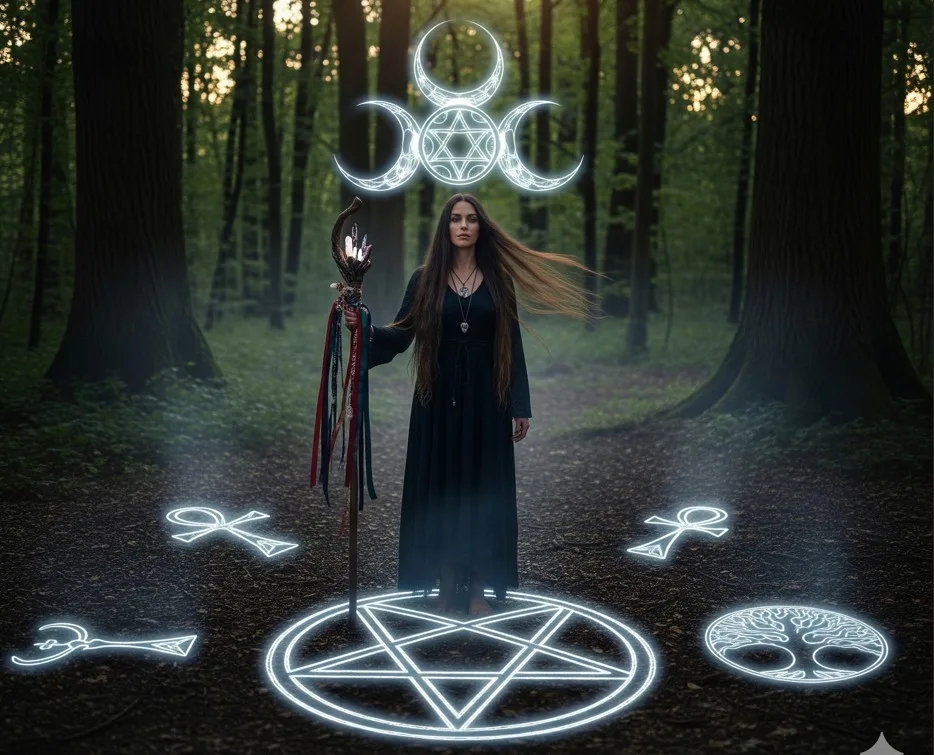
Wiccan Symbols And Their Meaning
Wiccan symbols represent core beliefs, from the divine feminine and masculine to the elements of nature. Here are some of the most prominent Wiccan symbols and their meanings.
Pentagram (Pentacle)
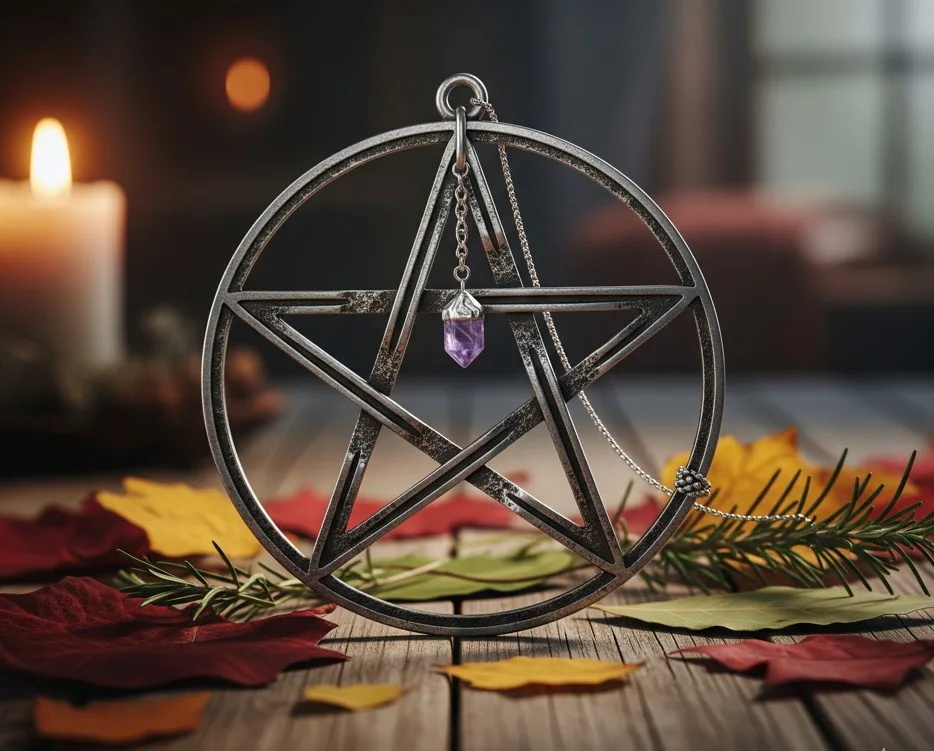
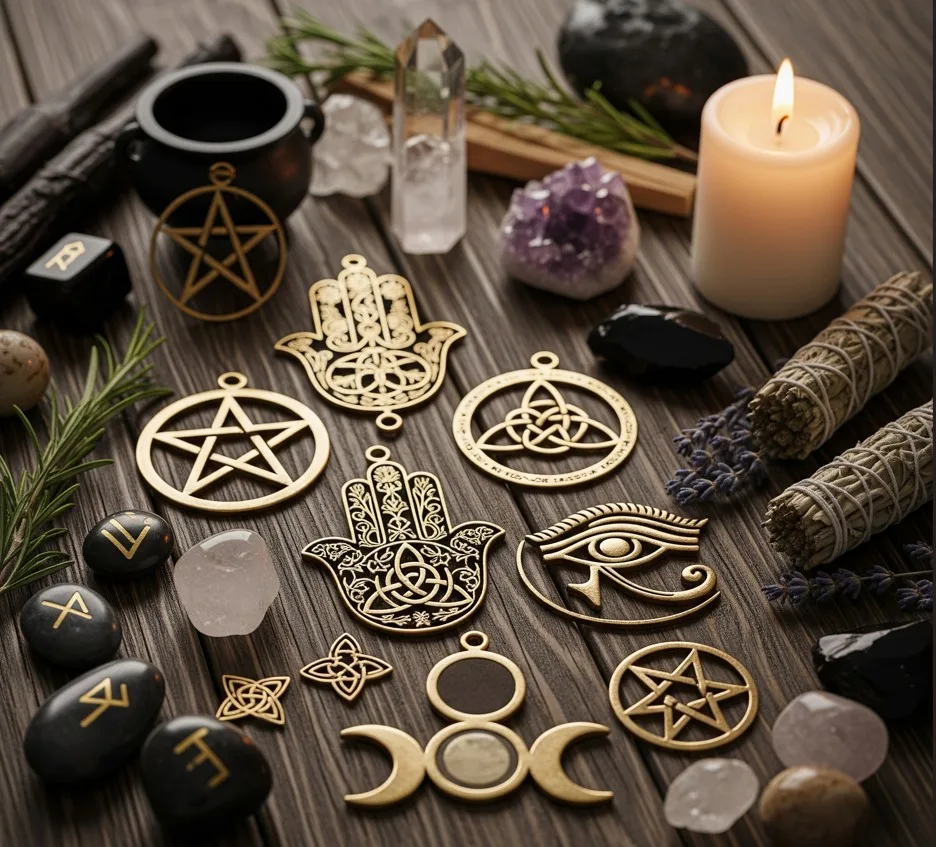
The five-pointed star – a pentagram when drawn alone, or a pentacle when enclosed in a circle – is one of the most important Wiccan symbols. ThoughtCo observes that “the pentacle is probably the best-known symbol of Wicca today”. Its five points represent the four classical elements (earth, air, fire, water) plus spirit. In other words, it embodies “mind over matter”: Wiccans say the pentagram “symbolizes the four elements… along with spirit”, indicating that spirit (the fifth point) guides the other forces. Another interpretation is that the pentagram stands for “spirituality over materialism” (spirit at the top, elements below).
The surrounding circle (in a pentacle) adds unity and eternity, implying that all five elements are connected. Practitioners trace pentagrams in ritual to honor this balance, showing that the pentagram meaning in Wicca unites earthly and spiritual energies.
The pentacle is also a powerful protection symbol in Wicca. In fact, the same ThoughtCo source calls it a “symbol of protection”, and notes it is often worn or displayed for warding. Similarly, Woot & Hammy explains the pentagram’s five points act like spikes around a center, making it “a symbol of protection against evil”. Many witches wear pentacle talismans or draw pentagrams on charms for this reason. When someone asks “pentagram meaning in Wicca”, sources emphasize both its elemental symbolism and its role as a magical safeguard. In short, this star is not only a cosmic map but also a guard: one puts the pentacle on their neck or altar to invoke protective energy
Triple Moon (Goddess Symbol)
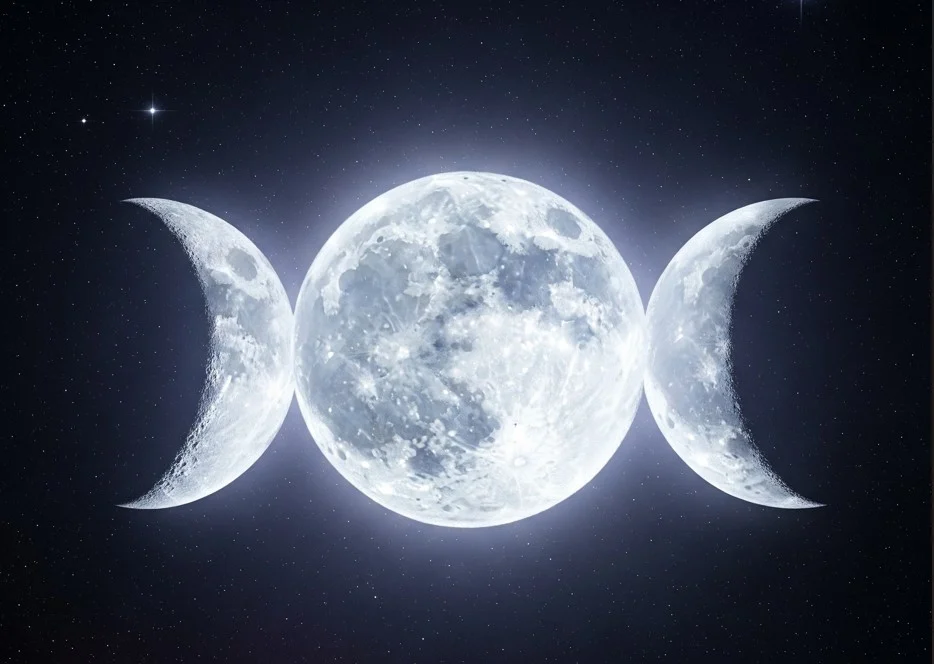
Another signature Wiccan image is the triple moon. This Wiccan moon symbol shows a waxing crescent, a full moon, and a waning crescent in a row. It is also called the Triple Goddess symbol and a strong witch symbol. As ThoughtCo explains, the triple moon “represents the three phases of the moon — waxing, full, and waning”. By extension, it embodies the Goddess in her three aspects: Maiden (waxing = new beginnings), Mother (full = fertility and peak power), and Crone (waning = wisdom and release). Each phase aligns with certain magics: new projects on the waxing moon, the most potent magic at the full moon, and banishing/letting go on the waning. This illustrates the triple moon pentacle meaning: together, these crescents remind witches of the life cycle and the feminine divine. Wiccans often wear a triple moon pendant or carve it on altars to call upon those energies.
Because the moon governs so much of Wicca, the triple moon symbol is used in many rituals (for example, in Drawing Down the Moon ceremonies). It may even be combined with a pentagram in a “triple moon pentacle”, fusing lunar goddess power with the elemental pentacle’s protection. In any case, the triple moon symbol draws a clear connection between lunar phases and Wiccan magic, reminding practitioners that what symbolizes magic often depends on cosmic cycles and the Goddess’s presence.
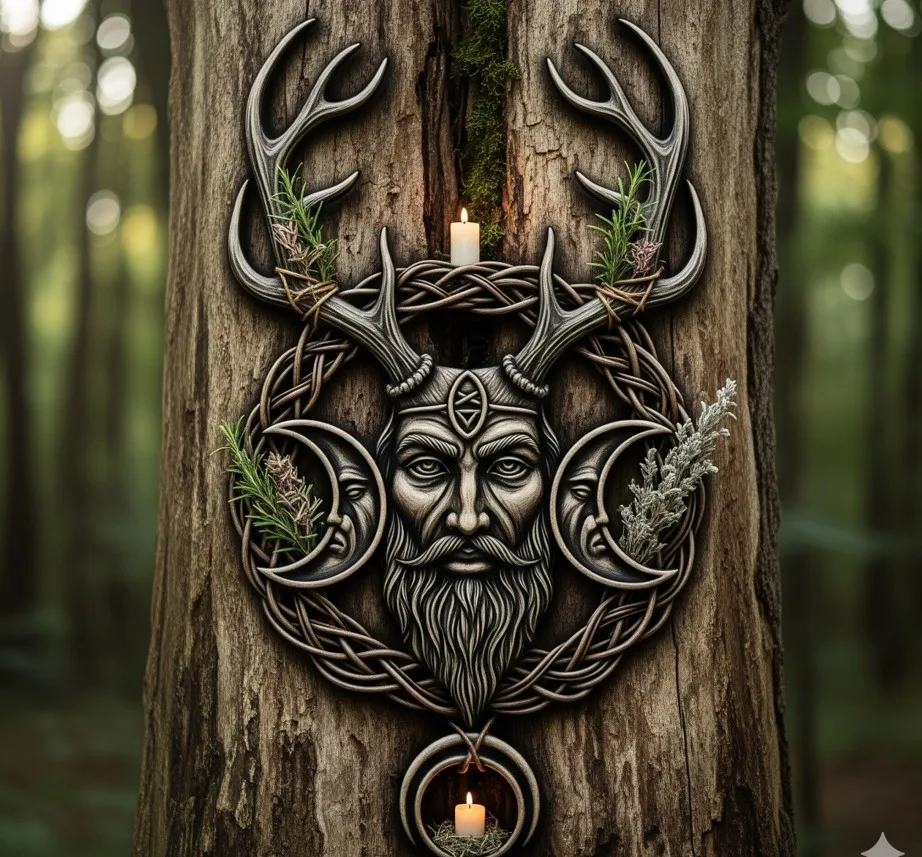
The Horned God
The Horned God is the primary male deity of Wicca, and his symbol has several layers to unpack.
At first glance, we see a simple line drawing of what looks like a face with horns at the top. However, if you’ll think back to the symbol of the triple moon, you’ll notice that this one looks similar. It could also be interpreted as a slim, crescent moon resting on top of a full moon–or a sliver of the moon resting on top of the sun (which we associate with the Horned God).
The Witch’s Knot
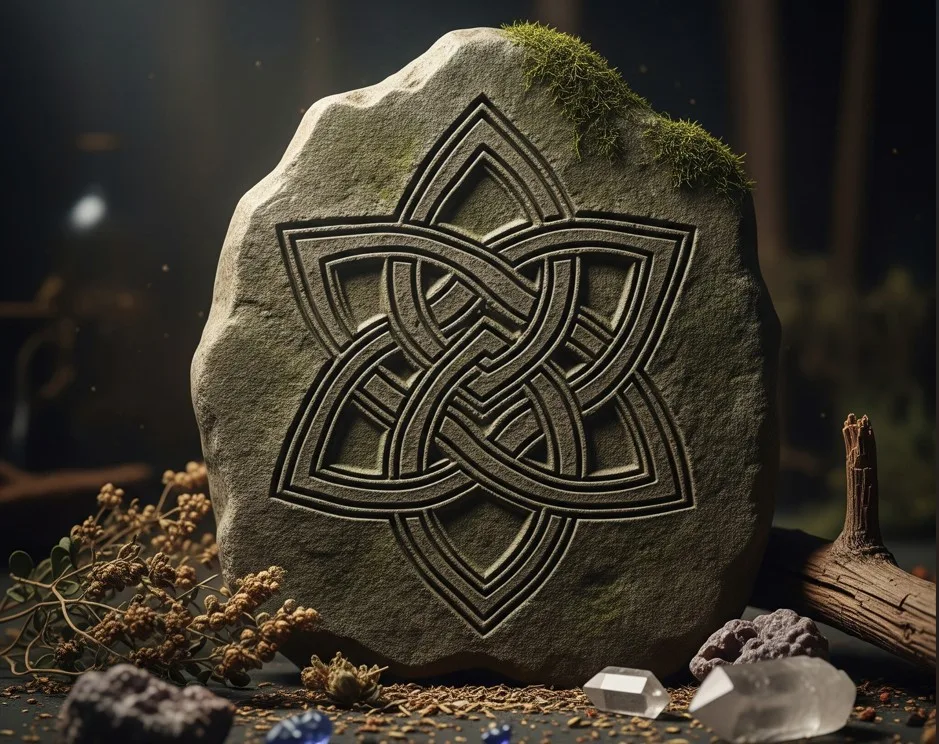
The witch’s knot is interesting in that it’s a Wiccan symbol…but it’s (k)not!
This shape has been around for centuries, and during that time it’s been commonly used as a means of banishing or warding off evil. However, unlike some witch symbols that are only represented pictorially, witches will actually use twine or rope to create this very knot.
This is Wiccan symbol you can hold in your hands. If you’re not a skilled knot expert, never fear! The witch’s knot can be used as a simple design too.
Within this Wiccan symbol, we see a circle. In addition to representing infinity, circles are also a common sign of protection within witchcraft. When we cast a sacred circle to perform magick, we create a barrier that spirits of ill will cannot cross.
We also see a shape similar to the Celtic cross in this design. In this case, the shape has four points instead of three. The interpretation of this varies from witch to witch, but it’s often used to represent something that can be grouped in fours—like the traditional elements or the cardinal directions.
Symbols of Love
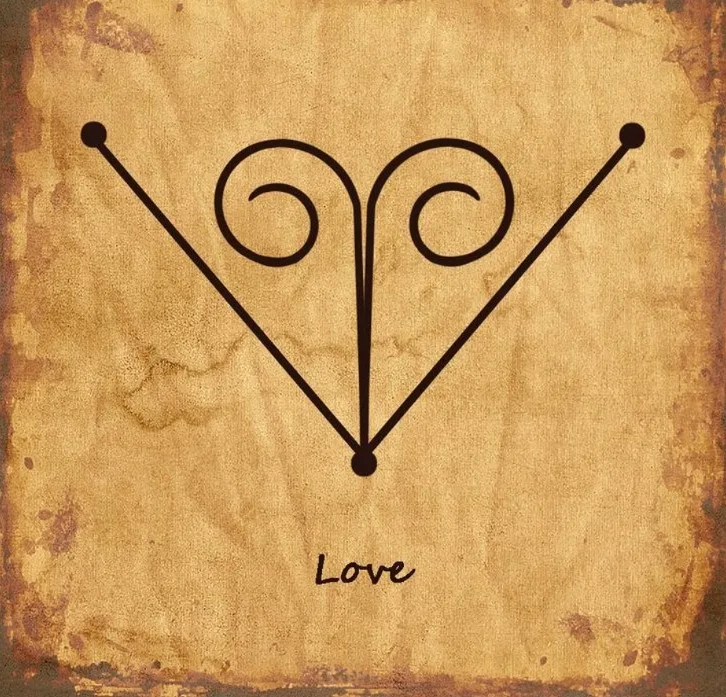
Wicca has its own symbols for love and emotion as well. The simplest is the heart icon – a Wiccan symbol for love that transcends cultures. As one practitioner notes, the heart “embodies love, compassion, emotional connection, and romantic relationships” in Wiccan practice. Similarly, the rose is a classic love symbol. Magickal Spot explains that roses in Wicca “represent love, desire, beauty, and divine feminine energy”.
These symbols are often used in love spells or charms: one might place a rose on an altar to attract passion, or carve a heart into a candle to strengthen a romance. Other motifs include the dove (peace and devotion) and even a love knot (eternal bond). In each case, the meaning is clear: a symbol of love and attraction is chosen for rituals about the heart. By learning which images symbolize magic in love matters, Wiccans craft spells that align with natural affection and Goddess-love.
Wheel of the Year
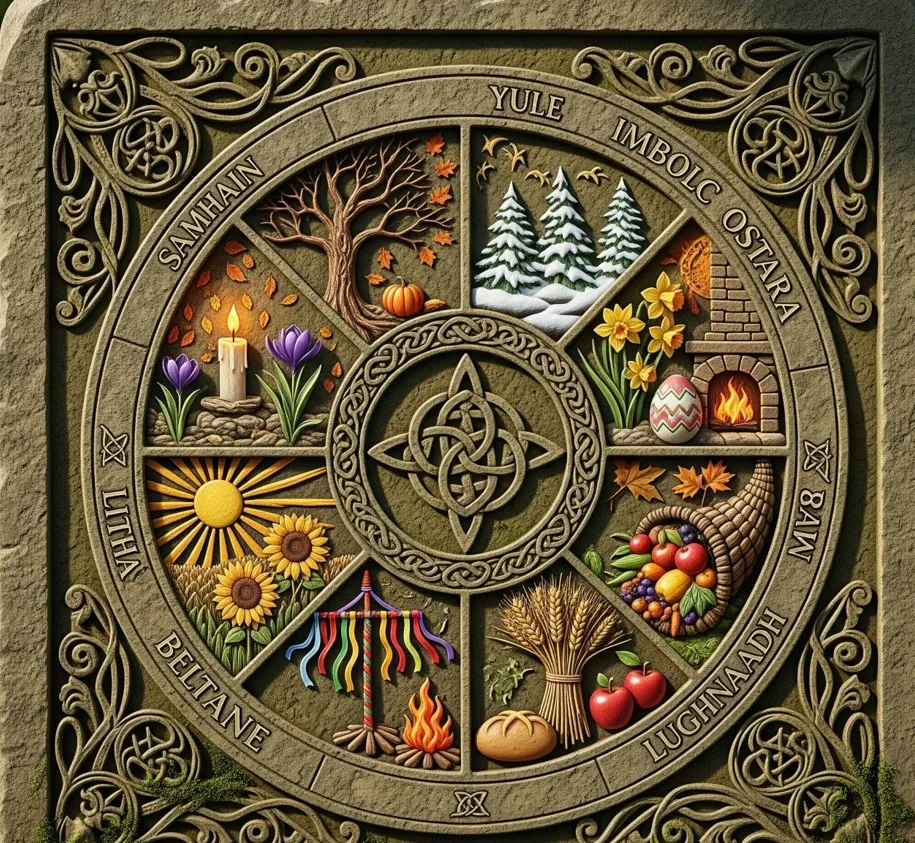
The wheel of the year helps witches navigate through the ever-changing seasons. Just like one year follows the next, one rotation around the wheel of the year is always followed by another.
If you count carefully, you’ll see that this circle is divided into eight sections. Each of these sections represents a different holiday on the Wiccan calendar.
They are as follows:
- Yule (or the Winter Solstice)
- Imbolg
- Ostara (or the Spring Equinox)
- Beltane
- Litha (or the Summer Soltice)
- Lammas (or Lughnasadh)
- Mabon (or the Fall Equinox)
- Samhain
- Dividing the year into different sections, each with its own important day, is a way to help witches make sense of the passage of time.
It creates a rhythm that allows us to sync ourselves with the natural process of birth, life, death, and rebirth.
Magic, Protection, and Other Symbols
Beyond stars and moons, Wicca uses many occult symbols. For example, the spiral represents growth and the journey of life. Elemental triangles stand for Fire or Water. The chalice (cup) stands for the Goddess. However, as noted, the pentagram is uniquely a symbol of magic itself – “the blueprint of magic ceremony,” to quote one Wiccan teacher. In other words, the pentagram so thoroughly represents all the elements that it is the emblem of spellcasting. It even shows up in places like church carvings (historically, long before Wicca) because of its deep power.
So when people wonder “what symbolizes magic” in Wicca, many point to the pentagram or similar stars. As the RileyStar guide observes, during ritual a witch “stands in the center [of the pentagram] and… invokes the five elements”, so the pentagram literally outlines the magic process. In practice, lighting a pentacle candle or wearing a star pendant can be a way to say “I am working magic.” Other protective symbols (protection symbols wiccan) include the circle itself – casting a circle marks sacred space – and even everyday tools like the broom (cleansing) or athame (fire/air) which can take on symbolic meaning. But the key is that each symbol is intentionally chosen for its meaning.
Charms and Amulets
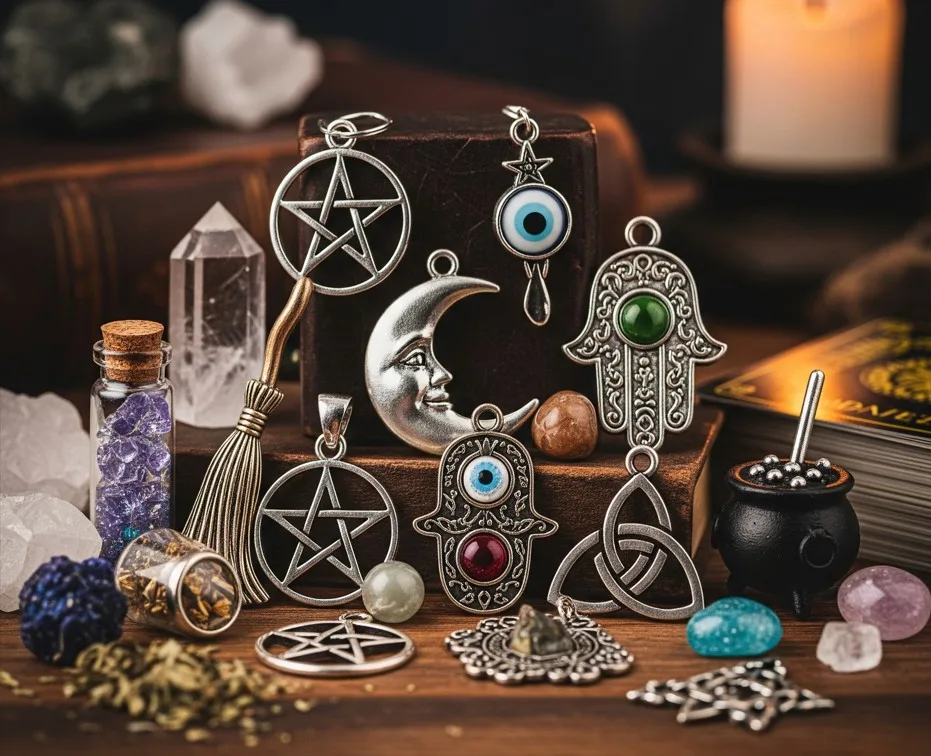
Wiccans often channel symbolism into charms and amulets. A charm’s power comes from the symbols engraved or attached to it – in other words, charm symbols and their meanings guide its magic. For example, carving a pentacle on a wooden disk creates a protective amulet. Similarly, a lover might add a heart charm and pink or red ribbons to a sachet to attract affection. Even the color of a cord or crystal in a charm bag carries meaning (green beads for growth, black cord for protection, etc.). Every element of a charm is chosen to amplify intent.
These practices reflect the way Wicca teaches symbolism. As one source on pentacles notes, Wiccans often “wear the pentacle around the neck as protection and as a symbol”. In other words, they literally wear the symbol whose meaning they seek. Likewise, when making a love charm, they might invoke the rose or heart because of their association with love. Learning each symbol’s significance (for example, that color red = love, pentacle = warding) is part of learning Wicca. The symbols become keywords in a magical vocabulary.
How to Incorporate Wiccan Symbols Into Your Magick
Symbols in Wicca are more than decoration – each sign carries living energy and intention. By contemplating the Meaning of Wiccan Symbols, you bring focus to your craft. For many witches, everyday objects become consecrated by adding even a simple sigil or knot. Witch symbols appear on altars, jewelry, and doorways as reminders of the divine. Each symbol on your altar or amulet is a bridge between the mundane and the sacred.
In practice, you might place a carved pentacle (a five-pointed star in a circle) at the center of your altar to invoke its protective earth-energy. Many Wiccans also wear pentacle necklaces or use pentacle slabs to consecrate ingredients, since the star is traditionally associated with balance and protection. Likewise, draw or display the Triple Moon symbol (waxing–full–waning moon) during lunar rites to honor the Maiden–Mother–Crone aspects of the Goddess. These conscious gestures – tracing a pentagram onto a candle, hanging a lunar banner, or draping an altar cloth with sacred icons – channel ancient meaning into your workings.
Everyday magic is woven through simple touches. You might carve a spiral or Moon rune into a talisman, or tie a knot charm on a calendar date. Even lighting incense and touching a symbol before spellcasting can center your intent. By embedding these witch symbols into altars, charms, or everyday tools, your life becomes an enchanted path. The symbols become part of you, reminding you of the gods’ presence and focusing your intent in each moment.
Color Meanings in Wicca
Wiccans assign special meanings to colors in their magic – known as color correspondences. In fact, many Wiccan guides list color meanings in Wicca to help with spellcraft. For example, one source lists white as the color of purity, illumination, and spiritual growth, while black represents protection, banishing, and transformation. Red is linked to passion, courage, strength and love. Green stands for growth, fertility, abundance (think of green for plants), and blue for healing, peace, and intuition. In practice, a Wiccan might light a white candle for purification or a red candle for romance.
These color meanings Wicca tables ensure that every hue in an altar or charm adds the right energy. Thus, colors themselves are symbolic language in ritual: they extend the meaning of Wiccan symbols into the visual and elemental realm
Conclusion
Wicca uses a rich visual language grounded in nature and the divine. Each Wiccan symbol – from the pentacle to the spiral, from moon phases to color – is laden with meaning. By studying these meanings, practitioners gain insight into how the craft works. The meaning of Wiccan symbols ties together the philosophy of Wicca: it is about balance, cycles, and the unity of spirit and nature. Whether casting a circle (a symbol of unity), lighting a colored candle, or drawing a pentagram, every act in Wicca is purposeful. Through Wicca symbolism, the abstract (love, protection, growth) becomes tangible, allowing the witch to “cast a circle” of understanding around their practice.
In the end, knowing these symbols is practical not like witch symbols: a symbol for love is used in love spells, a symbol for protection in warding spells, and so on. The Wiccan practitioner ties each magical working to the appropriate sign. What symbolizes magic in Wicca is essentially what the tradition has agreed represents those magics. By honoring the symbols of earth, air, fire, water, and spirit – and by respecting the moon’s and goddess’s imagery – Wiccans make their rituals meaningful. In this way, mastery of Wicca symbolism goes hand-in-hand with living the craft.