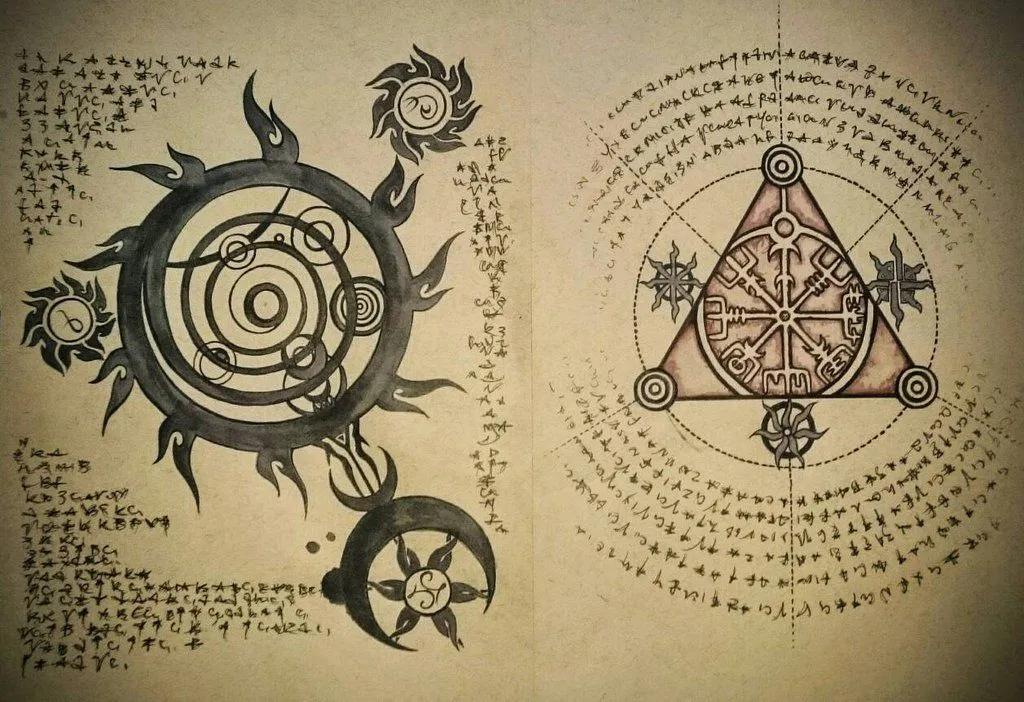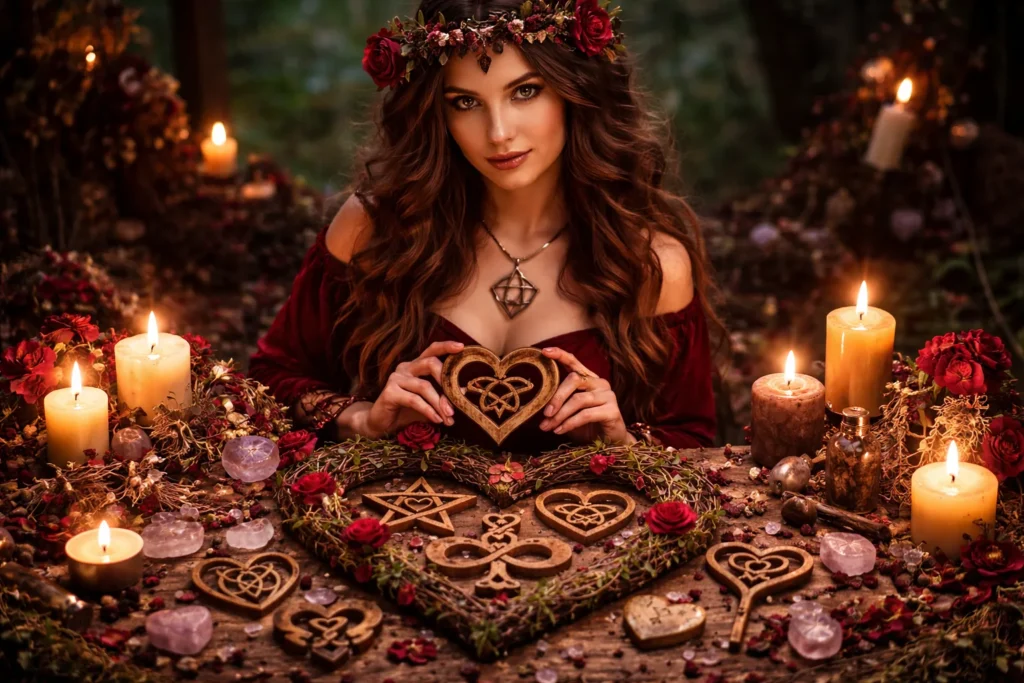
Pagan love symbols are sacred marks, runes, and sigils used by ancient cultures to call in love, protect relationships, and honor the spiritual energy of deep connection. These symbols come from Celtic, Norse, Wiccan, and broader pagan traditions, and they carry meaning that has lasted for thousands of years. Whether you’re drawn to them for spiritual practice, tattoo ideas, or just pure curiosity, these symbols carry a weight that’s hard to ignore.
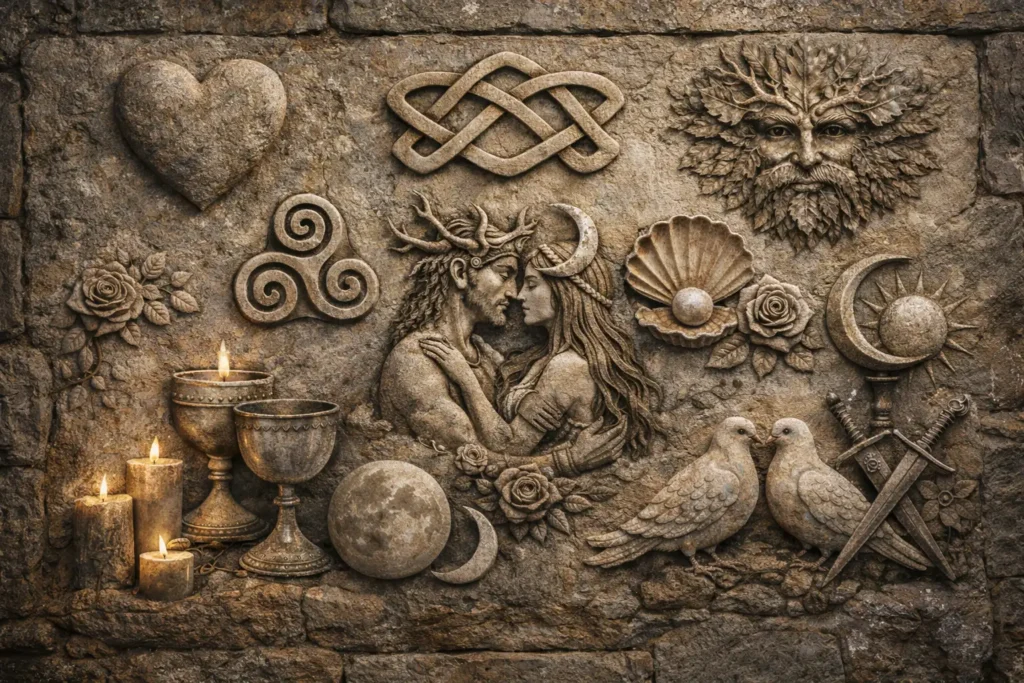
Where Does This All Start?
Here’s the thing: humans have always needed a way to express love that goes beyond words. And the ancients? They were incredibly creative about it.
Long before greeting cards or love songs, people carved symbols into stones, painted them on skin, and stitched them into cloth. These weren’t just decorations. They were intentions made visible. The idea was simple: draw the right symbol, and you invite that energy into your life.
The pagan tradition covers a wide range of cultures and spiritual paths. Celtic, Norse, Greek, Egyptian, and Wiccan systems all have their own visual language around love. And many of those symbols have survived to this day.
The Triquetra: A Celtic Symbol That Never Breaks
If you’ve spent any time researching Celtic symbols, you’ve seen the Triquetra. It’s that three-pointed, interlocked knot shape that looks like it has no beginning and no end.
That’s exactly the point.
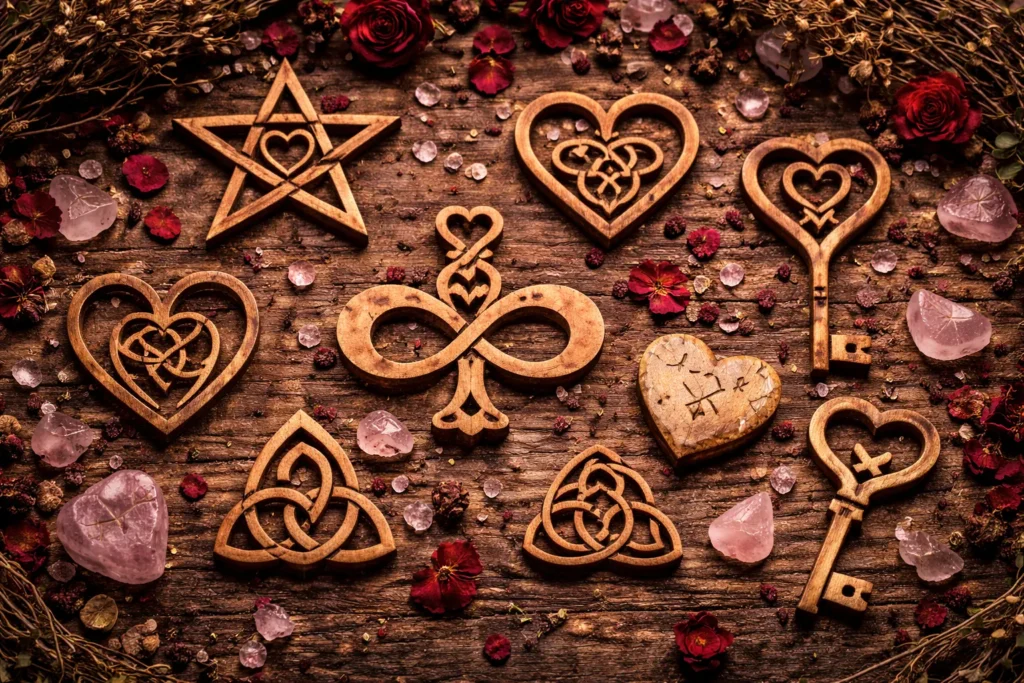
Among the many Celtic symbols tied to love, the Triquetra stands out because it represents the eternal cycle: mind, body, and spirit. In the context of love, it’s often read as past, present, and future tied together. A kind of pagan symbol for eternal love, really. No edges, no exit points. Just continuous connection.
Celtic artisans wove it into metalwork, manuscripts, and jewelry. You still see it today on wedding bands and tattoos, which tells you something about how deeply it resonates.
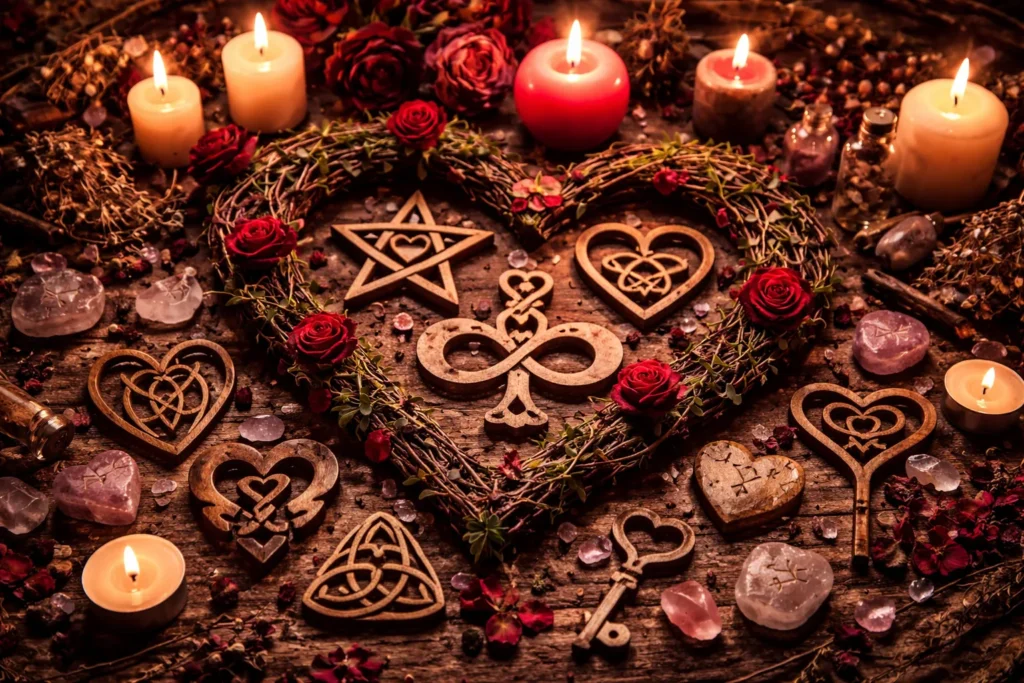
Runes and the Pagan Rune for Love
Norse rune systems offer something a little more direct. The pagan rune for love most people point to is Gebo, which looks like a simple X. Deceptively plain for something so meaningful.
Gebo means “gift,” and in the runic tradition, love is considered one of the most sacred gifts exchanged between people. It represents mutual exchange, balance, and partnership. Not just romantic love either. This rune speaks to deep bonds of any kind.
Then there’s Ingwaz, a diamond-shaped rune associated with fertility, harmony, and inner peace. Many practitioners use it when they want to nurture love that lasts rather than just sparks quickly and fades.
And Wunjo? That one’s about joy and belonging. If Gebo is the exchange, Wunjo is what it feels like once it settles in your life.
These three together form a kind of love constellation in runic practice.
Wiccan Love Sigils: Made, Not Just Found
Unlike runes or Celtic symbols, wiccan love sigils are often created rather than inherited. That distinction matters.
A sigil is a personalized magical symbol, usually crafted with a specific intention in mind. In Wiccan practice, someone might write out a desire, remove the vowels and repeated letters, and then arrange the remaining lines into a unique symbol. That symbol then becomes charged with intention through ritual.
Wiccan love sigils are used in candle magic, carved into wax, drawn on paper and burned, or worn on the skin. The idea is that the symbol holds your desire in a concentrated, visual form. It bypasses the conscious mind and speaks directly to the deeper energies at work.
Some practitioners create them fresh every time. Others keep one that has worked before and return to it. There’s no single right way. That flexibility is part of what makes the Wiccan tradition feel alive.
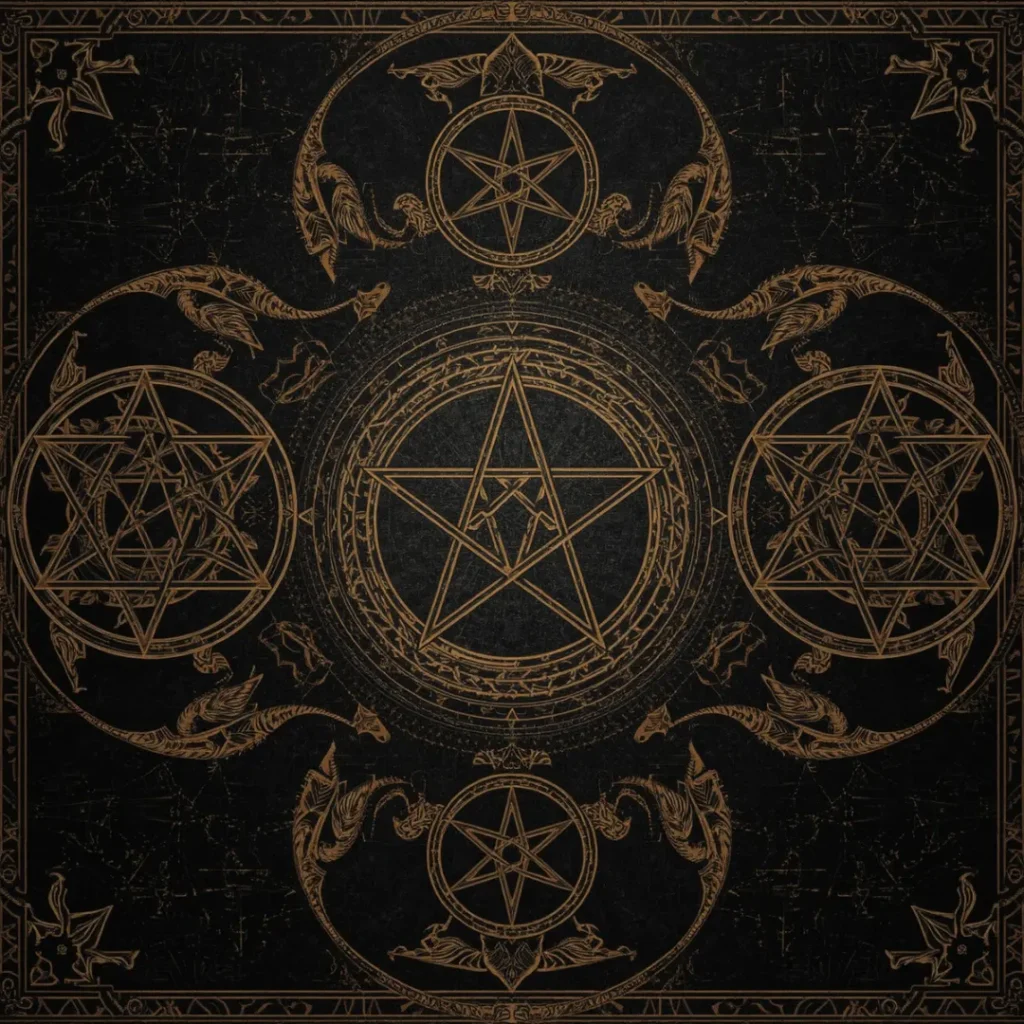
Witch Symbols and Their Connection to Love
Not all witch symbols are directly about love, but many intersect with it in interesting ways.
The Witch’s Heart, for instance, is a triple goddess symbol overlaid with heart imagery. It ties romantic love to the lunar cycles, suggesting that love, like the moon, waxes, wanes, and returns. There’s something honest about that framing. Love isn’t always full. Sometimes it’s a sliver.
The Eye of Horus shows up in some Wiccan symbols and eclectic pagan practices as a protection symbol for relationships. The idea is that you invite it to guard what you’ve built together.
Even the pentacle carries love associations in certain traditions. The five points represent earth, air, fire, water, and spirit. When all five are in balance, a relationship can flourish. Many practitioners draw the pentacle during love rituals or use it on altars dedicated to relationship work.
The Claddagh: A Love Symbol With Layers
Most people know the Claddagh as Irish jewelry. A heart held by two hands, topped with a crown. But its roots as a pagan love symbol run deep.
The imagery is older than Christianity’s influence on Ireland. The heart represents love. The hands represent friendship. The crown represents loyalty. Worn in different ways, it signals whether the wearer’s heart is free or taken.
It’s one of those rare symbols that has traveled from ancient pagan and Celtic cultural roots into mainstream Western jewelry without losing much of its original weight. You can still find it on rings exchanged at weddings, passed down through generations, used as friendship tokens.
The Aphrodite’s Mirror: A Simple Love Symbol With Ancient Power
This one tends to surprise people. The circle-with-a-cross symbol you might associate with biology (the “female” symbol) is actually drawn from the mirror of Aphrodite, the Greek goddess of love. The circle represents her mirror, the cross represents its handle.
It’s one of the oldest love symbols in the Western world, predating Rome and Greece as formal empires. In pagan practice, it’s used to honor the feminine aspect of love: receptive, nurturing, magnetic.
How People Use These Symbols Today
You’d be surprised how practical this gets.
Some people incorporate the pagan symbol for eternal love, like the Triquetra, into commitment ceremonies instead of traditional Christian symbols. Others use runic love symbols in journaling, carving them into the margins of letters or notebooks.
Wiccan practitioners might set up a love altar using a combination of these symbols: a Gebo rune, a rose quartz crystal, a red candle, and a freshly created wiccan love sigil. The symbols create a visual focus for the intention.
Tattoo culture has absorbed these deeply. Celtic symbols and Norse runes in particular are hugely popular for relationship tattoos because they feel earned, like you’re reaching back through history for something solid.
Do These Symbols Actually Work?
That’s the question everyone quietly asks.
Whether you approach this from a spiritual perspective or a psychological one, the symbols serve a real function. They focus attention. They create ritual. They make an invisible thing (love, commitment, hope) visible and concrete.
In pagan traditions, symbols were never considered magic by themselves. They were tools for the practitioner to direct their own energy and intention. Think of them like a lens, not a wish machine.
So yes, in that sense, they work. They work the way any meaningful ritual works: by giving form to something you care about.
A Few Symbols Worth Knowing
If you want a quick reference:
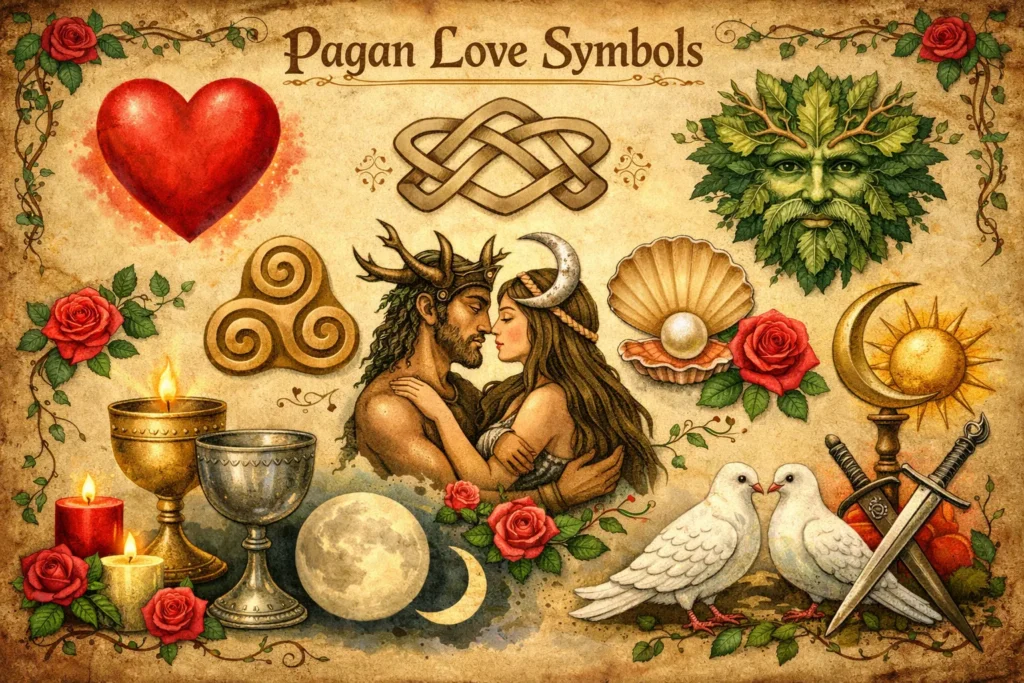
- Triquetra: Celtic symbol for eternal love and connection
- Gebo (X rune): The Norse pagan rune for love as gift and exchange
- Ingwaz: Harmony and lasting love
- Witch’s Heart: Love tied to lunar cycles
- Claddagh: Love, friendship, loyalty combined
- Aphrodite’s Mirror: Ancient feminine love energy
Final Thought
These symbols have outlasted empires, religious shifts, and centuries of being misunderstood. They keep showing up because people keep finding them meaningful. That’s a different kind of proof than most of us are used to looking for, but it’s not nothing.
If you feel drawn to one of these pagan love symbols, that connection is worth paying attention to. Start with the one that speaks loudest. Research its roots. Use it with intention.
That’s exactly how people have always used them.