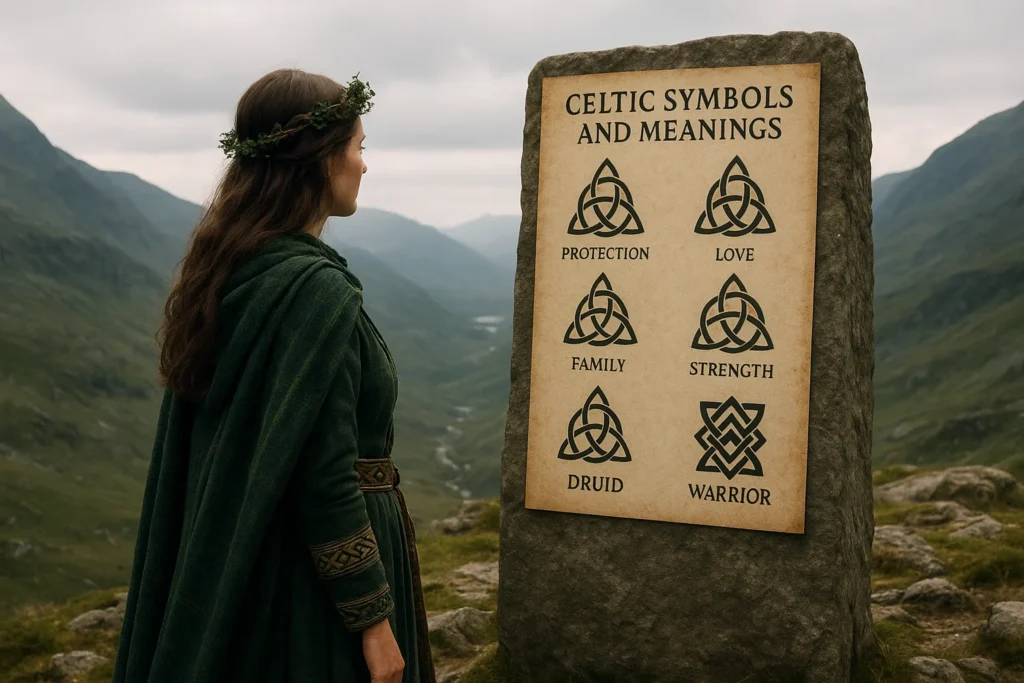
Celtic symbolism encompasses a rich array of designs and motifs deeply rooted in the culture and beliefs of the Celtic peoples. These symbols, often found in art, jewelry, and other crafts, represent various aspects of life, nature, spirituality, and mythology. The intricate world of Celtic symbols has long captivated audiences, evoking a profound sense of mysticism, spirituality, and ancestral wisdom that continues to fascinate artists and craftworkers across centuries. These designs are not merely decorative; they serve as powerful conduits to a rich cultural heritage, embodying deep beliefs and life philosophies.
The enduring allure of Celtic symbols stems from their ability to represent universal human experiences such as life, death, rebirth, interconnectedness, protection, strength, and love, all conveyed through visually complex and captivating designs. This inherent resonance, combined with their aesthetic adaptability, explains their continuous presence and popularity in contemporary art, fashion, and media, making them highly suitable for modern interpretation and commercialization.
Understanding the Symbol’s Historical Origins
Tracing the roots of any witch symbol is much like navigating through a labyrinth of time and culture. The task demands a layered approach, unearthing hidden connections along the way that tie civilizations together through shared symbolism. The origins of any symbol can often be traced back to the time when early humans began to communicate using symbols, a practice that was less about language and more about conjuring up deep-seated existential ideas.
The value of understanding a symbol’s historical origins is immense. Indeed, it offers a mesmerizing glimpse into our collective ancestral mindset and provides context for our current usage. While some symbols may have retained their original meanings, others could have evolved spectacularly over time, colored by sociopolitical and religious influences. This intrinsic connection between symbols and history paints a vivid picture of human evolution, underlining the continuity of our shared heritage.
Ancient Celtic peoples held a profound connection to nature and spirituality, a bond that significantly influenced their artistry. This spiritual reverence manifested in the patterns and symbolic motifs they meticulously crafted to express their religious beliefs and life morals. The origins of Celtic designs can be traced back further than the Celts themselves, with early forms appearing in Roman mosaics before being adapted and refined within early Christian manuscripts. This historical progression highlights an early and significant cross-cultural influence that shaped the distinct Celtic artistic style.
The evolution of Celtic art spans several key periods: the Hallstatt era, originating in Austria around 800 to 475 BCE, considered the foundational root of Celtic culture; the La Tène era, spanning roughly 450 BCE to the 1st Century BCE, recognized as the prime period of Celtic artwork; and the Celtic Revival, beginning in the 19th century CE, representing a more modern reinterpretation of Celtic art history. A compelling aspect of Celtic art’s deep antiquity is evident in sites like Newgrange in County Meath, Ireland, where Neolithic passage tombs dating from 3200 BCE feature stone symbolic engravings, most notably the Trinity-spiral, which predates the Egyptian pyramids. This triple spiral design is understood to represent the never-ending cycle of life encompassing birth, life, and death, and has also been interpreted as symbolizing man, woman, and child.
Throughout these periods, Celtic symbols were consistently employed to empower daily lives, offering guidance, strength, and protection. They were frequently found engraved into stone or meticulously crafted into jewelry, serving as tangible talismans and expressions of deeply held beliefs. A foundational principle within Celtic symbolism, particularly evident in knotwork, is the pervasive motif of “never-ending cyclical loops”. Many Celtic designs intertwine in continuous, unbroken patterns, symbolizing the never-ending cycle of life and inspiration. These interwoven patterns profoundly represent the eternal cycles of life, death, and rebirth. Beyond the life cycle, these designs also symbolize the interconnectedness of all things and the eternal nature of existence.
Read more : Best Psychic in Philadelphia
Celtic Knot Meaning — Why the Knot Matters
The Celtic knot is a visual language of interlace patterns common in Insular art (manuscripts, stonework, metalwork) from roughly the 5th–12th centuries. Knots are continuous lines with no start or finish and therefore symbolize:
- Eternity (life, love, faith without end)
- Interconnectedness (relationships, fate, nature)
- Spiritual continuity (soul’s journey, cycles)
These intricate designs are said to represent the endless cycle of life, death, and rebirth, as well as the interconnectedness of all things in the natural world. The “infinite swirl” characteristic of Celtic knots encapsulates concepts of “neverendingness,” universal harmony, and the profound unity of existence. The never-ending nature of Celtic knots is also deeply linked to ancient Irish and Celtic beliefs in the afterlife, where death was not perceived as a definitive end but rather as an entry point to another chapter in an endless journey.
Common knot types:
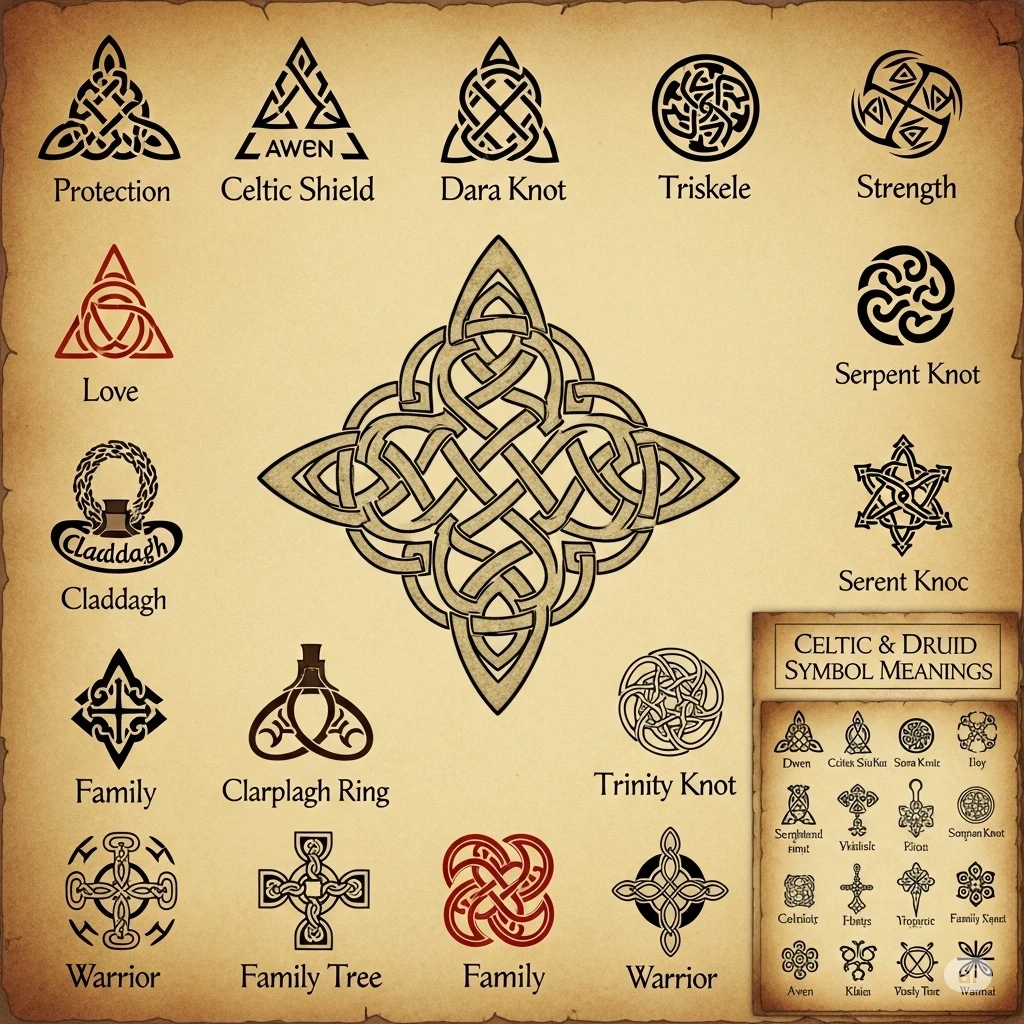
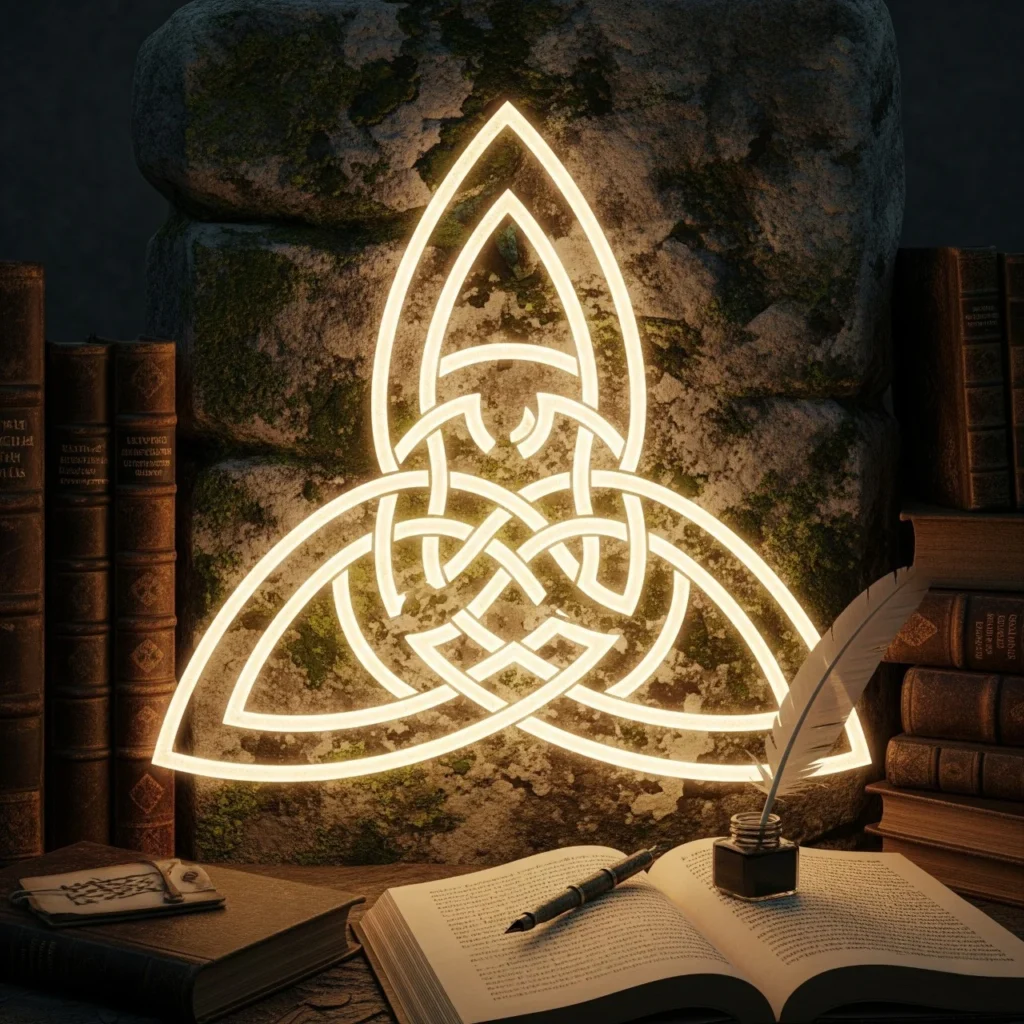
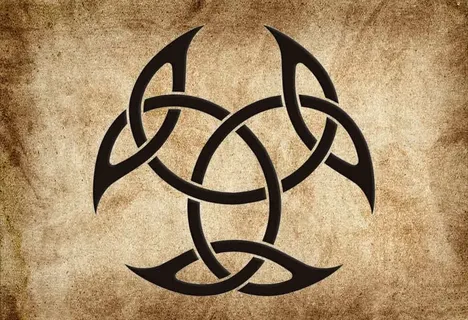
- Triquetra (Trinity Knot): This triangular figure, composed of three interlaced arcs, represents triplicity—life/death/rebirth or mind/body/spirit. In pagan and pre-Christian contexts, it is thought to represent the female triple goddess, such as Banba, Fodla, and Ériu, after whom Ireland (Éireann) is named. It also symbolizes the three realms of material existence: Land, Sea, and Sky, or earth, water, and air. With the advent of Christianity, the symbol was re-appropriated to represent the Holy Trinity: the Father, the Son, and the Holy Spirit. More broadly, it can symbolize unity, eternity, protection, spiritual growth, and the balance between divine feminine and masculine principles.
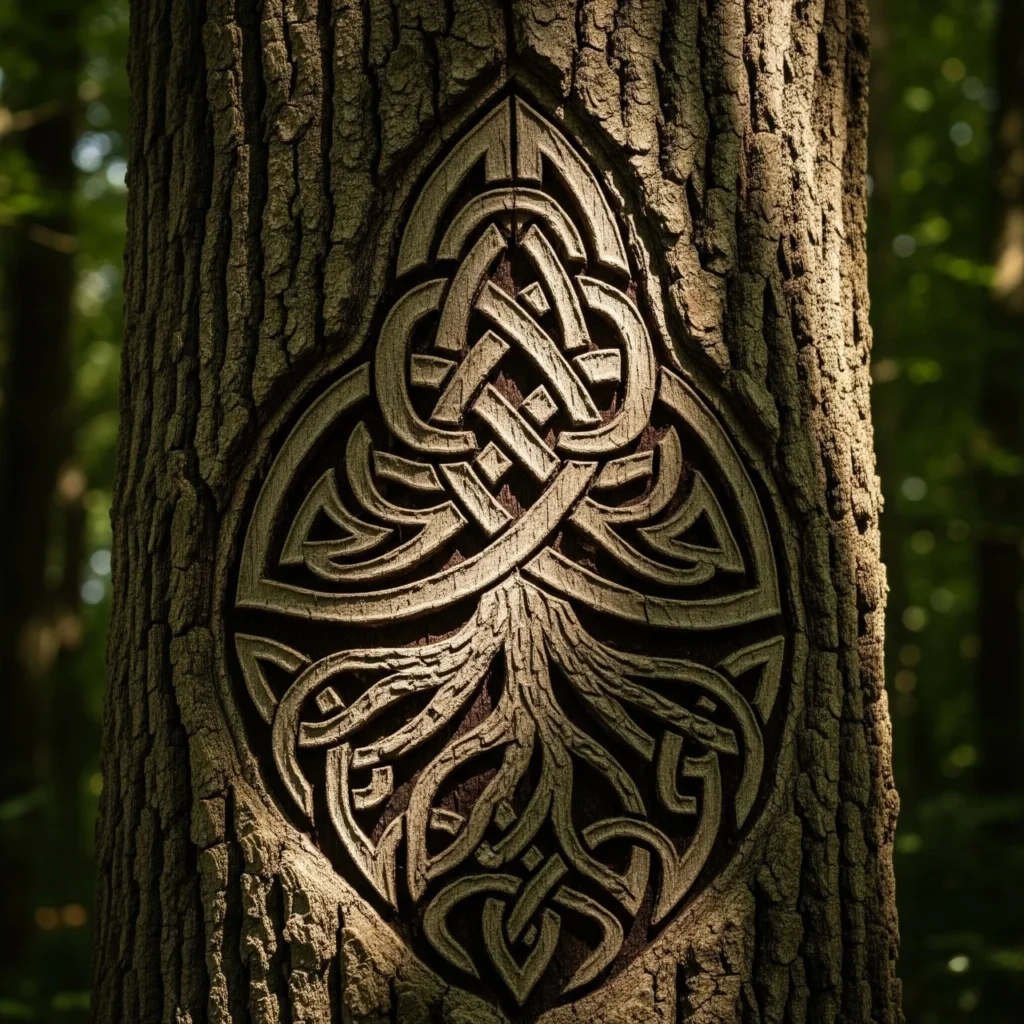
- Dara Knot: Derived from the Gaelic word ‘Doire,’ meaning ‘Oak Tree,’ this intricate, interwoven design visually mirrors the sprawling, complex root system of a massive oak tree. It symbolizes inner strength, resilience, endurance, longevity, and profound wisdom, encouraging individuals to stay grounded and strong in times of adversity. The intricate root system it represents also hints at brotherhood and the deep, unseen connections that bind individuals together, like roots intertwining beneath the earth. It can also be associated with family ties or family roots, symbolizing a connection to one’s origins and home.
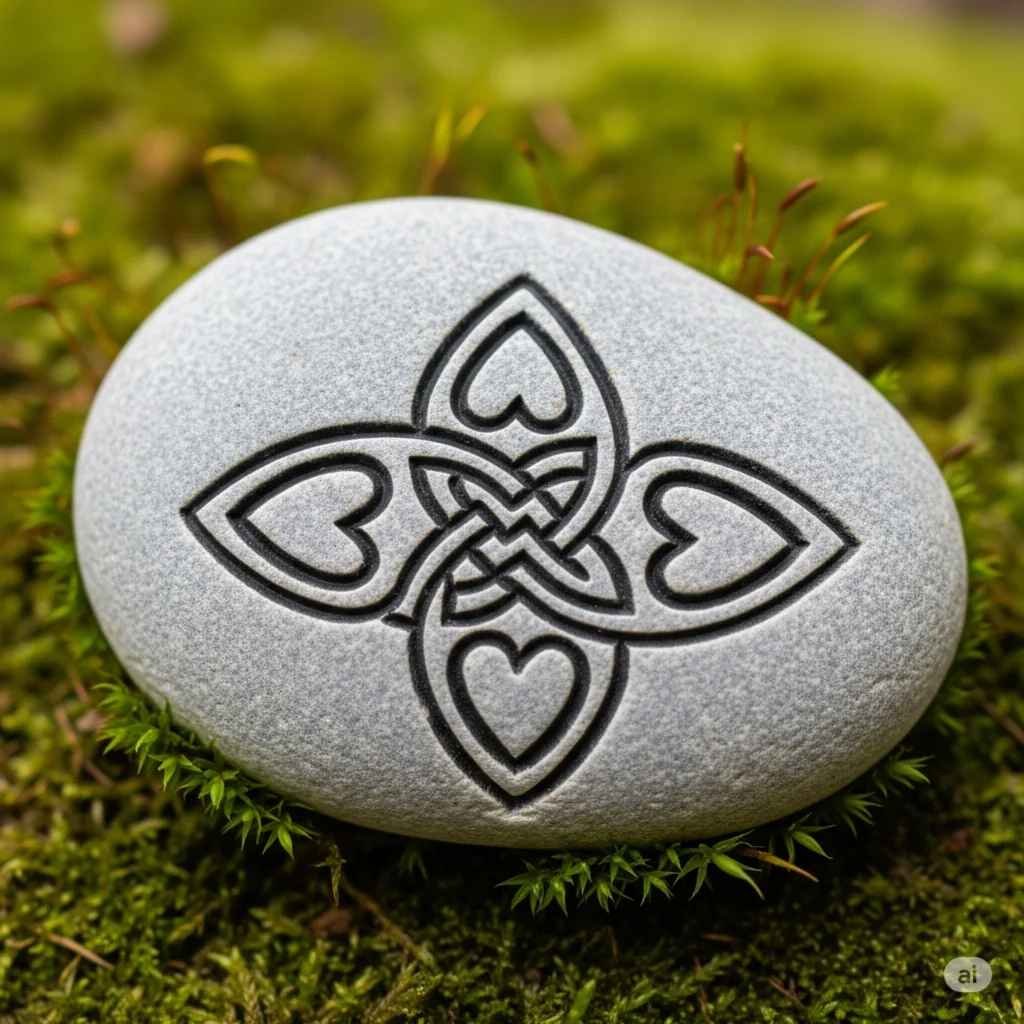
- Love Knot: The Celtic Love Knot, also known as the Anam Cara Knot, which translates to “soul friend,” is a modern interpretation of traditional Celtic knotwork, featuring infinity patterns. Its design prominently displays a heart created by the intertwining lines of two Celtic knots, giving it the appearance of two interlocked hearts. This knot symbolizes everlasting love between two people and an unconditional bond. It also represents the never-ending cycles of life and holds spiritual meaning for existence itself. Historically, Celts are believed to have exchanged these knots in a similar fashion to how modern couples exchange rings today.
Other significant knots include:
- Sailor’s Knot: A four-pointed Celtic knot with two entwining, looping lines, symbolizing enduring love, friendship, and strength.
- Solomon’s Knot: A unique Celtic knot with no visible beginning or ending, representing immortality, eternity, the union of man and the divine, wisdom, and love.
- Bowen Knot: Sometimes referred to as a ‘heraldic knot,’ it symbolizes love, balance, unity, and interconnectedness.
Celtic Symbol for Protection — Signs Celts Used to Keep Safe
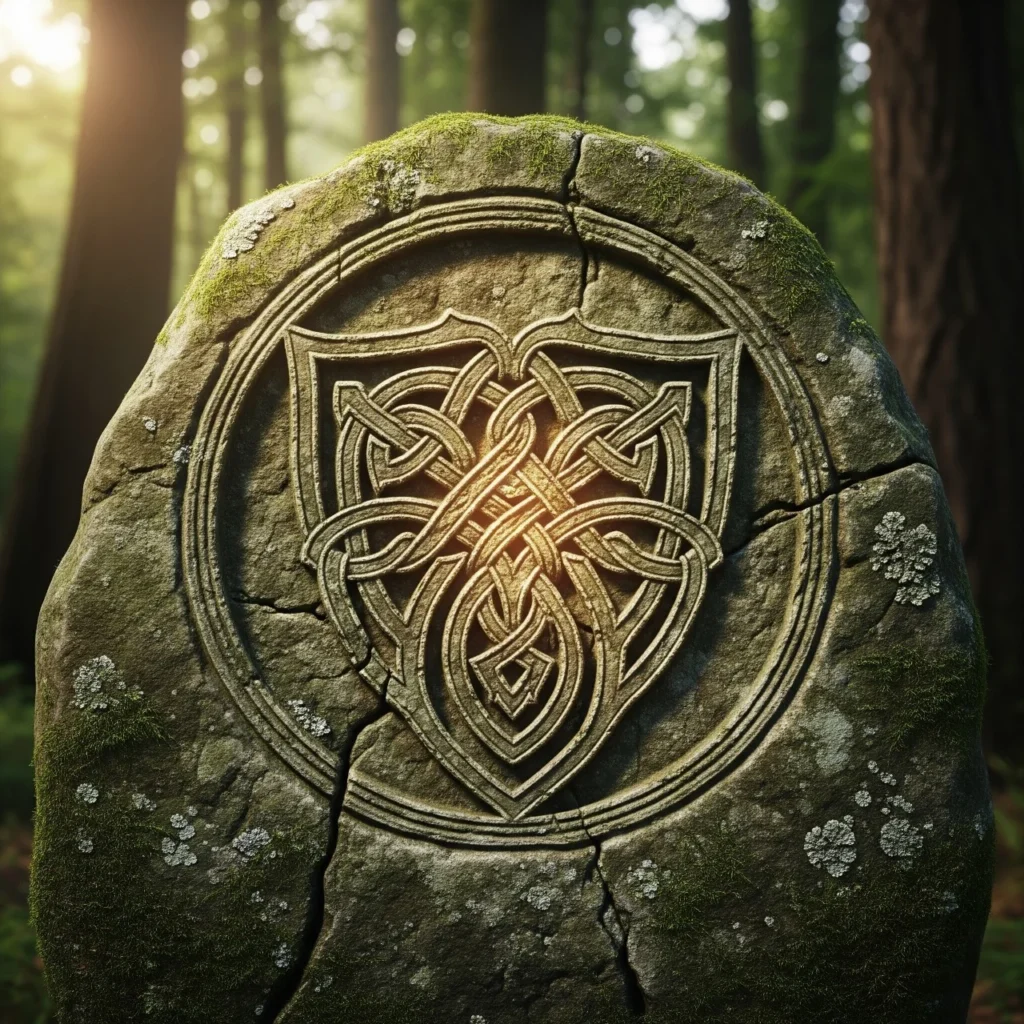
Protection symbols were practical and symbolic — carved on shields, sewn into clothing, or used in ritual. The best-known Celtic symbol for protection is the Shield Knot: a square knot variant used historically as a protective charm. Other protective marks:
- The Celtic Shield Knot: An ancient and powerful symbol, characterized by its four distinct corners and an intricate, interwoven design, often depicted as a square or circle with complex interlacing patterns forming an unbroken loop. Its continuous loop represents eternal life, while its geometric form is believed to ward off negative energies, illness, and misfortune, effectively serving as a talisman of strength and safety. Historically, this knot was often placed on warriors’ shields and within homes to offer protection from harm, danger, and bad luck, acting as a spiritual barrier against malevolent forces. The knot’s four corners are also understood to symbolize the fundamental elements of earth, water, fire, and air, thereby connecting it to natural forces believed to provide balance and protection. Its appearance can resemble a shield, with the central point where the four quadrants connect often seen as the handle of a warrior’s shield, further reinforcing its defensive symbolism. This knot was utilized across various cultures, including Celtic, Norse, and Viking traditions, underscoring its universal appeal as a protective emblem.
- St. Brigid’s Cross: This old Irish symbol is said to bring protection and good fortune. It is typically made of materials such as straw or rushes and then hung in the doorway for protection from evil.
- Ogham Marks: Particular letters or Ogham inscriptions were invoked for protection or blessings. The Ailm, a lesser-known yet profoundly powerful Celtic symbol, typically shaped like a cross within a circle, traces its origins back to the Ogham alphabet, an ancient Celtic script. It primarily symbolizes inner strength and perseverance, reflecting the spirit’s capacity to overcome obstacles and remain pure and unbroken. It also carries meanings of strength, purity, resilience, healing, purification, good health, and fertility. Ancient Celtic warriors might have adorned their weapons, skin, and armor with the Ailm before battle, seeking its protective and empowering qualities.
- Triple Spiral (Triskele): In some contexts, the Triskelion invoked cycles that protect life and transition. It is among the oldest Celtic motifs, with examples found in ancient stone carvings at sites like Newgrange, dating back to 3200 BCE. Its depiction of perpetual motion and cyclicality, originating from such deep antiquity and subsequently embraced by the Celts, underscores a fundamental human fascination with dynamic processes and transformation.
Celtic Symbols for Love — How They Express Devotion
Celts celebrated companionship and loyalty with symbolic designs intended for rings, tokens, and monuments:
- Claddagh: This traditional Irish ring stands as a universal symbol of profound human connections. Its distinctive design features a heart, symbolizing love, held by two hands, representing friendship, and topped with a crown, signifying loyalty. The heart in hands specifically denotes belonging and sacrifice, encapsulating the sentiment, “I come to you with my whole heart”. The design originated in the village of Claddagh, located near Galway City in Western Ireland. In modern culture, the Claddagh Ring is commonly worn as a symbol of love and commitment, making it a popular choice for engagement and wedding rings. It is also frequently gifted to loved ones as a symbol of friendship. A unique aspect of the Claddagh Ring is its specific wearing conventions, which traditionally communicate the wearer’s relationship status : worn on the right hand with the heart pointing towards the wrist indicates a relationship; on the left hand with the heart pointing towards the fingertips signifies engagement; and on the left hand with the heart pointing towards the wrist means married.
- Love Knot / Lover’s Knot: This endless interlace for unbroken relationship, also known as the Anam Cara Knot, symbolizes everlasting love between two people and an unconditional bond. Its design prominently displays a heart created by the intertwining lines of two Celtic knots, giving it the appearance of two interlocked hearts. The seamless loops embody faith, eternity, and the enduring love between individuals. Several variations exist, including the Triple Drop Love Knot (unity, strength, spirit, existence), Celtic Oval Love Knot (eternal life), Celtic Round Love Knot (powers of earth, water, fire, motion of the sun), Celtic Four Love Knot (four seasons, couple’s love), and Celtic Square Love Knot (loyalty).
- Heart-modified trinity: This blends trinity symbolism with romance. An example is the Serch Bythol, translated from Welsh as “endless love,” a design that includes two Trinity knots side by side, forming a circle at their center. It symbolizes everlasting love between two people and an unbreakable bond that transcends life.
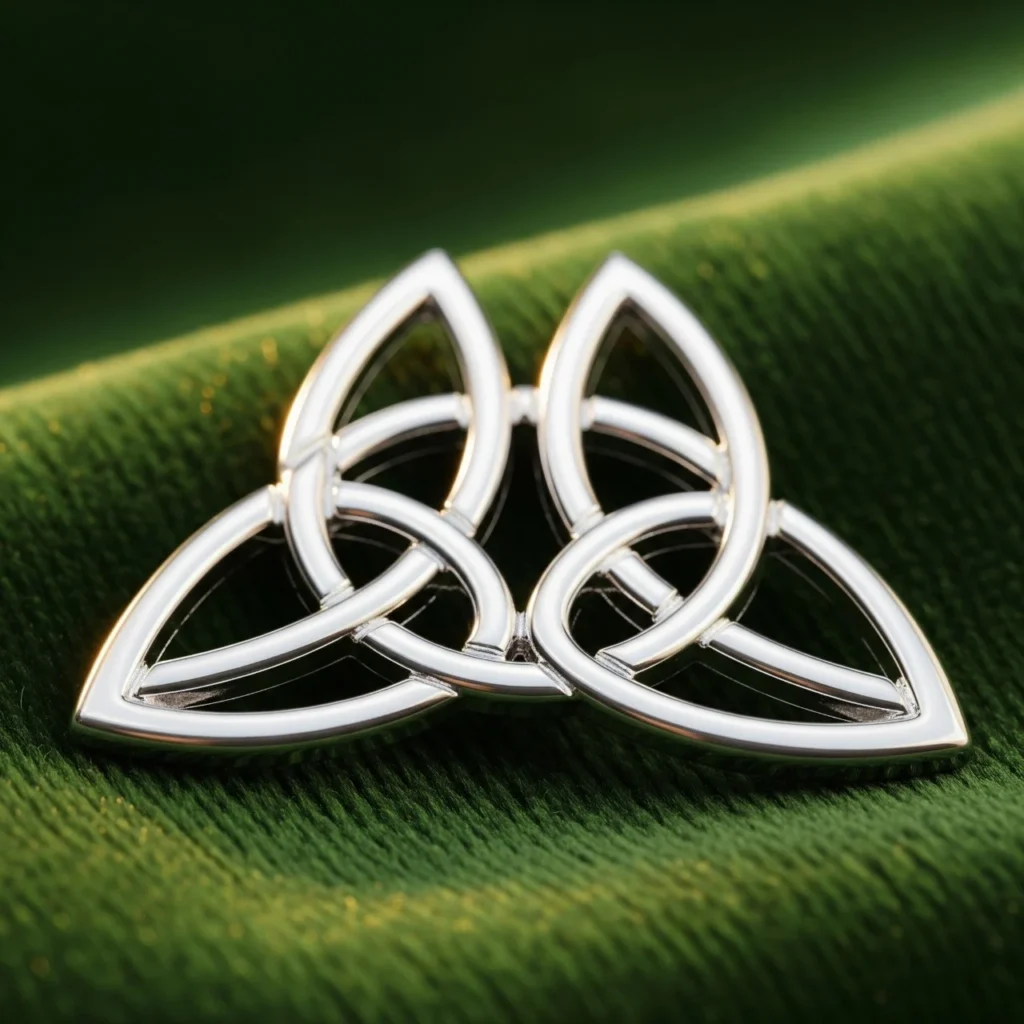
These are widely used in engagement/commitment jewelry because they combine cultural authenticity with clear meaning.
Celtic Symbols for Family — Roots, Lineage, and the Tree of Life
Family and ancestry are central themes in Celtic iconography:
- Tree of Life (Crann Bethadh): This prominent symbol is often depicted with branches reaching skyward and roots delving deep into the earth, forming an eternal circular shape that signifies the interconnectedness of all life. It represents harmony, balance, and the vital connection between heaven and earth. It symbolizes growth, strength, wisdom, endurance, and resilience. The symbol also reflects the eternal cycle of life, death, and rebirth, mirroring the changing seasons. Beyond its spiritual and natural associations, it symbolizes family lineage and connections across generations, representing the roots that bind a family together.
- Dara Knot: Oak-root inspired, this knot symbolizes “strength in the roots” and is often used to honor family heritage. Its intricate root system also hints at brotherhood and the deep, unseen connections that bind individuals together.
- Trinity Knot: Sometimes used to represent three generations or interlinked family roles.
- The Celtic Motherhood Knot: A heartfelt modern design, deeply inspired by traditional Celtic knotwork, it is crafted from a single, continuous line, forming a stylized heart or a triquetra-like shape with no beginning and no end. This design is a powerful symbol of the unbreakable bond between a mother and child, representing eternal love and connection. While a modern invention by jewelry artist Jennifer Derrig, it reflects ancient values of motherhood, unity, and eternity that are deeply embedded in Irish culture. Its flowing lines eloquently reflect the continuity of life, the unwavering strength of maternal love, and the sacred role of motherhood within Celtic heritage.
Celtic Symbols for Strength — Courage and Endurance
Symbols of power and stamina in Celtic art include:
- Boar: A widespread sign of ferocity and valor, appearing on torcs and banners.
- Dara Knot: Widely recognized as the most notable Celtic symbol for strength. Its intricate design, derived from the Gaelic word ‘Doire’ meaning ‘Oak Tree,’ mirrors the deep-rooted power of the revered oak, symbolizing inner strength, resilience, endurance, longevity, and profound wisdom. This powerful association made it an ideal choice for Celtic warriors to wear into battle, believing it would imbue them with the oak’s formidable qualities.
- Ailm (Ogham letter): Associated with the fir tree, a symbol of renewal and healing, it represents inner strength, purity, and perseverance. It reflects the spirit’s capacity to overcome obstacles and remain pure and unbroken. It is also linked to Brigid, the goddess of fertility and prosperity.
- Triskelion: Sometimes referred to as a Celtic love knot, it also signifies strength, representing the will to move forward and overcome adverse conditions.
- Celtic Shield Knot: A powerful emblem of protection, strength, and enduring resilience.
- Celtic Tree of Life: Symbolizes strength, longevity, and wisdom.
- Eagle: Held a revered place, embodying power, strength, and spiritual insight. It was believed to personify the ability to see the future and find truth, often used on military banners to imbue valor and wisdom.
- Welsh Dragon (Y Ddraig Goch): Symbolized strength, wisdom, protection, and victory in battles.
- Wolf: A symbol of strength, independence, and unity, associated with warrior qualities and loyalty to the pack. Irish Celts revered wolves as protectors and guardians of the land.
- Bull (Tarvos): Symbolized strength, courage, and fertility. Sacred animals, bulls represented natural power and protection.
- Griffins: Considered protectors of warriors, believed to bring good luck in battle.
- Epona: The Celtic goddess of horses, was a key figure in warrior protection, granting them strength and success in battle.
- Scottish Thistle: The national symbol of Scotland and also a Celtic symbol for strength and resilience, representing fortitude, protection, and resistance.
Druid Symbols and Meanings — The Spiritual Layer
Druidic symbolism comes from the priestly class of pre-Christian Celtic society and their later revival interpretations:
Understanding Druidry requires distinguishing between historical Druidic practices and modern interpretations. The original ancient Druids were the spiritual elite of the European Celtic cultures, functioning as magico-religious specialists of Iron Age Western Europe. Our literal knowledge of these ancient figures comes primarily from classical authors, as they did not produce their own written materials, making their belief system difficult to reconstruct. In contrast,
Modern Druidry, or Neo-Druidry, is a contemporary spiritual movement that emerged in 18th-century Britain as part of the Romantic movement, idealizing the perceived spiritual wisdom and natural harmony of ancient Celtic societies. It is crucial to note that modern Druidic traditions are
not directly descended from ancient practices; rather, they are modern reconstructions or reinterpretations. Modern Druidry primarily promotes honorable relationships with physical landscapes, flora, fauna, diverse peoples, nature deities, and spirits of nature and place.
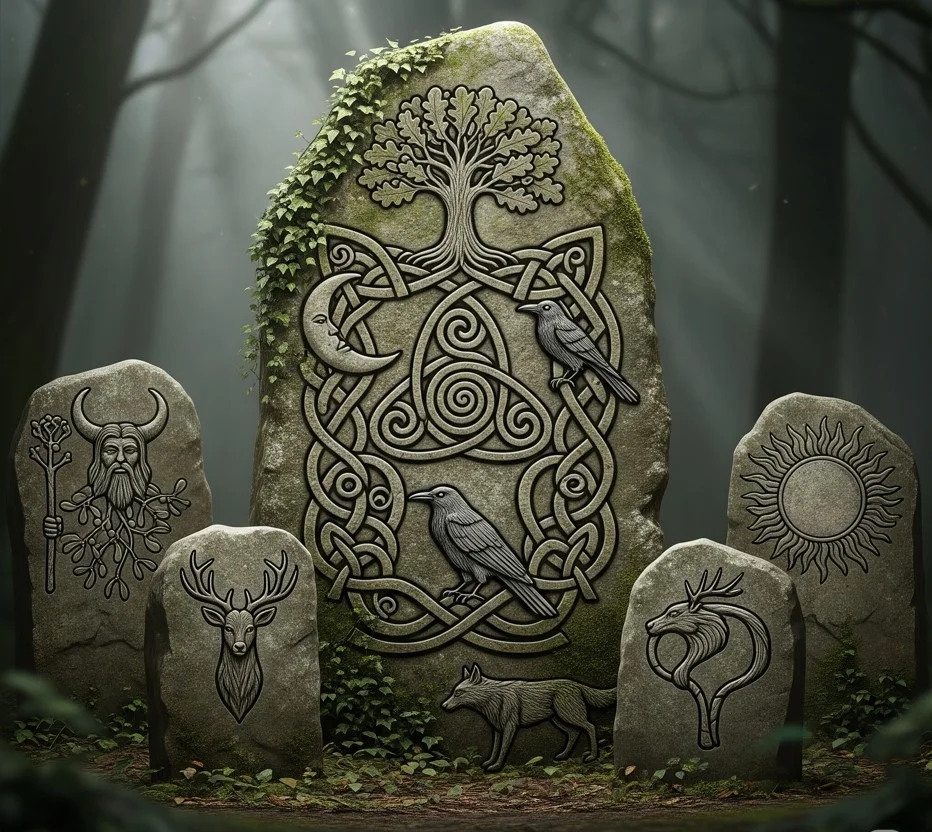
Key Druid symbols and their meanings:
- Awen: This symbol is composed of three rays or lines converging at the top and flowing downward. The word “Awen” itself traces back to the Welsh language, meaning “inspiration”. It is understood to represent not simply inspiration, but specifically the inspiration of truth; without Awen, one cannot proclaim truth. The three lines are interpreted in various triads: earth, sea, and air; body, mind, and spirit; or love, wisdom, and truth. In the context of Druidism, these rays can also represent the three grades of Druidism: Ovate, Bard, and Druid, embodying power, wisdom, and love. Some interpretations suggest the two outer rays represent male and female energy, with the central ray symbolizing the balance between them, making the Awen a symbol of unity and harmony of opposites in the universe. Although some sources suggest its origin lies with the 18th-century Welsh poet Iolo Morgannwg, making it a modern invention rather than an ancient Celtic symbol, it has been widely adopted within modern Druidry as a symbol of great unity and a tool for measuring consciousness.
- Triskele (Triple Spiral): This symbol represents motion, cycles, personal growth — used in shrines and ritual. It is among the oldest Celtic motifs, with examples found in ancient stone carvings at sites like Newgrange, dating back to 3200 BCE. It represents the three worlds of existence—celestial, physical, and spiritual ; the stages of the life cycle—birth, life, and death ; and the dynamic elements of water, air, and fire. It can also symbolize the passage of time, flowing through the past, present, and future.
- Ogham: An alphabet tied to trees; each letter has mythic and healing associations (e.g., Birch = new beginnings). The Ailm, derived from the Ogham alphabet, is believed to represent the pine tree, associated with healing and inner peace.
- Celtic Tree of Life (Crann Bethadh): A significant symbol in Druidry, representing the deep connection to the earth, nature, and natural philosophy. Sacred groves, particularly those of oak trees, were considered holy places for Druids, where rituals and fortune-telling were performed. The very word “druid” is believed to derive from the Celtic word for oak, highlighting their profound link.
- Wheel of Taranis: This symbol is a wheel with six or eight spokes, representing Taranis, the Celtic deity of the sky and thunder. The circular nature of the wheel symbolizes the cyclical nature of life, the universe, and the concept of eternal return. It was also worn as a protection amulet.
- Green Man: Depicted as a head made of leaves, symbolizing rebirth, the cycle of the seasons, and the fertility of the land. This symbol powerfully represents the strong bond that Druids and Celts felt between humans and nature.
- Five-Fold Symbol: Consists of five rings, with a central ring surrounded by four others. It is linked with the Tuatha Dé Danann, where the central circle represents Danu and the surrounding rings stand for her offspring. It also serves as a beacon for enlightenment, with Druid beliefs emphasizing that meditating upon this symbol leads to heightened awareness and understanding.
Celtic Symbol for Warrior — Protection and Valor
Warrior symbolism blended protection and combat attributes:
It is important to understand that there is no single, universal Celtic symbol specifically designated as “the warrior symbol”. Instead, the Celts, as a warring people, utilized a repertoire of designs that collectively represented strength, endurance, wisdom, and protection in battle.
- Boar iconography: Signifying strength and aggression. The boar was a widespread sign of ferocity and valor, appearing on torcs and banners.
- Shield Knot: Used on armor to protect in battle. The Celtic Shield Knot was believed to provide spiritual protection during battle and was a symbol of bravery and resilience, offering both physical and spiritual defense.
- Weapon motifs: While specific deities like Lugh are mentioned in the user’s prompt, the research notes broadly indicate that animal totems on weapons (like spears, swords) were believed to protect the wearer and instill animal characteristics.
- Dara Knot: An ideal choice for Celtic warriors to wear into battle, believing it would imbue them with the oak’s formidable qualities.
- Celtic Tree of Life: Its unity provided strength to Celtic warriors, and the promise of rebirth meant they had nothing to fear from death.
- Trinity Knot (Triquetra): Its flowing design without start or end represents the unity of the three elements and suggests that the spirit can never be broken, making it a good choice for warriors to wear to battle.
- Ailm: Celtic warriors might have adorned their weapons, skin, and armor with the Ailm before battle, seeking its protective and empowering qualities.
Beyond abstract symbols, the physical accoutrements of Celtic warriors were themselves imbued with deep symbolic meaning:
- Animal Totems: The Celts believed that animal totems, when placed on weapons, armor, helmet crests, war horns, and shields, not only protected the wearer but also instilled in them the specific properties and characteristics of that animal. Examples include the Stag (nobility) , Owl (wisdom) , Dragons (power, protection, cycle of nature, immortality) , Eagle (power, strength, spiritual insight, valor, wisdom) , Wolf (strength, independence, unity, loyalty, protectors) , Bull (strength, courage, fertility, natural power) , Griffins (protectors, good luck in battle) , and Epona (goddess of horses, strength, success in battle).
- Torcs: These neck or wrist collars, crafted from various metals, were quintessential items of Celtic jewelry and reflected the noble status of the individual.
- Celtic Shields: Familiar oblong items, often made of wood and leather, were not only used for physical defense but also believed to ward off enemies and evil spirits, offering protection and peace to families and their territory.
Celtic Symbols and Meanings Chart
To provide a concise overview, the following table summarizes some of the major Celtic symbols and their core meanings:
| Celtic Symbol | Meaning |
| The Celtic Tree of Life (Crann Bethadh) | Harmony, balance, and the connection between heaven and earth; represents the eternal cycle of life, death, and rebirth, as well as growth, wisdom, and resilience. |
| The Celtic Cross | A combination of Christian and pre-Christian beliefs; the cross symbolizes faith, and the circle represents eternity and the cyclical nature of life. It reflects spiritual enlightenment, protection, and the unbreakable connection between the physical and the divine. |
| The Dara Knot | Derived from “Doire” (oak tree), it symbolizes strength, inner wisdom, and endurance, mirroring the roots of an oak tree. It encourages staying grounded and strong during adversity. |
| The Ailm | A lesser-known symbol shaped like a cross within a circle, associated with the fir tree. It represents strength, purity, resilience, renewal, and healing. It reflects the spirit’s ability to overcome obstacles. |
| The Triquetra (Trinity Knot) | Represents the Holy Trinity in Christian tradition (Father, Son, Holy Spirit). In pre-Christian culture, it signifies the threefold nature of life (life, death, and rebirth) or the maiden, mother, and crone. It symbolizes eternal love and unity. |
| The Triskelion (Triple Spiral) | Found in ancient stone carvings older than the Egyptian pyramids, it reflects the triad of life: past, present, future or mind, body, spirit. It represents life’s journey and movement. |
| The Irish Harp | A national emblem representing harmony, creativity, and the soul’s deep connection to music. It symbolizes joy, identity, and storytelling. |
| The Shamrock | Used by St. Patrick to teach the Holy Trinity. It means spiritual unity, protection, and good luck. |
| The Claddagh Ring | One of the most iconic Irish symbols, with a heart for love, a crown for loyalty, and hands for friendship. It is given as a token of devotion. |
| Serch Bythol | Formed by two interwoven Trinity Knots, this symbol represents eternal love and devotion between two souls, an unbreakable bond that transcends life. |
| The Celtic Motherhood Knot | A stylized heart made from two interlaced Trinity Knots, symbolizing the unconditional love between a mother and child. It represents nurturing, protection, and the sacred bond of motherhood. |
| The Celtic Love Knot | A modern version of traditional knotwork, featuring two interweaving hearts, symbolizing everlasting love and the never-ending cycles of life. |
| Celtic Shield Knot | Protection, strength, and resilience; traditionally placed on warriors’ shields and in homes to ward off evil spirits and misfortune. |
| Sailor’s Knot | Enduring love, friendship, and strength, often woven by sailors to remember loved ones. |
| Solomon’s Knot | Immortality, eternity, union of man and the divine, wisdom, and love. |
| Bowen Knot | Love, balance, unity, and interconnectedness. |
| Five-Fold Symbol | Harmony, elemental balance, sacred unity, integration of body and spirit; linked to Tuatha Dé Danann. |
| Wheel of Taranis | Cyclical nature of life, the universe, and eternal return; associated with the Celtic thunder deity Taranis; also a protection amulet. |
| The Green Man | Rebirth, cycle of seasons, fertility of the land; symbolizes the strong bond between humans and nature. |
| Awen | Inspiration, truth, and the balance of male and female energy; represents the three grades of Druidism. |
How to Choose and Use Celtic Symbols Respectfully
- Know the origin: Check whether the design is Pictish, Irish, Welsh or modern revival.
- Avoid cultural appropriation: If using sacred symbols (like Ogham or Awen), learn the background and, if appropriate, credit cultural sources.
- Match intent to symbol: Choose Shield Knot for protection, Claddagh for commitment, Dara Knot for inner strength.
- Work with artisans who understand the motifs for authentic, high-quality pieces.
Exploring Ancient Celtic Symbols
The historical roots of most ancient symbols often lead us back to the Celts, a group that held a profound appreciation for the natural and spiritual world. This veneration was embodied in their intricate and meaningful symbolism. The Celts were a collective of tribes spread across what’s now known as Western Europe, with the most concentrated regions in Ireland and Britain. Each symbol, whether inscribed on monoliths, depicted in their intriguing metal works, or embroidered onto their war banners, encoded a unique aspect of their culture, belief system, or philosophy.
Unravelling the symbolism of ancient Celtic Symbols icons, we find a complex interweaving of mythology, spirituality, and an acute observation of the natural world. The Triskele, or the three-legged symbol, for instance, represents the three realms— land, sea, and sky, or the Triple Goddess symbolising maiden, mother, and crone. The
Celtic cross, with its distinct circle enveloping the intersection of the cross, demonstrates a unique amalgamation of the Christian cross with the symbol of the sun, reflecting a symbiosis between the old and new beliefs. Indeed, each symbol tells a story of the Celtic people; their struggles, aspirations, and their deep-rooted connection with the mystic world.
Interpreting the Christian Perspective
The contemporary Christian understanding of the symbol is steeped in rich biblical tradition and theological discourse. While the symbol’s historical origins precede Christianity, its incorporation into Christian iconography has presented it as a conduit to interpret and communicate complex theological principles. It is often viewed as a representation of the Holy Trinity – the Father, the Son, and the Holy Spirit. In this context, the interconnectedness of the symbol’s elements represents the unified yet distinct nature of the divine trinity.
However, it’s essential to recognize that not all Christian denominations assign the same interpretation to the symbol. For some, it stands as an embodiment of faith, hope, and charity – the theological virtues articulated in the New Testament of the Bible. As such, the symbol has seen a versatile application in Christian arts, rituals, and religious paraphernalia. Despite its diverse interpretations, the emblem remains a powerful tool for conveying Christian spiritual beliefs and concepts.
The Triquetra, for example, gained prominence in Insular ornaments from about the 7th century and is famously found in the Book of Kells. While its original intention by early medieval artists is unknown, it has been interpreted as representing the Holy Trinity, especially since the Celtic revival of the 19th century. The
Celtic Cross is a unique variation of the traditional Christian cross, infused with Celtic design elements, symbolizing faith, hope, and the enduring legacy of Celtic Christianity. Its distinctive features include a circle that intersects the cross’s arms, symbolizing the unity of the spiritual and material worlds. According to popular Irish legend, Saint Patrick introduced the Celtic cross to help pagan followers understand the cross’s importance, combining the Christian cross with the Celtic circle representing eternity. Similarly, the
Shamrock was used by St. Patrick to teach the Holy Trinity.
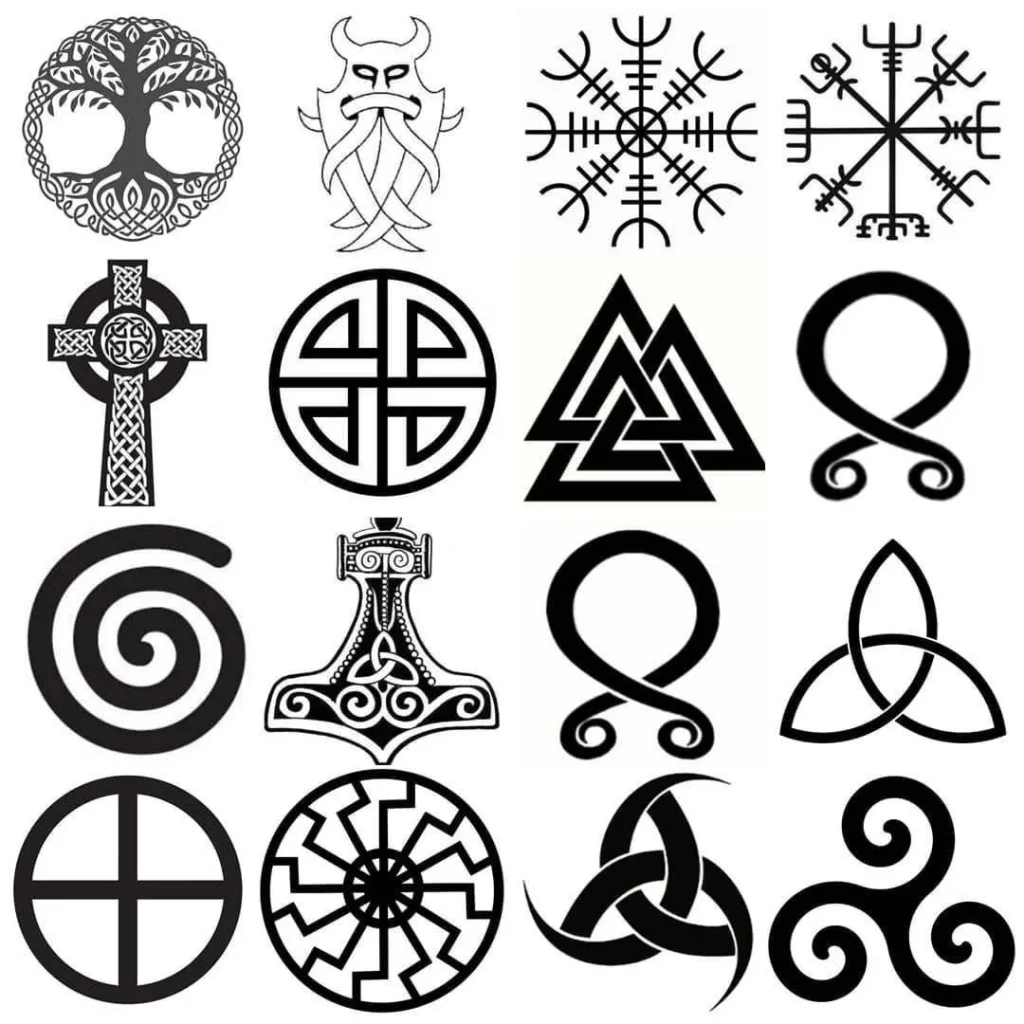
Celtic Symbols and Their Connection with Norse Mythology
While scouring through the annals of Norse mythology, one can uncover a multitude of symbols, each with its own deep-rooted symbology. One such emblem is commonly found represented in myths that highlight the interconnectedness of all things in creation and the recurring cycles of life, death, and rebirth – conveying a profound grasp of the universe’s very fabric.
In Norse mythology, symbols often offer insight into the Norse civilization’s ethos and their rich mythological world, where gods, humans, and mythical creatures interacted. As the mythology suggests, the universe was perceived as an intricate web of overlapping cycles and interconnected parts, akin to the vision conveyed by these recurrent symbols. As a result, the symbolism found in Norse mythology remains relevant and evocative, carrying layers of meaning that resonate within and beyond its original cultural context.
The Celtic Shield Knot, for instance, was utilized across various cultures, including Celtic, Norse, and Viking traditions, underscoring its universal appeal as a protective emblem.
Exploring the Pagan Interpretation
Pagan interpretations are quite distinct when it comes to symbol assessment, as they have a unique perception of the world and spirituality. Hinged on nature worship and polytheism, Paganism imbibes an array of symbols, each encompassing a multitude of meanings that often overlap with other cultures and religions. This intrinsic variety and diversity make a comprehensive interpretation of pagan symbols a stimulating venture.
In the realm of Pagan symbolism, connections to tangible elements such as earth, wind, fire, and water are common, linking it closely to an appreciation for the environment. Often the symbolism embodies things like fertility, harvest, or the changing of the seasons. Assumingly straightforward, a deep dive into the realm of Pagan symbolic interpretation exposes an intricate and profound system of philosophy enriched by thousands of years of human thought and contemplation.
In pagan and pre-Christian contexts, the Triquetra is thought to represent the female triple goddess, such as Banba, Fodla, and Ériu. It also symbolizes the three realms of material existence: Land, Sea, and Sky. The
Triskelion in pagan spirituality, often represents birth, death, and rebirth, or the realms of Earth, sea, and sky. The
Awen, while its origins are debated, is sometimes interpreted as representing the balance of male and female energy, symbolizing unity and harmony of opposites in the universe.
Symbolic Use in Wicca and Witchcraft
As a belief system rooted in tradition yet often adapted to the individual, Wicca and witchcraft tend to be malleable in their use of symbols. These symbols, many drawn from ancient sources and recontextualized, serve to communicate complex ideas and harness specific energies in practice. For Wiccans and witches, the symbol is understood as more than just a representative image; it is considered a powerful tool for manifestation and change. This view aligns with many other spiritual and occult beliefs that attribute tangible power to intangible symbols.
Elements, animals, planets, and various geometric configurations are among the many symbols utilized in Wiccan and witchcraft rituals. These symbols are used in casting circles, invoking deities, spell-crafting, and establishing a sacred space. Each symbol has a specific meaning or energy associated with it, and the intention behind its use is just as important as the symbol itself. This ritual creation and use of symbols is a key component of Wiccan and witchcraft practice, emphasizing the interconnectedness of all things and the power of intention.
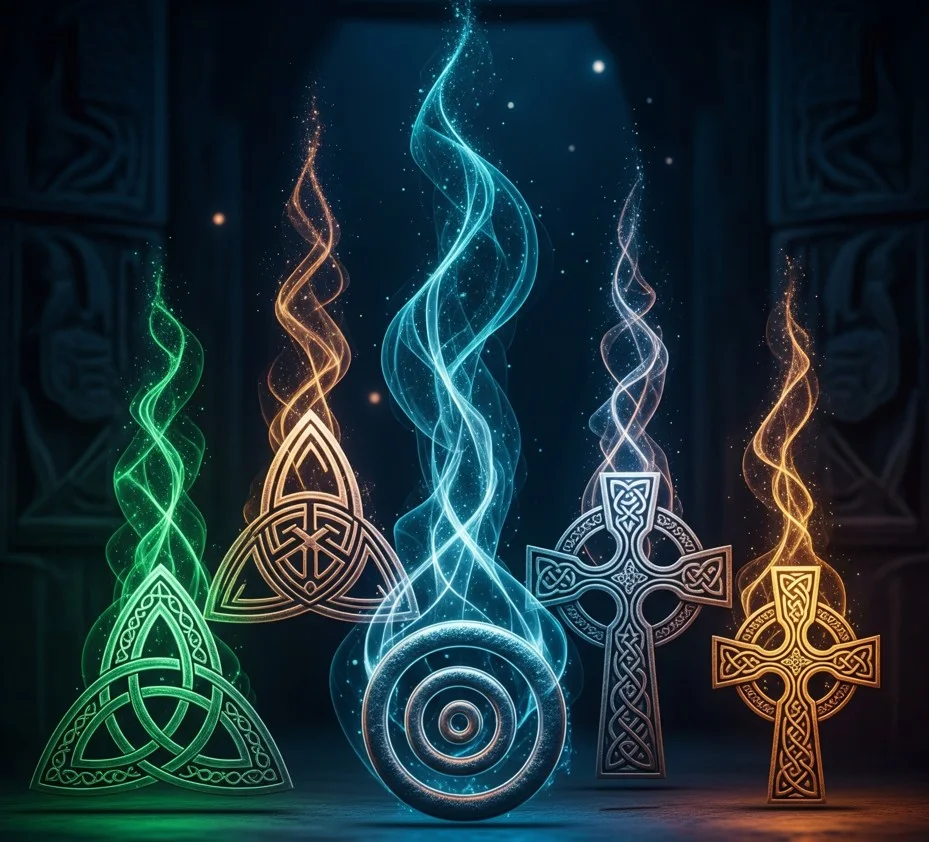
The Triquetra, for instance, is used by Wiccans to represent the triple goddess (Maiden, Mother, Crone).
The Symbol in Popular Culture and Media
In the modern era, symbols have proven to be a powerful tool in popular culture and media. They have infiltrated every aspect of society, from our daily interactions, to the movies we watch, even the books we read. They carry with them a sense of profundity and depth, speaking to audiences in a language that transcends words. This ability to tell complex narratives and symbolize sophisticated concepts makes them instrumental in the world of film, literature, and art.
Symbols are not only critical in storytelling but also branding. A simple emblem can tell a lot about a brand’s belief and ethos, making it easily identifiable amidst a sea of competitors. This precise deployment of symbols is prevalent in advertising, where companies have successfully harnessed their power to evoke emotions, often persuading consumers into making purchasing decisions. They evoke deep-rooted associations and memories, making them an effective and compelling medium in popular culture and media.
The enduring appeal of Celtic symbols is vividly demonstrated by their widespread integration into contemporary culture, from fashion and jewelry to art and popular media. This continued presence reflects a deep cultural resonance and an appreciation for their intricate beauty and profound meanings.
Jewelry stands as a primary medium for the modern expression of Celtic symbolism. Many of the symbols discussed, including the Claddagh ring, Trinity Knot, Tree of Life, Dara Knot, Ailm, Triskelion, Irish Harp, Shamrock, Celtic Motherhood Knot, and Serch Bythol, are widely featured in contemporary jewelry designs. These pieces are often worn not only for their aesthetic appeal but also as personal talismans, protective charms, or profound expressions of individual and familial meaning.
Tattoos represent another significant avenue for modern Celtic symbolism. Designs like the Celtic Shield Knot, Triquetra, Triskelion, and Ailm are popular choices for tattoos, valued for both their intricate aesthetics and their deep symbolic meanings. Historically, Celtic warriors would adorn their weapons, skin, and armor with these symbols, believing they conferred protection, ferocity, courage, and a connection to organic energy in battle. This tradition continues today, with individuals choosing Celtic tattoos to symbolize strength, resilience, and personal conviction.
In the realm of Art and Design, intricate Celtic knotwork continues to fascinate and inspire artists and craftworkers globally. Modern Celtic artists, like Michael Carroll, continue the tradition of ancient monks, creating new yet classically ancient designs. These symbols are found in various contemporary artistic expressions, including illuminations, tile work, and mandalas.
Celtic symbols have also permeated Popular Culture and Media, reaching a broad audience. The Triquetra, for instance, has gained significant recognition through its prominent use in the American fantasy drama Charmed, where it symbolized the “Power of Three”. It has also appeared on Michonne’s katana in
The Walking Dead, in the German Netflix series Dark to symbolize closed time loops, and even on Thor’s hammer Mjölnir in the Thor film series. Beyond these, the
Shamrock is widely recognized and utilized in St. Patrick’s Day festivities, appearing in decorations and clothing. The
Claddagh ring is a popular choice for engagement and wedding rings, symbolizing love and commitment. The
Irish Harp, a national emblem, appears on Irish Euro coins and Guinness labels, further cementing its place in modern identity.
The Use in Modern Occult Practices
The modern application of ancient symbols in occult practices presents a resurgence of old beliefs, creating a link between the past and the present. The emphasis on intuition, connection with the spiritual realm, and divination is reinforced through the use of these symbols. They often occupy a prominent place in ritualistic practices and are seen as key conduits in navigating the spiritual planes, for instance, in Neo-Pagan witchcraft and certain esoteric societies.
The understanding and interpretation of these symbols have expanded due to the internet and globalization, which has facilitated the cross-pollination of ideas and practices. The symbols have also been appropriated in various contexts, occasionally taking on new dimensions that might significantly deviate from their ancient origins and interpretations. Whether these changes represent a true evolution of symbology or a distortion from its original meanings is a debate among practitioners and scholars.
Conclusion
The exploration of Celtic symbols reveals a rich and multifaceted heritage, deeply rooted in ancient beliefs and practices, yet remarkably vibrant and relevant in the contemporary world. These symbols, far from being mere historical artifacts, are living expressions of profound human experiences and cosmological understandings.
The intricate geometry of Celtic knots, with their pervasive “never-ending cyclical loops,” embodies a fundamental Celtic worldview centered on continuity, transformation, and interconnectedness. This philosophical underpinning allows them to convey eternal concepts like life, death, rebirth, and unbreakable bonds of love and family. Symbols such as the Triquetra and Triskelion, with their powerful triadic meanings, demonstrate an enduring human fascination with cycles and the ability of visual archetypes to be re-appropriated and infused with new significance across diverse spiritual frameworks.
The strength and protective qualities inherent in symbols like the Dara Knot, deeply tied to the enduring oak tree, and the Celtic Shield Knot, a clear visual metaphor for defense, illustrate the Celts’ holistic approach to resilience. This extended to their use of animal totems, where the perceived qualities of nature were believed to confer protection and strength upon warriors. The nuance that no single “Celtic warrior symbol” exists underscores the diverse and adaptable nature of Celtic tribes, where a repertoire of emblems conveyed core virtues rather than a monolithic representation.
Druid symbols, whether ancient or modern interpretations like the Awen, further emphasize the deep connection to nature, balance, and spiritual inspiration. While modern Druidry is a reconstructionist movement, it effectively draws upon established Celtic principles to articulate its contemporary focus on nature veneration and holistic well-being.
The enduring appeal of Celtic symbols is vividly demonstrated by their widespread integration into modern jewelry, tattoos, art, and popular media. This commercialization and popularization are driven by a contemporary desire for meaningful self-expression, a connection to heritage, and an appreciation for intricate aesthetics. The ability of these symbols to be reinterpreted for diverse modern applications, from personal statements to cultural identifiers, ensures their continued visibility and relevance.
In essence, Celtic symbols are timeless expressions of universal human experiences—love, family, strength, protection, and spiritual connection. Their intricate beauty, coupled with their profound and adaptable meanings, ensures their continued prominence and relevance in the digital age, making them not only fascinating subjects of study but also powerful tools for personal and cultural expression.
Pingback: Pagan Love Symbols: Ancient Signs That Still Speak to the Heart - Witch symbols
Pingback: Irish Symbols and Their Meanings: The Complete Guide to Celtic Signs, Tattoos - Witch symbols