

How to practice Wicca—have you ever wondered where to begin when you feel spiritually drawn to nature and magic? Wicca doesn’t require formal conversion, hierarchy, or official membership. Anyone who feels called to its values can start their journey on their own terms. The first step is often quiet study and reflection. Explore beginner-friendly books and trustworthy websites to build a foundation. Wicca: A Guide for the Solitary Practitioner by Scott Cunningham, for example, is a highly recommended introduction that clearly explains core beliefs, rituals, and tools.
How to practice Wicca in daily life often begins with deepening your connection to nature. Take mindful walks, tend a garden, or simply sit outside and observe the world around you. Pay attention to the changing seasons, the phases of the moon, and the behavior of wildlife—these rhythms are sacred in Wicca. By honoring nature and developing personal rituals, you begin to experience the divine in the natural world, nurturing a spiritual path that is deeply personal, peaceful, and empowering.

Getting Started with How to Practice Wicca
This first part is all about the basics of how to practice Wicca. We’ll look at what Wicca is, where it comes from, and its main beliefs. This will give you a good foundation before you start trying things out. If you’re asking “how do you practice wicca?”, this is the perfect place to start.
A. Welcome to the Path – What is Wicca?
Wicca is a modern religion that’s all about respecting nature. Wiccans see the Earth and all living things as sacred. It’s a path that follows the seasons and the cycles of the moon. This deep connection to nature is at the very heart of everything in the faith.
The person who made Wicca popular was Gerald Gardner, back in the 1950s. He brought together ideas from old Celtic traditions, folklore, and other spiritual paths to create the religion we know today.
It’s easy to get confused by terms like “Pagan,” “Witch,” and “Wiccan.” Here’s a simple breakdown:
- Paganism: This is a big umbrella term for many different earth-based faiths. Wicca is one of these faiths.
- Witchcraft: This is the practice of using energy and intention to create change. It’s a skill, not a religion itself.
- Wicca: This is a specific religion under the Pagan umbrella. Most Wiccans practice witchcraft, but not all do.
A good way to remember it is: “Most Wiccans are witches, but not all witches are Wiccans.”
One of the great things about Wicca is that there’s no single leader or holy book. This means you have the freedom to find your own way. Most people who practice Wicca today do it on their own, as “solitary practitioners.” This guide is here to help you find your own path.
B. Core Beliefs and How to Become Wiccan
While everyone’s path is a little different, there are some core ideas that most Wiccans share.
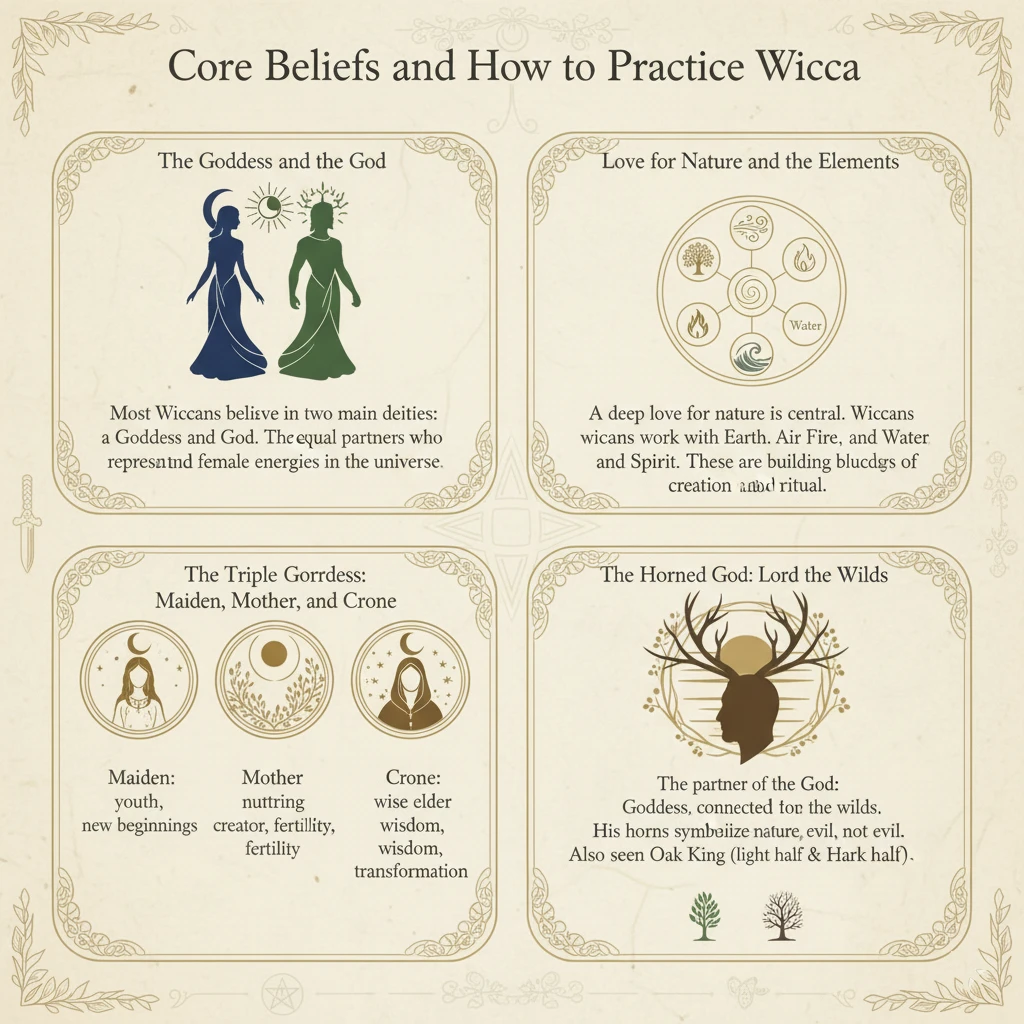
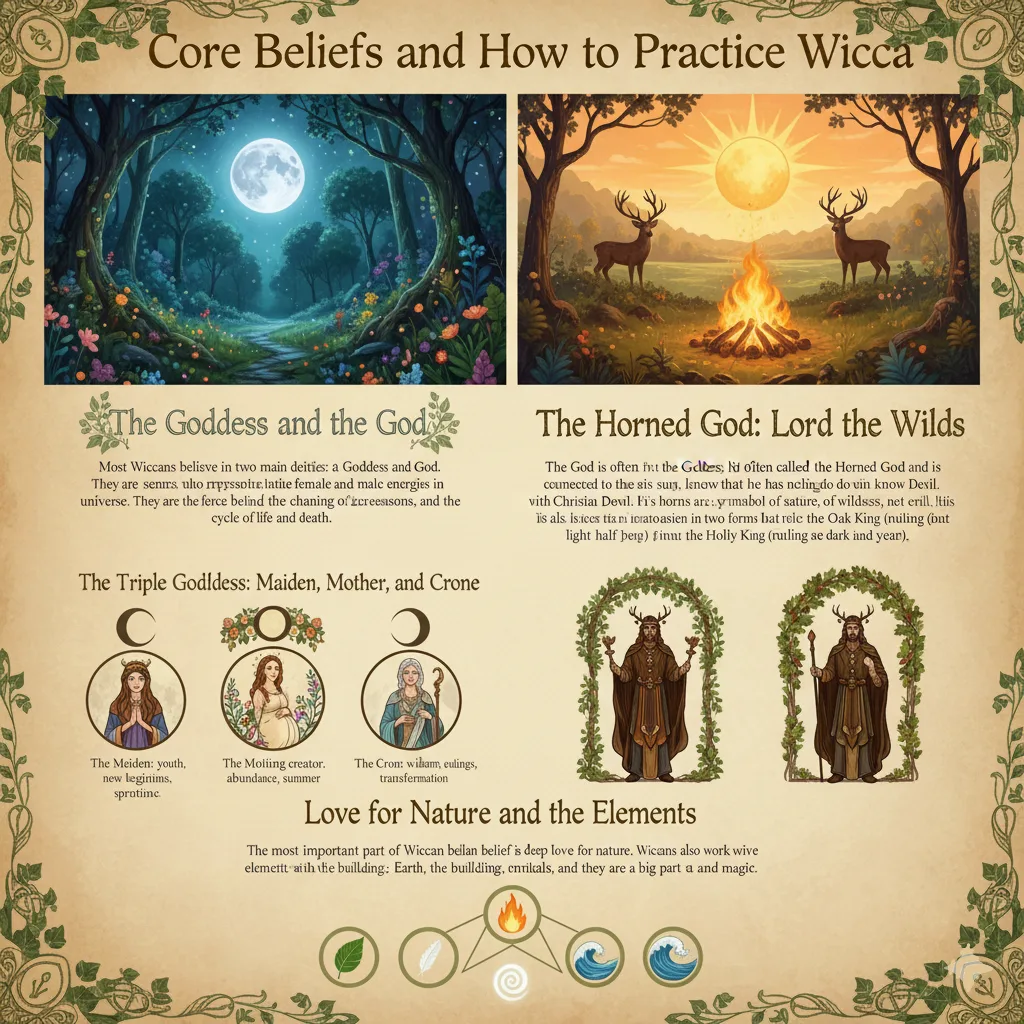
The Goddess and the God Most Wiccans believe in two main deities: a Goddess and a God. They are seen as equal partners who represent the female and male energies in the universe. They are the force behind all of creation, the changing seasons, and the cycle of life and death.
The Triple Goddess: Maiden, Mother, and Crone The Goddess is often seen in three forms, which connect to the phases of the moon and the stages of life.
- The Maiden: She represents youth, new beginnings, and fresh energy, like the waxing moon and springtime.
- The Mother: She is the nurturing creator, representing fertility and abundance, like the full moon and summer.
- The Crone: She is the wise elder, representing wisdom, endings, and transformation, like the waning moon, autumn, and winter.
The Horned God: Lord of the Wilds The God is the partner of the Goddess. He is often called the Horned God and is connected to the sun, forests, animals, and the cycle of life. It’s very important to know that he has nothing to do with the Christian Devil. His horns are an ancient symbol of nature and wildness, not evil. He is also seen in two forms that rule the year: the Oak King (ruling the light half of the year) and the Holly King (ruling the dark half).
Love for Nature and the Elements The most important part of Wiccan belief is a deep love for nature. Wiccans also work with five elements: Earth, Air, Fire, Water, and Spirit. These are seen as the building blocks of everything, and they are a big part of rituals and magic.
C. The Wiccan Moral Compass
Wicca has a few key principles that guide how people act. It’s all about taking responsibility for your own choices.
The Wiccan Rede: “An It Harm None, Do What Ye Will” This is the main guideline in Wicca. It simply means, “If it doesn’t hurt anyone, do what you want.” This encourages you to think about the consequences of your actions before you do them, making sure you don’t cause harm to yourself, others, or the world around you.
The Threefold Law: What You Send Out Comes Back This is the idea that whatever energy you put out into the world—good or bad—will come back to you three times stronger. Whether you see it as a literal rule or just a good reminder to be kind, it encourages positive actions.
How to Practice Wicca: Your First Steps
This part moves from ideas to action. Here’s how you can start learning how to practice Wicca.
A. How to Practice Wicca: Solitary or Coven?
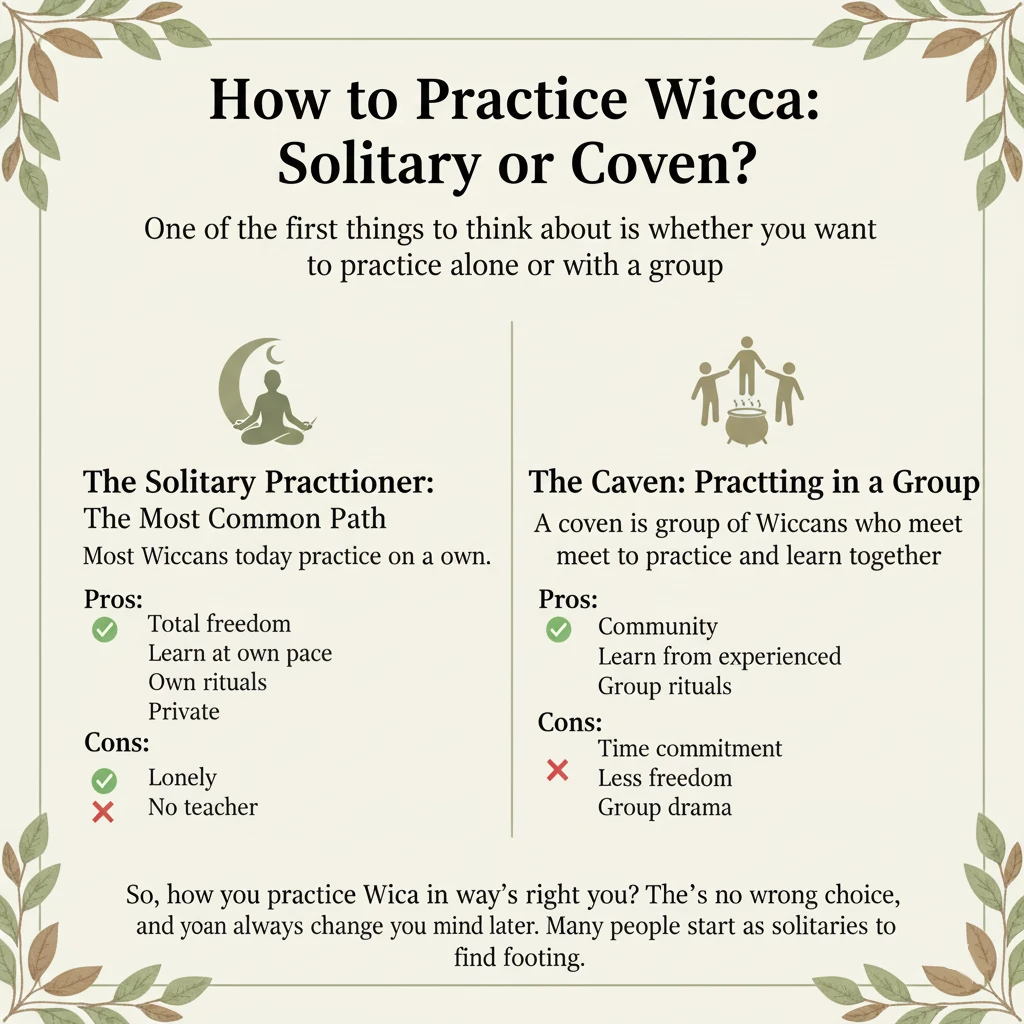
One of the first things to think about is whether you want to practice alone or with a group.
The Solitary Practitioner: The Most Common Path Most Wiccans today practice on their own.
- Pros: You have total freedom. You can learn at your own pace, create your own rituals, and keep your practice completely private.
- Cons: It can sometimes feel lonely, and you don’t have a teacher to ask questions.
The Coven: Practicing in a Group A coven is a group of Wiccans who meet to practice and learn together.
- Pros: You get a sense of community and family. You can learn from experienced people and do more powerful group rituals.
- Cons: It takes a big time commitment, and you have less personal freedom. Group drama can also be a problem.
So, how do you practice wicca in a way that’s right for you? There’s no wrong choice, and you can always change your mind later. Many people start as solitaries to find their footing.
B. How to Practice Wicca with an Altar
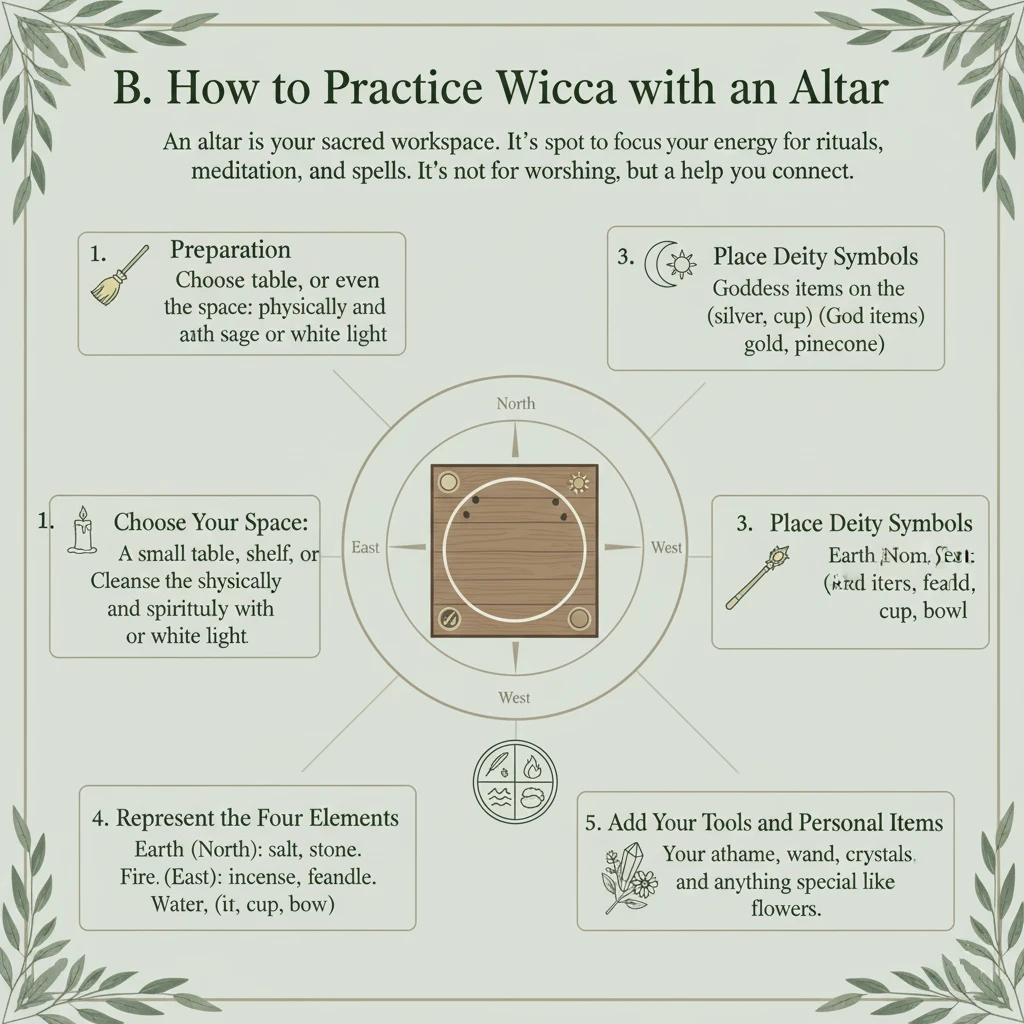
An altar is your sacred workspace. It’s a spot to focus your energy for rituals, meditation, and spells. It’s not for worshiping, but a tool to help you connect.
Setting Up Your First Altar: A Step-by-Step Guide
- 1. Choose Your Space: It can be a small table, a shelf, or even a box you can put away. An outdoor spot on a tree stump or rock is great, too.
- 2. Cleanse the Space: First, clean it physically. Then, cleanse it spiritually by burning some sage or just imagining a pure white light washing over it.
- 3. Place Deity Symbols: Many people place items for the Goddess on the left (like a silver candle or a cup) and for the God on the right (like a gold candle or a pinecone).
- 4. Represent the Four Elements: This creates balance.
- North (Earth): A bowl of salt, a stone, or a plant.
- East (Air): Incense or a feather.
- South (Fire): A candle.
- West (Water): A cup or bowl of water.
- 5. Add Your Tools and Personal Items: Place your tools on the altar and add anything that feels special to you, like crystals or flowers.
C. The Witch’s Toolkit
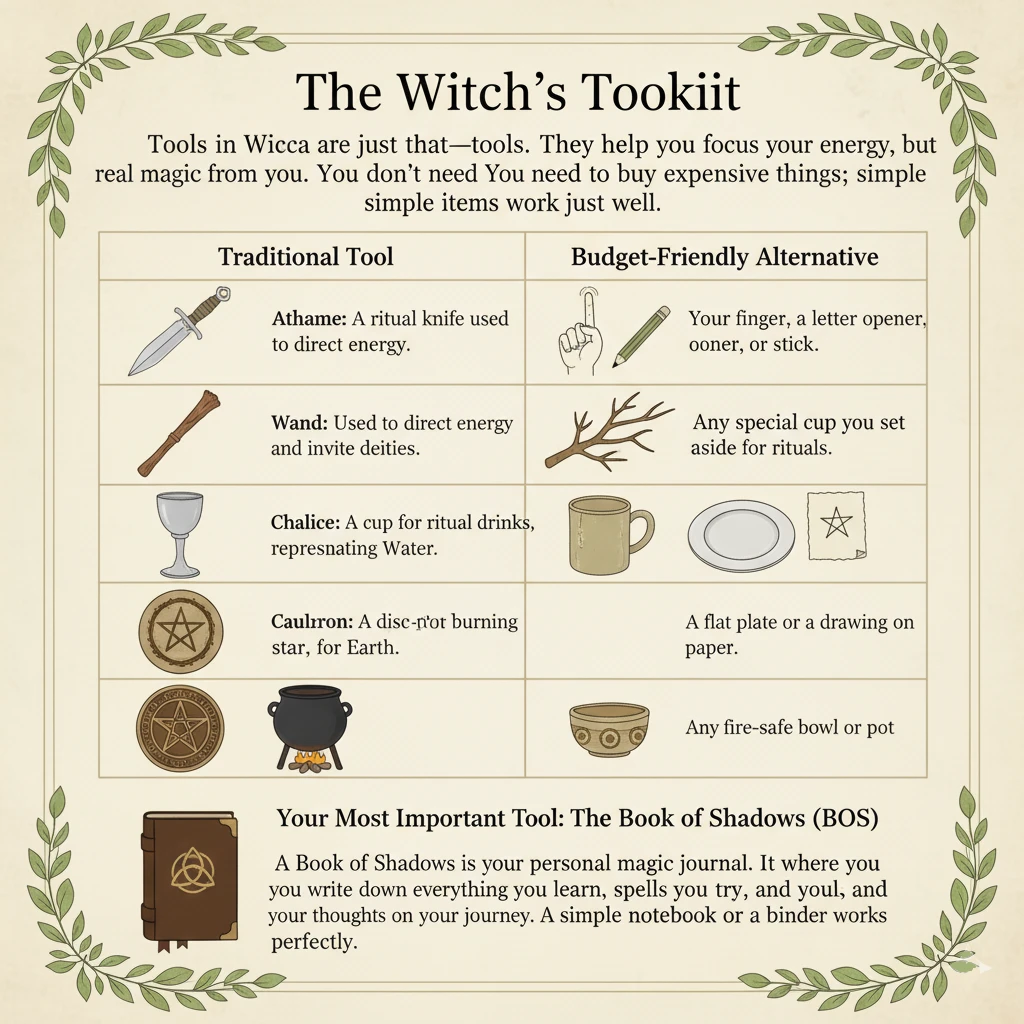
Tools in Wicca are just that—tools. They help you focus your energy, but the real magic comes from you. You don’t need to buy expensive things; simple items work just as well.
Essential Tools and Their Everyday Alternatives
| Traditional Tool | Purpose/Symbolism | Budget-Friendly Alternative |
| Athame | A ritual knife used to direct energy. | Your finger, a letter opener, or a stick. |
| Wand | Used to direct energy and invite deities. | A branch you find outside or your finger. |
| Chalice | A cup for ritual drinks, representing Water. | Any special cup you set aside for rituals. |
| Pentacle | A disc with a five-pointed star, for Earth. | A flat plate or a drawing on paper. |
| Cauldron | A fire-proof pot for burning things or mixing. | Any fire-safe bowl or pot. |
Your Most Important Tool: The Book of Shadows (BOS) A Book of Shadows is your personal magic journal. It’s where you write down everything you learn, spells you try, and your thoughts on your journey. A simple notebook or a binder works perfectly.
How to Practice Wicca with Rituals and Celebrations
Wiccan practice connects you to the rhythms of the Earth through seasonal festivals and personal rituals. This is a key part of how to practice Wicca.
A. The Rhythm of the Year – Celebrating the Sabbats
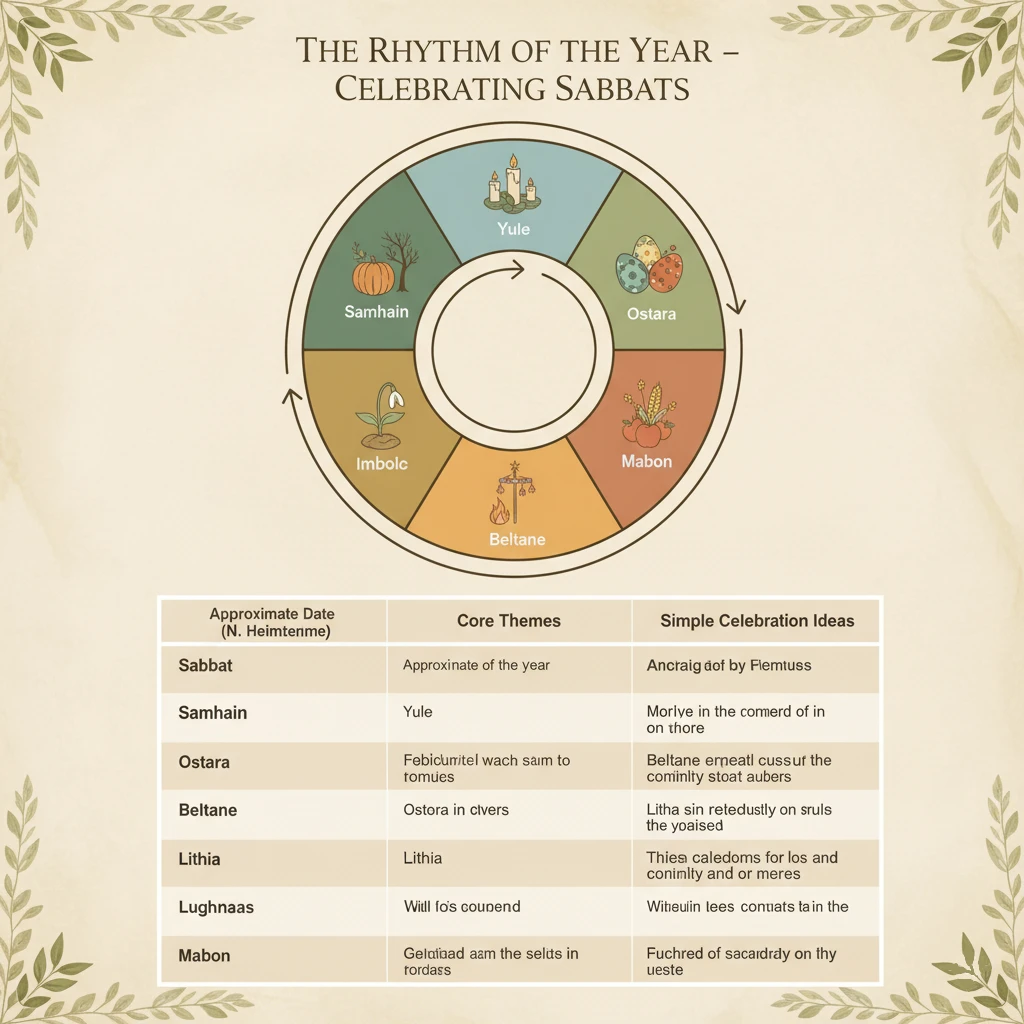
The Wheel of the Year is the Wiccan calendar of eight festivals, called Sabbats. They mark the seasons and celebrate the Earth’s journey around the sun.
The Eight Sabbats: A Beginner’s Guide
| Sabbat | Approximate Date (N. Hemisphere) | Core Themes | Simple Celebration Ideas |
| Samhain | October 31 | Honoring ancestors, the Witch’s New Year, endings and beginnings. | Set up an ancestor altar, carve pumpkins, practice divination. |
| Yule | Winter Solstice (~Dec 21) | Rebirth of the sun, return of light, hope, and peace. | Decorate a Yule tree, light candles, have a festive meal. |
| Imbolc | February 1-2 | First signs of spring, purification, new beginnings. | Spring clean your home, light white candles, plan your garden. |
| Ostara | Spring Equinox (~Mar 21) | Balance of light and dark, new growth, and renewal. | Decorate eggs, plant seeds, take a nature walk. |
| Beltane | May 1 | Fertility, passion, fire, and union of the God and Goddess. | Make a flower crown, have a bonfire (or light a candle). |
| Litha | Summer Solstice (~Jun 21) | Peak of the sun’s power, abundance, and joy. | Watch the sunrise, have a barbecue, gather wildflowers. |
| Lughnasadh (Lammas) | August 1 | First harvest, gratitude, and abundance. | Bake bread, make a corn dolly, give thanks for your food. |
| Mabon | Autumn Equinox (~Sep 21) | Second harvest, balance, giving thanks, and preparing for winter. | Have a harvest feast, go apple picking, reflect on what you’re grateful for. |
B. A Simple Solitary Ritual for Beginners
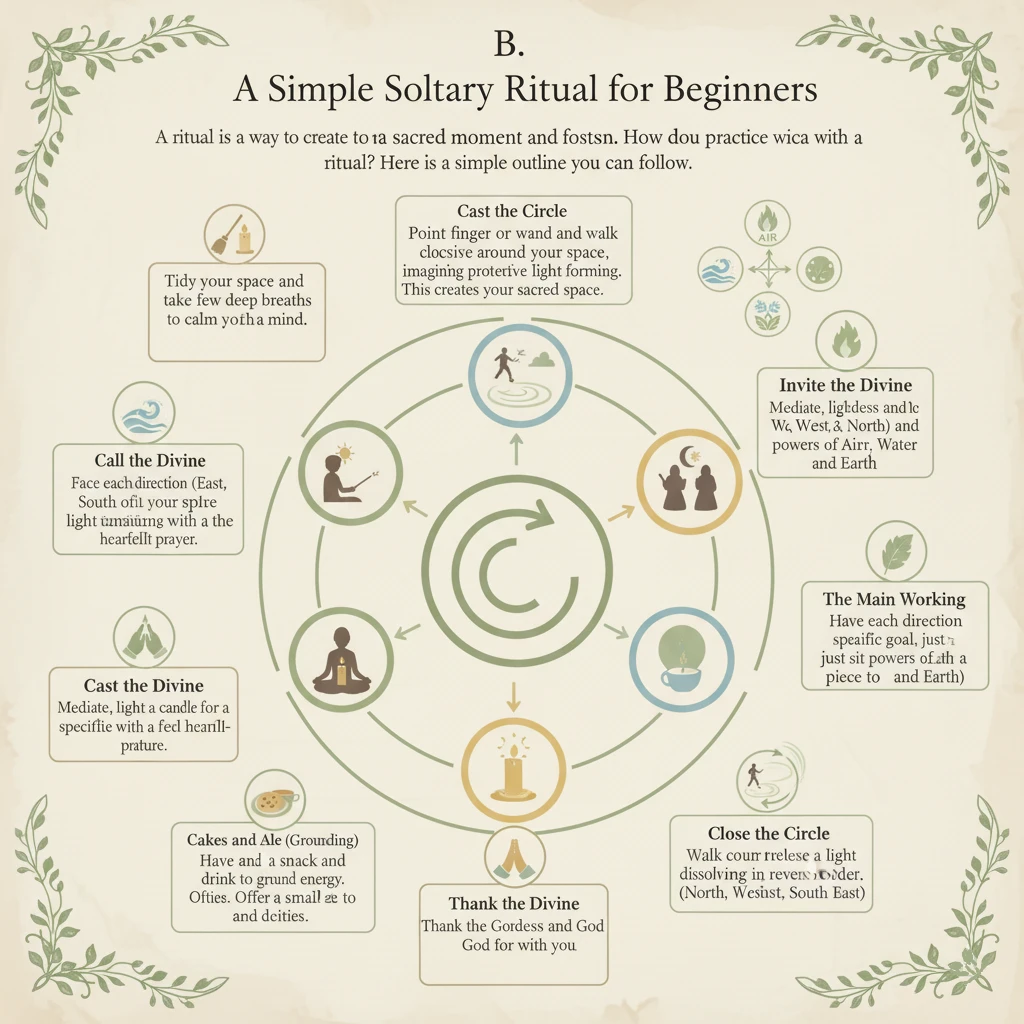
A ritual is a way to create a sacred moment and focus your intention. How do you practice wicca with a ritual? Here is a simple outline you can follow.
- 1. Preparation: Tidy your space and take a few deep breaths to calm your mind.
- 2. Cast the Circle: Point your finger or a wand and walk clockwise around your space, imagining a sphere of protective light forming around you. This creates your sacred space.
- 3. Call the Quarters: Face each direction (East, South, West, North) and welcome the powers of Air, Fire, Water, and Earth.
- 4. Invite the Divine: Ask the Goddess and God to be present with a simple, heartfelt prayer.
- 5. The Main Working: This is the main part. You can meditate, light a candle for a specific goal, or just sit quietly and feel connected to nature.
- 6. Cakes and Ale (Grounding): Have a small snack and a drink (like a cookie and juice) to ground your energy. Offer a small piece to the deities.
- 7. Thank the Divine: Thank the Goddess and God for being with you.
- 8. Dismiss the Quarters: Thank and release the elements in reverse order (North, West, South, East).
- 9. Close the Circle: Walk counter-clockwise, imagining the light dissolving. Say something like, “The circle is open, but never broken.”
How to Practice Wicca with Spells
Magic in Wicca is about focusing your intention to create positive change. It’s a natural skill, not something supernatural. Remember the main rule: “Harm None.” This is fundamental to how to practice Wicca.
A. The Basics of Spellcraft
A good spell has three key parts:
- Intention: Have a clear, specific goal. State it as if it’s already happened (e.g., “I am protected and safe”).
- Visualization: Clearly picture your goal as if it’s real. The more detail, the better.
- Raising Energy: You need energy for your spell. You can raise it by chanting, dancing, or meditating, then direct it toward your goal.
B. How to Practice Wicca: Three Simple Spells
How do you practice wicca with spells? Here are three easy spells perfect for beginners.
1. A Simple Candle Spell for Positivity Candle magic is a great place to start.
- You’ll need: One white or yellow candle and a holder.
- What to do:
- Hold the candle and imagine any old energy being washed away.
- Light the candle and say your intention, like: “I welcome positive energy and joy into my life.”
- Gaze at the flame and imagine a warm, golden light filling you and your space.
- Let the candle burn down completely in a safe spot.
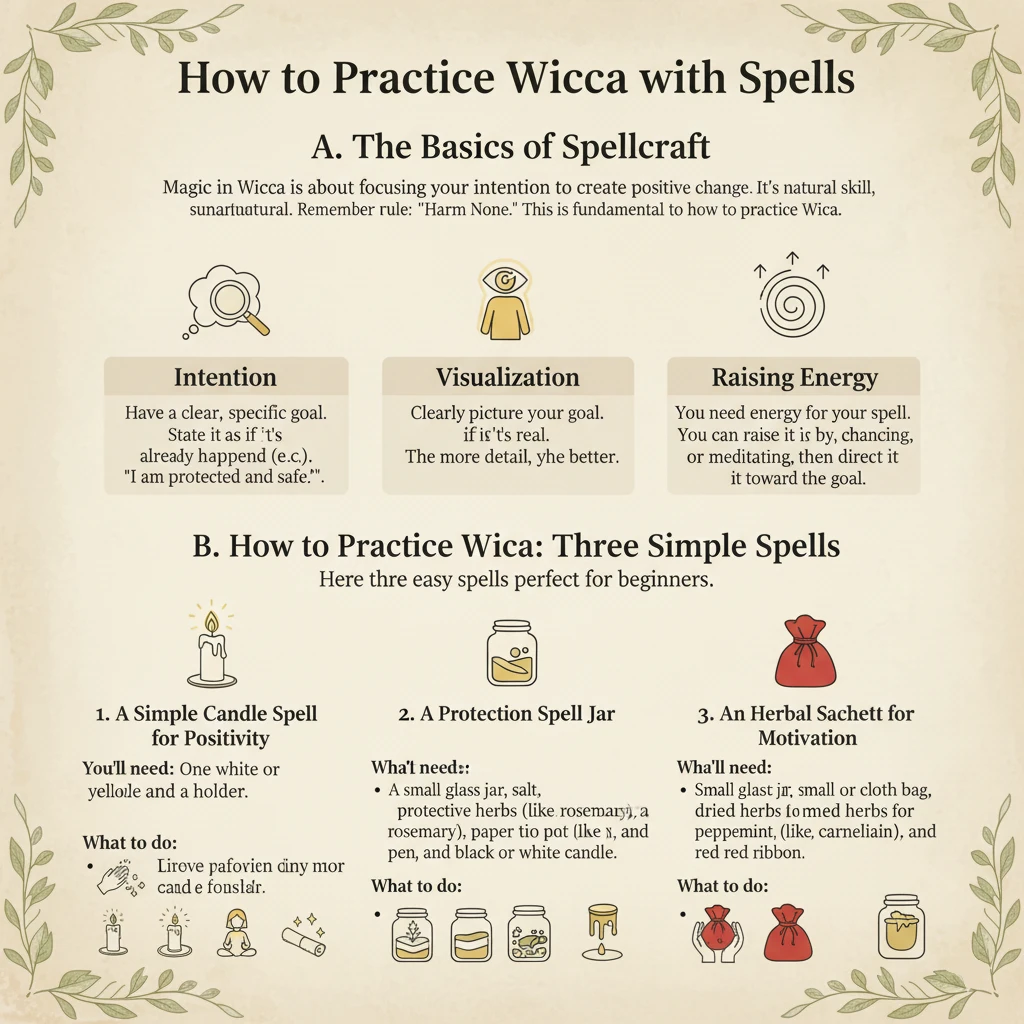
2. A Protection Spell Jar Spell jars are an old form of folk magic where you seal your intention inside a jar.
- You’ll need: A small glass jar, salt, protective herbs (like rosemary), a protective crystal (like black tourmaline), paper and pen, and a black or white candle.
- What to do:
- Cleanse your jar with smoke or salt water.
- Write your intention (like “I am safe and protected”) on the paper, fold it, and put it in the jar.
- Layer the salt, herbs, and crystal in the jar, focusing on your goal of protection.
- Close the jar and drip wax from the candle over the lid to seal it.
- Place the jar near your front door or on your altar.
3. An Herbal Sachet for Motivation A sachet is a small cloth bag filled with magical items that you can carry with you.
- You’ll need: A small red or orange cloth bag, dried herbs for motivation (like peppermint), a carnelian stone, and a red ribbon.
- What to do:
- Hold the empty bag and ingredients, and focus on a goal you want to achieve.
- Place the herbs and stone into the bag, thinking about your goal.
- Tie the bag shut with the ribbon, making three knots to seal the magic.
- Carry the sachet in your pocket or purse to keep its energy with you.
Continuing Your Journey
How to Become Wiccan! Your Wiccan path is one of lifelong learning. Here are some resources to help you keep growing and continue to learn how to practice Wicca.
A. A Beginner’s Bookshelf – Recommended Reading
Reading is one of the best ways to learn, especially if you’re practicing alone. Here are some great books to start with:
- Wicca: A Guide for the Solitary Practitioner by Scott Cunningham: This is the go-to book for beginners. It’s gentle, practical, and easy to understand.
- Buckland’s Complete Book of Witchcraft by Raymond Buckland: This is like a textbook for witchcraft. It’s very thorough and covers a huge range of topics.
- The Spiral Dance by Starhawk: A classic book that connects Wicca with feminist spirituality.
- Wicca for Beginners by Thea Sabin: A great modern introduction that gives a clear and realistic overview of the path.

B. Final Thoughts – Walking Your Unique Path
As you start your journey, remember a few things.
- Wiccans do not worship the Devil. The Horned God is a nature deity, not a figure of evil.
- Wiccans do not cast evil curses. The “harm none” rule is central to the faith.
- Wicca is a peaceful, life-affirming religion. It’s about loving nature and growing as a person.
Most importantly, trust your intuition. Ultimately, how to practice Wicca is a very personal journey. The spells and rituals in this guide are just starting points. Feel free to change them and find what feels right for you. Your path is your own to create.