
symbol for circe
circe symbol
circe goddess symbol
Ever wondered what exactly is the symbol for Circe is? You might think of a pig or a wicked moon, but the Greek sorceress Circe doesn’t have one single logo. In fact, her image is more like a tapestry of signs: the bright sun of her lineage, the wild beasts she commands, a mysterious wand, and even the word “circle” itself.
Imagine ancient art: vases often show Circe with a slender wand or staff, turning men into beasts. Yet her very name Circe (Greek Kirkē) hints at a circle or hoop of powe some say it even derives from kirkos, “hawk” or “falcon”. In other words, to know Circe’s symbol, you look at her story.
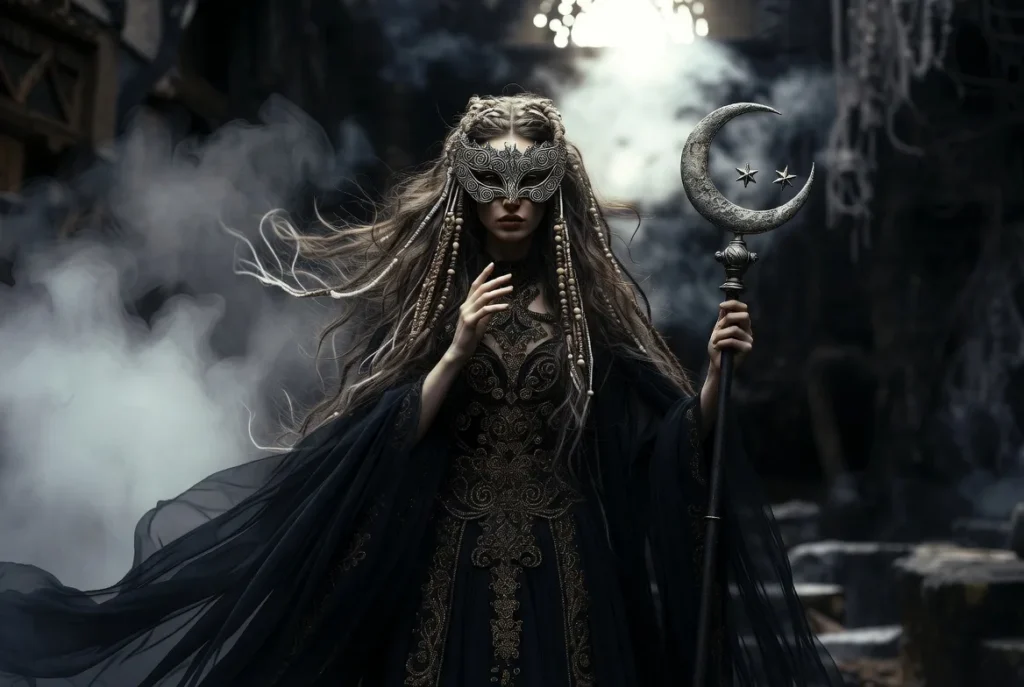
What is the Circe Goddess Symbol
In myth and magic, Circe’s “logo” is scattered through her legend. She’s a daughter of the sun-god Helios, born on an island of song and shadow, who weaves fate on a loom and brews transformation potions like a master alchemist. None of this is random: each element is part of her symbolic identity.
The Greek theoi name for Circe even means “hoop” or “circle”, a nod to magic circles and binding spells. Plus, some tradition links her name to kirkos, meaning hawk think of her keen sight and lofty perspective, like a predator bird circling its prey. So her “symbol” could be as much a hawk in flight as the moon-lit cauldron she stirs.
Symbol For Circe
Circe’s story is absolutely brimming with witch symbols, and I mean that in the best way. She’s literally called a “divine witch and goddess of incredible power” in modern folklore write-ups. Imagine flipping through a witch’s grimoire: you’d find her brewing strange potions and whispering charms, surrounded by bay and mandrakes. You know what’s wild? Spells and potions are as central to Circe’s image as the wand in her hand. Ancient texts and art repeatedly pair her with cups of brew and stalks of herbs, her tools of transformation.
So yes, witch symbols like cauldrons, wands, and phases of the moon fit right into her mythic resume. They weren’t called “witch symbols” in Homer’s time (that’s a modern label), but her legend basically invented that concept.

Circe Goddess Symbols
Let’s break down Circe’s symbolic toolkit. It’s less a single “symbol” and more a stew of images. For a quick cheat-sheet, here are some of her key emblems:
Wand or Staff:
This is Circe’s signature. Almost every depiction shows her with a magic wand (or staff), the tool she uses to enchant men and animals. It is basically the archetypal witch’s wand – a classic symbol of magical power.
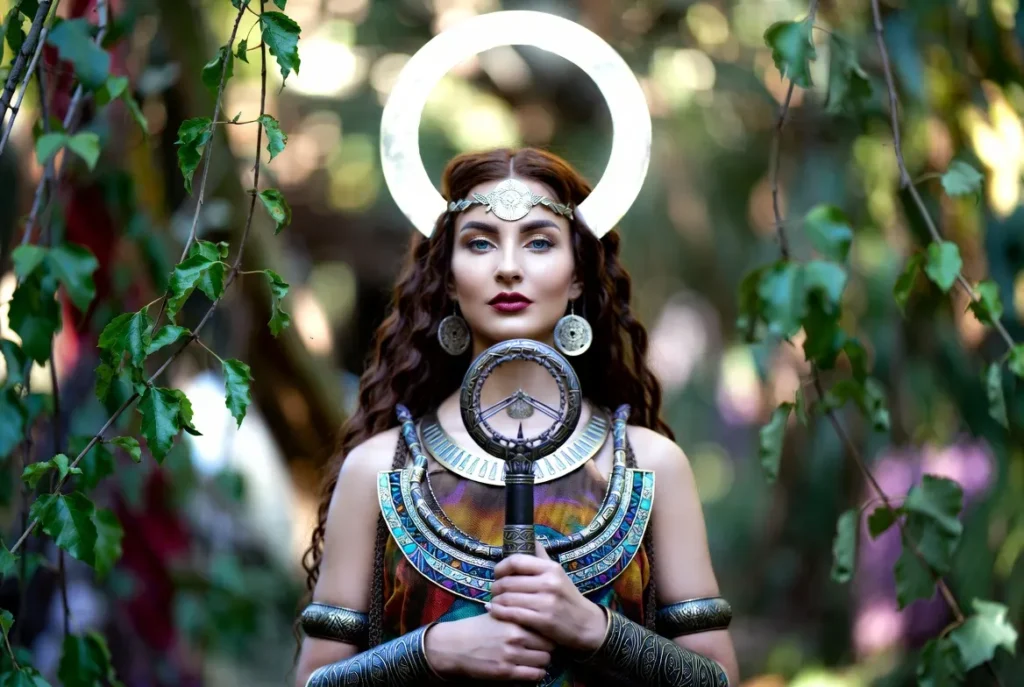
Potions & Herbs:
No witchcraft without potions, right? Circe’s recipes – from the deadly moly that Odysseus needs to resist her, to spells involving nightshade, mandrake, and bay – are her calling card. These items symbolize her knowledge of nature’s secrets, her power to heal or hex. (Side note: her “sacred plants” list reads like an herbology field day: enchanter’s nightshade, mandrake, and juniper.)
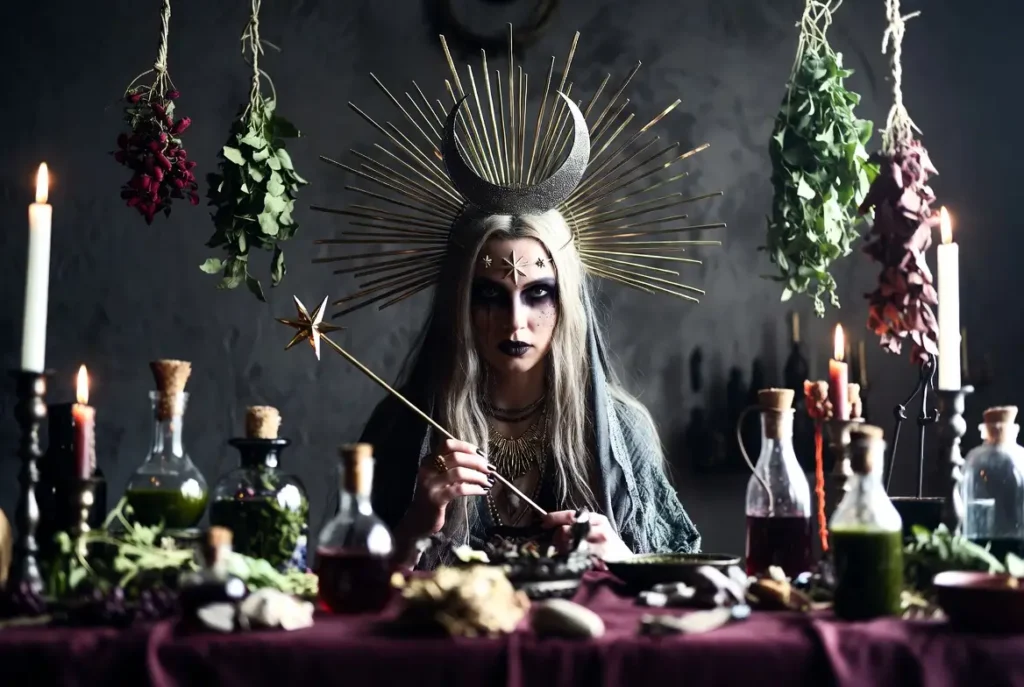
Animals:
This might seem odd for “symbols,” but hear me out. Circe surrounds herself with lions, wolves, pigs, and even mice – both as company and as transformed humans. In Greek myth, being “Mistress of Animals” is a big deal – think Artemis or the Anatolian Mother Goddess. For Circe, her animals show two things: her gentle command over wild nature and her gift of metamorphosis. (And yes, swine have their own symbolism here – pigs were sacred to Demeter, linked to cycles of life and purification.)
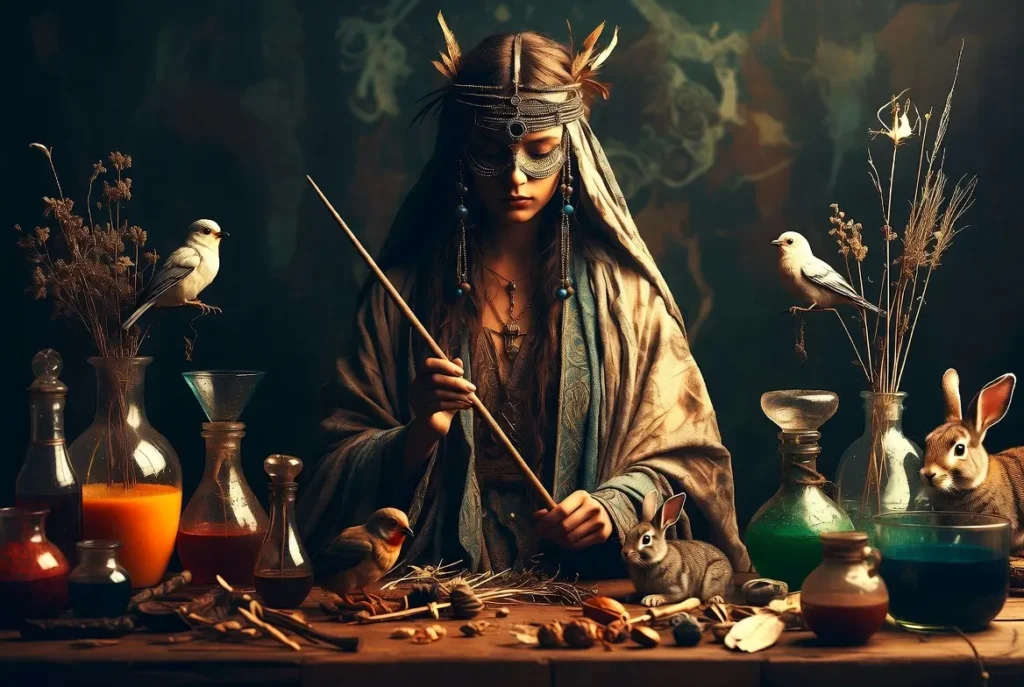
The Circle (Hawk/Falcon):
It’s literal in her name – Circe = “hoop” or “circle” – which speaks to the magical circles sorceresses cast. Additionally, the hawk imagery is strong: her name’s Greek root kirkos connects to hawks and falcons. Hawks stood for royalty and vision; they tie Circe to older mother-goddess traditions of the Mediterranean. So even a flying bird and the shape of a ring are her symbols.
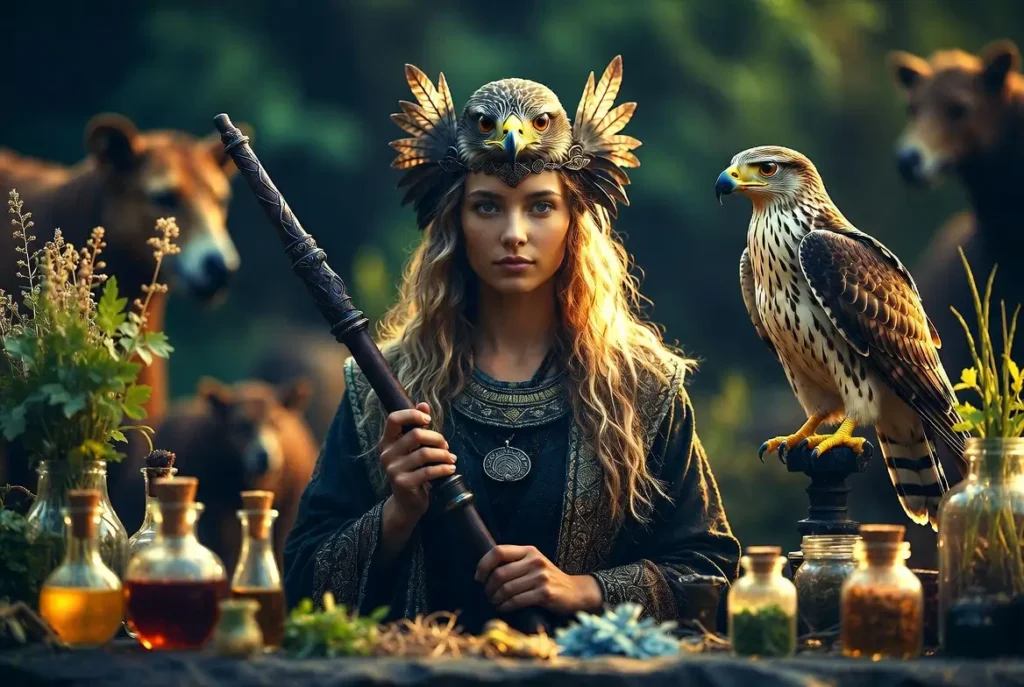
Sun and Sea:
Remember, she’s Helios’s daughter. So the sun is literally in her blood. It symbolizes her inherited glory and clarity of insight. At the same time, her island Aeaea is surrounded by the sea. Waves and ships show her two-faced nature – nurturing as the sun, yet wild as the deep. Ships on Circe’s sea “symbolize her journey between benevolence and vengeance… creation and destruction.”
Putting it all together, these symbols paint Circe as a multi-dimensional sorceress: solar and aquatic, a weaver of destinies, a teacher of wild wisdom. It’s like asking “what is the symbol of winter?” – you’d answer pine trees, snowflakes, family firesides, and hot cocoa. None of those is one, single thing; winter’s symbol is the feeling you get from all of it. Likewise, Circe’s symbol is found in her entire mythic atmosphere.
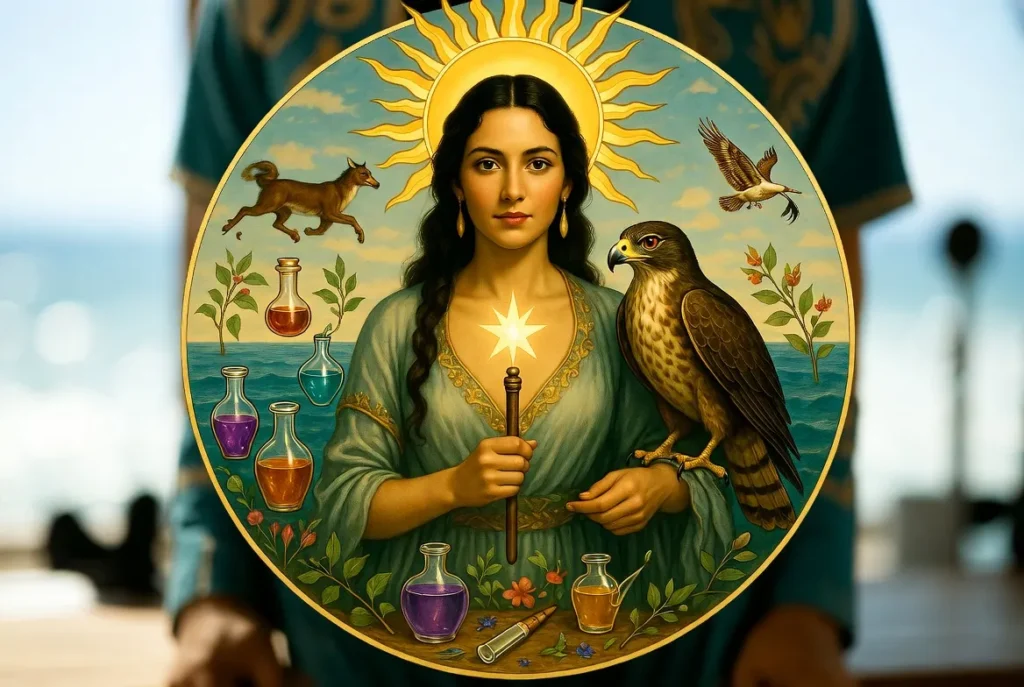
Circe’s Circle of Magic
So how do we translate that into modern terms? Imagine you’re a witch or pagan decorating your altar. Maybe you light a golden candle for Helios, pour seawater into a bowl for Aeaea, scatter a few mandrake roots, and place a little figurine of a hawk. Boom – you’ve built a Circe shrine from the ground up. Every item is a nod to her lore. No lightning bolt or owl here (those are Zeus and Athena’s symbols); Circe’s plate is full of herbal brews, a loom, and perhaps a bowl of barley (for Demeter) to honor those pigs and purification rituals.
Writers today also wrap Circe in familiar imagery. You’ll find jewelry with a triple moon motif (full moon flanked by crescents) sold as the “symbol for Circe” in comic shops, a design borrowed from modern goddess-witch iconography. Technically that triple-moon is Hecate’s symbol in Wicca, but hey, Circe is sometimes called Hecate’s daughter, so the crossover makes sense to fans. Either way, whether it’s triple-moon necklaces or a pagan altar, those are modern additions – they shout witch symbols we’ve been collecting for decades. Underneath it all, Circe’s core symbols remain her own: her transformative wand and her circle of magic, as ancient as the Aegean waves.
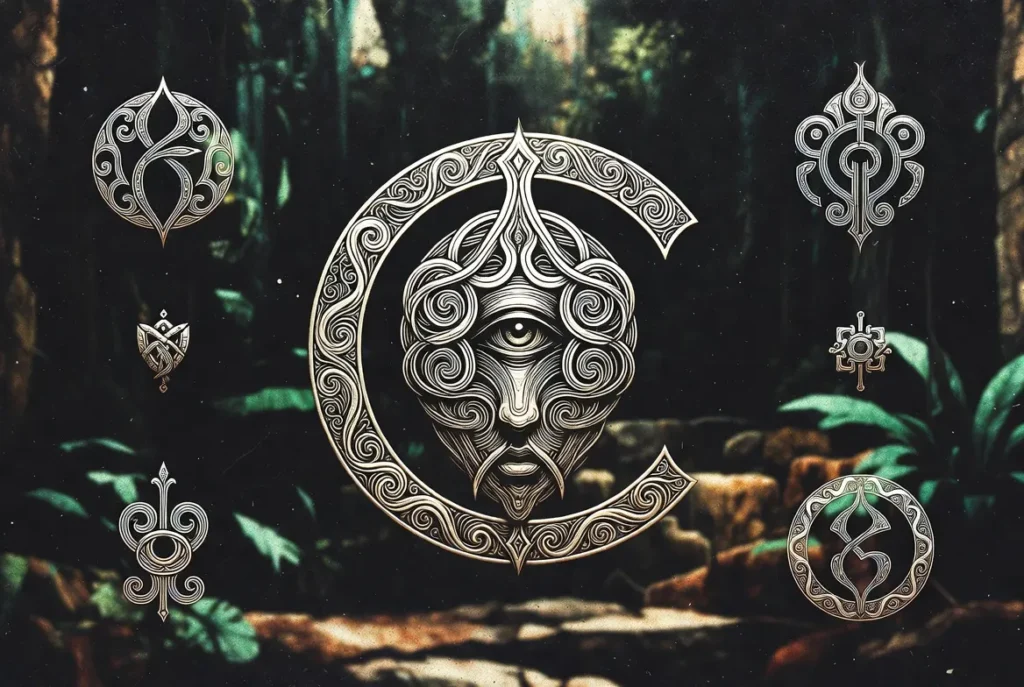
Circe in Our Age
Today’s fascination with Circe proves how powerful her archetype is. In the #Circe hashtag on social media, fans draw her with golden eyes (sun), surrounded by wild cats (Aeaea’s guardians), or hugging a piglet (a wink at her powers) – each a piece of the Circe symbol puzzle. Modern authors like Madeline Miller (in Circe, 2018) and illustrators often emphasize these motifs: the loom, the hymn-sung meals, the herb bundles. They’re basically pointing back to those same symbols we’ve been exploring.
And for witches? Circe is practically folklore royalty. In craft circles, invoking Circe goes hand in hand with classic witchcraft imagery. She’s mentioned in witchy blogs as an inspiration and is often depicted amid willow-braids of herbs and silhouetted wolves. In that sense, witch symbols are Circe’s home turf. It’s hardly a coincidence the same symbols keep popping up: a boundary circle on the ground (her name!), ritual plants in hand, nightfall’s moon overhead, and a companion animal at her side. To many modern pagans, these aren’t just nice aesthetics – they are how we recognize her presence or homage.
Final Thought
Ultimately, Circe’s “symbol” is more like a signature across mythic history. It’s the fiery hair and golden eyes of Helios’s daughter; it’s the circle of power she casts; it’s the nightshade on her shelf. It’s in the ring of bees buzzing around the story’s sweet-grass, in the flash of a hawk’s wing, and yes – in the howl of a wolf as a midnight omen.
So if someone asks again, “what’s the Circe symbol?” – just smile and say: it’s whatever part of her story calls to you. Her symbols are like a constellation: one person might point at the sun, another at a pig, but all of them are stars in the same sky.
Sources
The symbols above come straight from mythological scholarship and witchcraft lore. Circe’s wand, potions, and animals are detailed in modern Pagan references spells8.com witchesofthecraft.com
, her name’s meaning (circle/hawk) in etymological lore theoi.com
ladyofthelibrary.com , and her roles (goddess of transformation and sorcery) in texts on Greek myth
thewickedgriffin.com en.wikipedia.o . Each source above verifies the snippets of Circe’s emblematic universe woven into this story.
Pingback: Protection Symbols For Witches - Witch symbols
Pingback: Guide to the Meaning of Wiccan Symbols - Witch symbols
Pingback: Magic Symbols: What They Actually Do - Witch symbols