
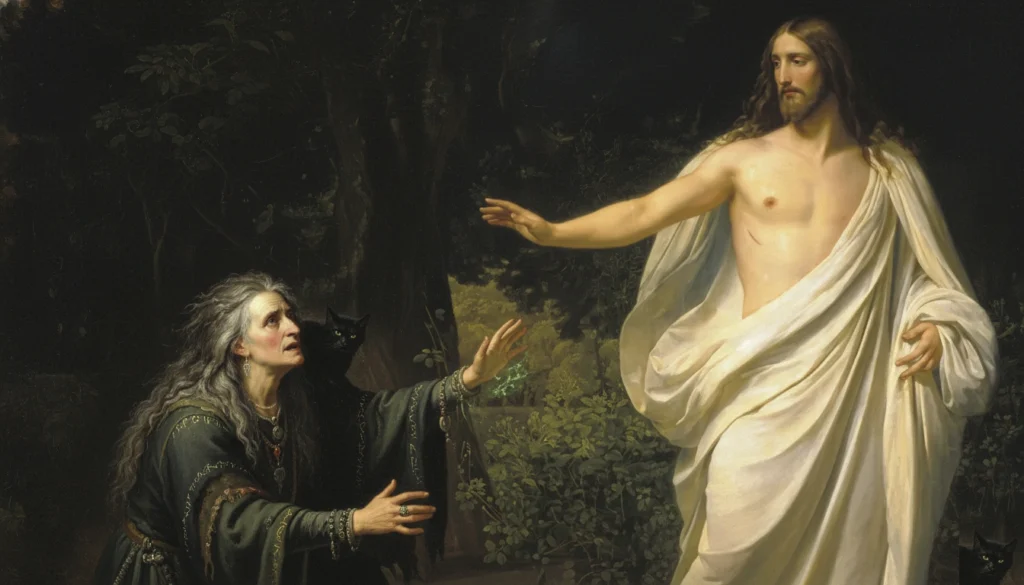
What did Jesus say about witchcraft? It’s a question that cuts to the heart of spiritual conflict, a search for clarity in a world filled with competing powers. Yet, a search through the Gospels for his direct condemnation of “witchcraft,” “magic,” or “spells” reveals a stunning silence. But this silence is not an absence of an answer. To truly understand what does Jesus say about witchcraft, we must realize his response was not a single quote, but a total confrontation.
Jesus answered the question not with words, but with overwhelming power—by directly overpowering the demonic forces that fuel sorcery , by issuing stark warnings against the deceptive “signs and wonders” of false prophets , and by living as the fulfillment of a divine law that had already condemned all occult practices as an act of rebellion against God.
Read More: Witchcraft in the Bible
What Does Jesus Say About Witchcraft in the Gospels?
A careful reader of the four Gospels—Matthew, Mark, Luke, and John—will discover a curious and compelling silence. While the broader biblical narrative speaks with startling clarity against witchcraft, magic, and spells, Jesus Christ himself is never recorded as using these specific words.
This absence is not an oversight, nor does it imply a softening of the divine stance. Instead, it represents a profound theological statement. To uncover what Jesus said about witchcraft, one must look beyond a simple word search. We must examine the totality of his ministry: his actions against the spiritual forces that empower magic, his warnings about spiritual deception, and the biblical worldview he upheld.
This report provides a definitive answer to this crucial question. We will explore three foundational areas. First, we’ll analyze Jesus’s direct confrontations with the demonic realm, the source of witchcraft’s power. Second, we’ll examine his indirect teachings, especially his warnings against false prophets who use deceptive signs—the equivalent of magic. Finally, we will place his perspective within the context of the Old Testament law, which he came to fulfill. This exploration reveals a clear picture of Jesus’s stance on all forms of witchcraft, magic, and spells.
Jesus vs. Demonic Magic: A Battle of Authority
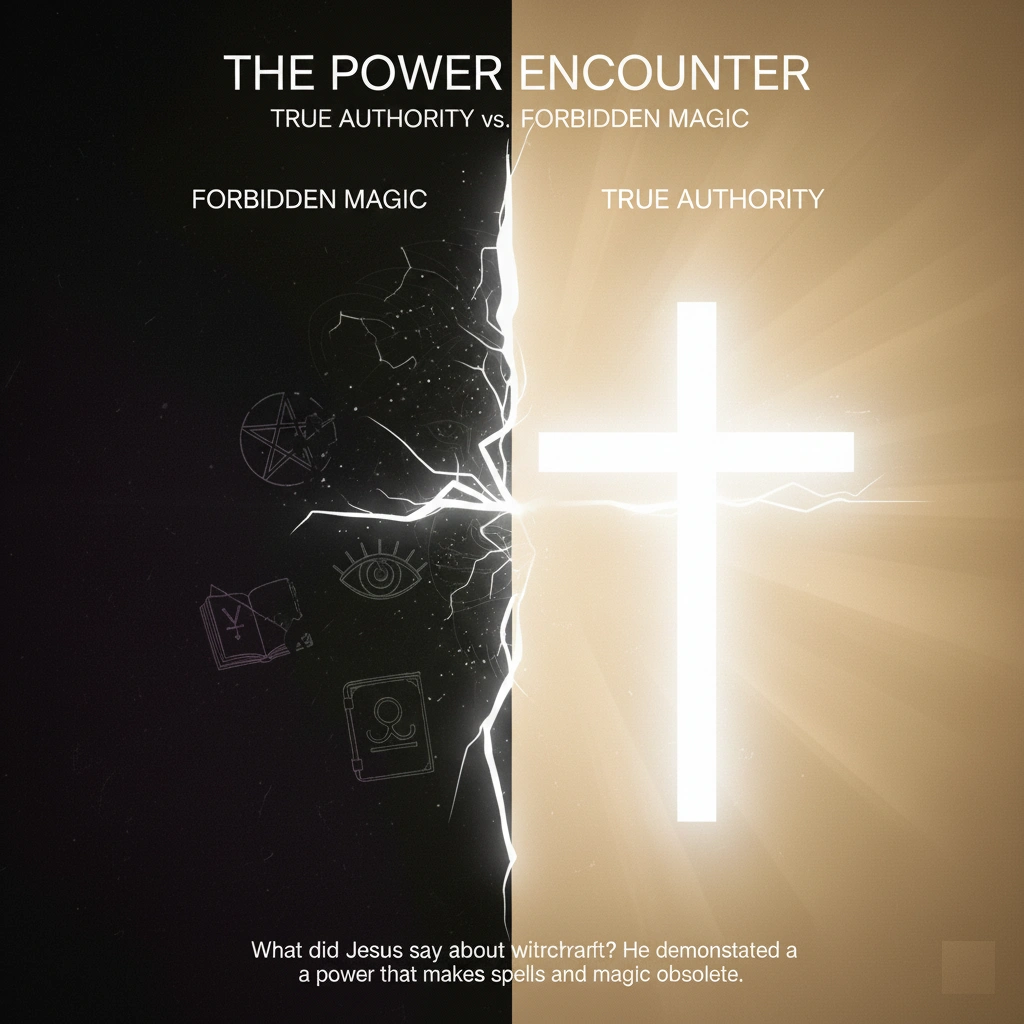
Jesus’s primary method for addressing witchcraft was not through words but through a direct demonstration of superior authority over its power source: the demonic realm. His ministry was an active invasion and overthrow of the kingdom of darkness.
The powers that practitioners of magic, sorcery, and spells seek to manipulate were, in the presence of Jesus, rendered powerless. He addressed the root of the issue, not just its symptoms.
The Nature of Demonic Power in Witchcraft
The biblical worldview presents witchcraft not as a neutral spiritual exploration but as a practice rooted in demonic activity and rebellion against God. It is the “universal, primeval religion of fallen humanity,” emerging when humans seek power from a forbidden source.
This pursuit of spiritual knowledge and control apart from God is a form of idolatry, tapping into the realm of Satan and his demonic forces. The core temptation behind all occultic practices is the same one offered in the Garden of Eden: “You will be like God”. It is a desire for power on one’s own terms, which is the definition of rebellion.
Jesus’s Exorcisms as a Direct Confrontation
The Gospels are filled with accounts of Jesus casting out demons. These events are more than healings; they are raw power encounters, public demonstrations of his divine authority over evil.
In the account of the Gerasene demoniac in Mark 5, the legion of demons immediately recognize Jesus’s authority. They do not challenge him; they beg for mercy, crying out, “What do you want with us, Jesus, Son of the Most High God? In God’s name don’t torture me!”.
This encounter reveals a critical truth: the very powers invoked in magic and sorcery are terrified of Jesus and subject to his command. They know he possesses the power of final judgment. His exorcisms were not rituals but commands issued with inherent authority. This established a clear hierarchy of power, placing Jesus in absolute supremacy over the demonic kingdom that fuels witchcraft.
The Delegation of Divine Authority
Jesus did not reserve this authority for himself. He delegated it to his followers. When he sent out the seventy-two disciples in Luke 10, they returned amazed, proclaiming, “Lord, even the demons are subject to us in your name!”.
The Greek word for “subject” is hupotasso, a military term describing a soldier obeying a commander’s order. The demons recognized the authority of Jesus’s name and were compelled to obey. This shows that authority over witchcraft’s source is an accessible power for believers through faith in Christ.
This delegated authority is profound. While witchcraft seeks control through forbidden rituals, faith exercises God-given authority through submission to Christ. Jesus’s approach was not to teach a better form of magic but to give an authority that made magic obsolete.
Jesus’s Cosmic Perspective on the Battle
Jesus’s response to the disciples’ report in Luke 10 reveals the cosmic scale of his mission. He tells them, “I saw Satan fall like lightning from heaven”. This is the testimony of a divine being who was present at the original rebellion of Lucifer. He is not just fighting minor demons; he has entered history to conclude the conflict.
He then gives his followers their orders: “Behold, I give unto you power to tread on serpents and scorpions, and over all the power of the enemy”. “Serpents” and “scorpions” are symbols of demonic powers. The authority he gives is “over all the power of the enemy,” signifying a complete victory. This reveals a strategy of displacement, not debate. Jesus doesn’t argue against witchcraft because his presence and power render it irrelevant.
What Jesus Said About Witchcraft Through His Warnings
While Jesus did not use the words “witchcraft” or “sorcery,” he spoke with severe gravity about its practitioners under the title “false prophets.” His warnings against those who use deceptive spiritual signs and wonders are a direct commentary on the function and danger of magic.
The Deception of “Signs and Wonders”
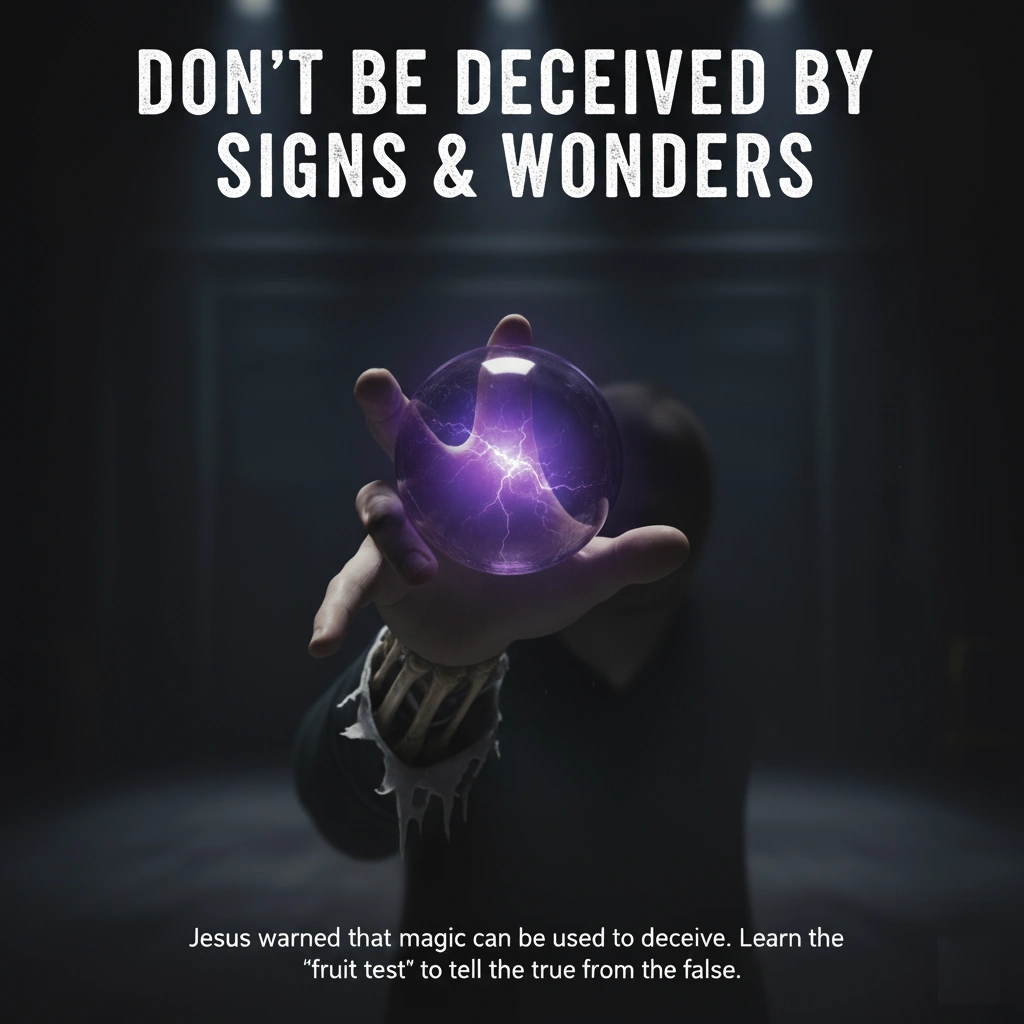
In his Olivet Discourse, Jesus warns: “For false messiahs and false prophets will appear and perform great signs and wonders to deceive, if possible, even the elect” (Matthew 24:24). This statement is critical because it shows that a supernatural event is not, by itself, proof of divine origin.
Jesus makes it clear that counterfeit power is real. Satan, the source behind witchcraft, excels at mimicking God’s works. Pharaoh’s magicians, through demonic power, were able to replicate some of Moses’s initial signs.
This teaching changes how one should approach supernatural claims. The question is not, “Did a miracle happen?” but rather, “What is the source of this power?” A magical act that leads a person away from God’s truth is a tool of deception. Deuteronomy 13 reinforces this, stating that even if a prophet’s sign comes true, if he then says, “Let us go after other gods,” he is a false prophet and must be rejected.
The Definitive “Fruit Test”
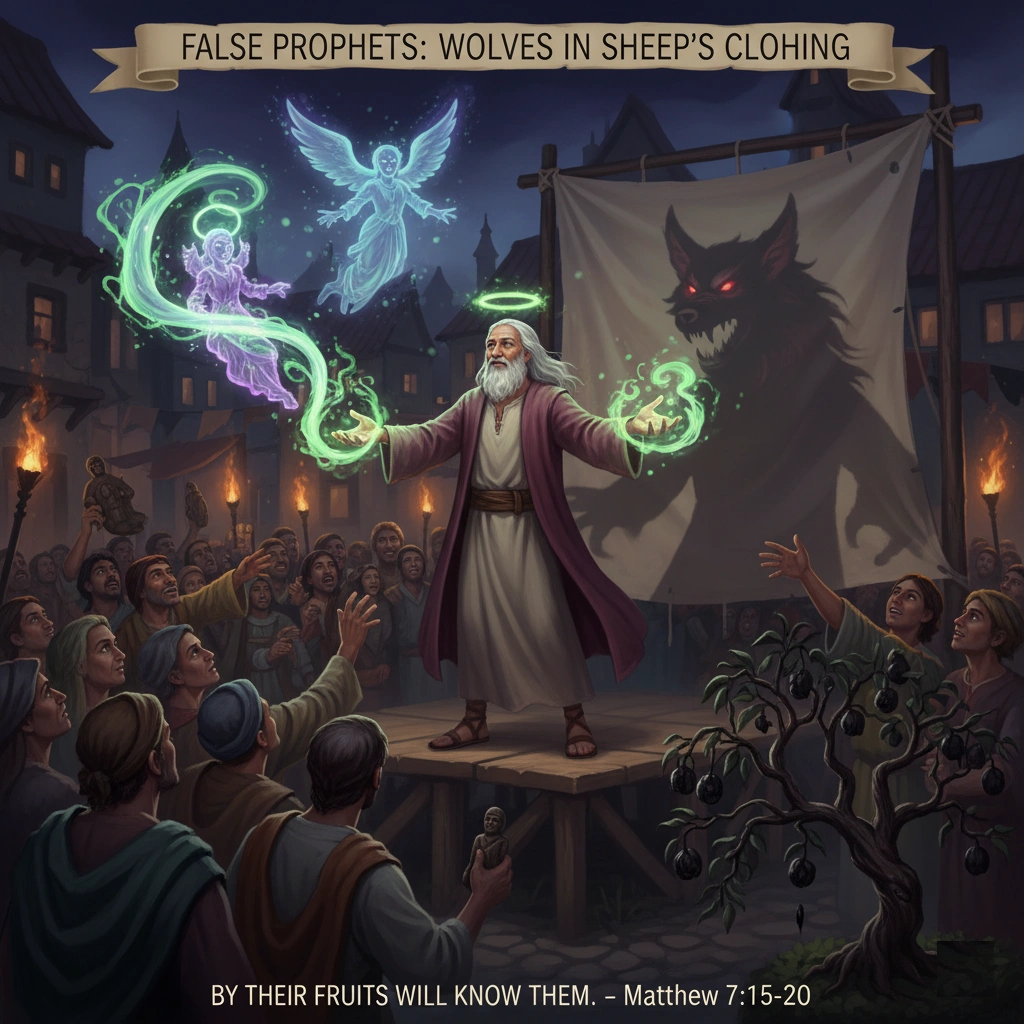
To guard against this deception, Jesus provides the ultimate diagnostic tool: “Beware of false prophets, who come to you in sheep’s clothing, but inwardly are ravenous wolves. You will recognize them by their fruits” (Matthew 7:15-20). This “fruit test” evaluates the tangible results of a person’s life and teaching. The key areas of inspection include:
- Doctrinal Fruit: Do they teach sound doctrine? A teacher who denies the unique saving work of Jesus Christ is, regardless of any miracles, a false prophet.
- Moral Fruit: Does their personal life reflect holiness? False teachers are often described as arrogant, greedy, and slaves to depravity.
- Theological Fruit: Where does their teaching lead? Does it point toward God or self-glorification? A true prophet’s work glorifies God; a false prophet’s work glorifies themselves or demonic powers.
The Nature of the Deceiver
Jesus’s metaphor—”ravenous wolves in sheep’s clothing”—is precise. The “sheep’s clothing” is the deceptive outward appearance. They may use Christian language and appear gentle.
However, their inner nature is that of a “ravenous wolf,” a predator whose goal is to devour the flock. They are motivated by greed and control, seeking to exploit the unsuspecting. This directly links the false prophet to the practitioner of witchcraft, who uses deceptive signs to lead people away from God.
The Old Testament Context for What Jesus Said About Witchcraft
To fully grasp Jesus’s position, we must understand the world into which he was born. He was a Jewish man living under the Law of Moses, which contained severe prohibitions against all occult practices. Jesus himself stated he came not to abolish the Law but to fulfill it (Matthew 5:17).
The Comprehensive Prohibition of Occult Practices
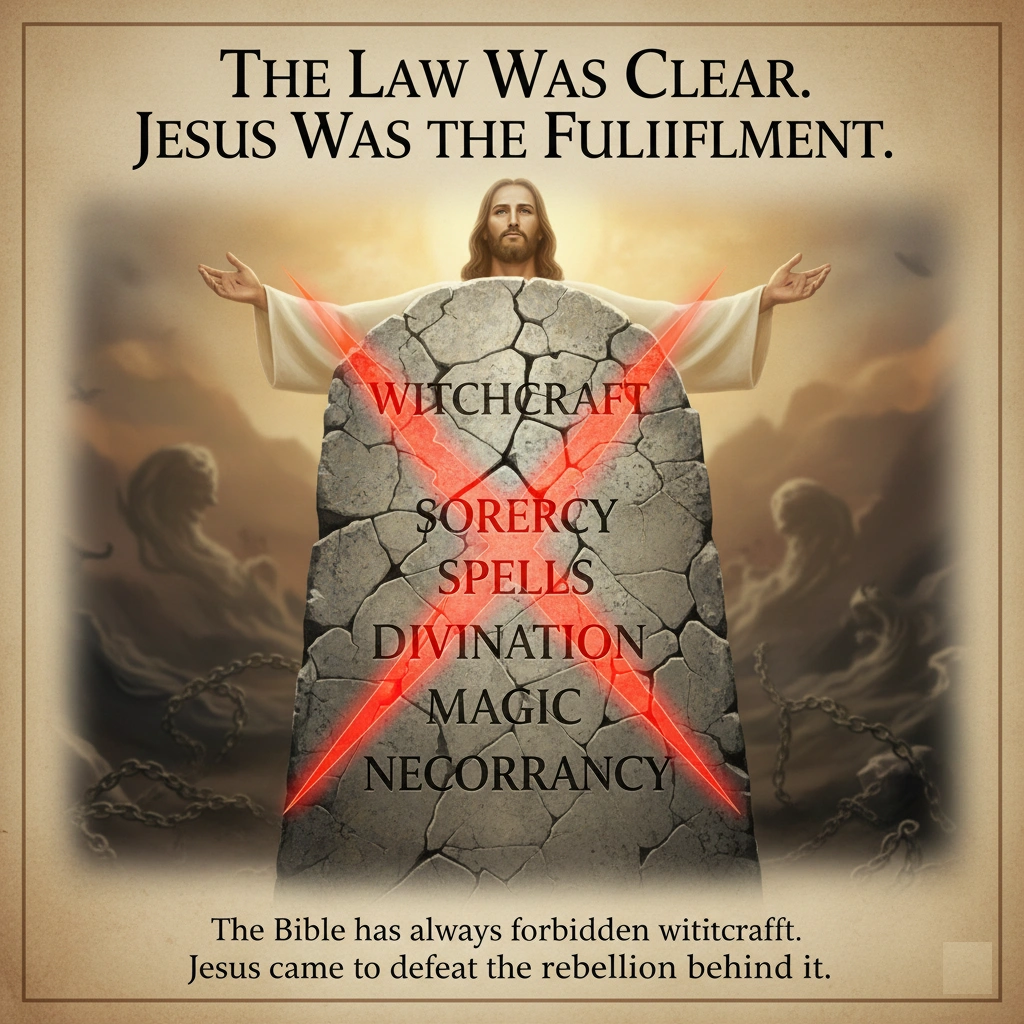
The most detailed condemnation of witchcraft is in Deuteronomy 18:10-12. This passage leaves no room for ambiguity:
“Let no one be found among you who sacrifices their son or daughter in the fire, who practices divination or sorcery, interprets omens, engages in witchcraft, or casts spells, or who is a medium or spiritist or who consults the dead. Anyone who does these things is detestable to the LORD, and because of these same detestable practices the LORD your God will drive out those nations before you.”
This list covers a wide array of forbidden spiritual activities, from fortune-telling to communicating with spirits.
The Rationale: Spiritual Treason and Idolatry
The core reason for this prohibition is that these practices are “detestable to the LORD”. The prophet Isaiah asks, “When someone tells you to consult mediums and spiritists… should not a people inquire of their God? Why consult the dead on behalf of the living?” (Isaiah 8:19). To engage in witchcraft is to turn away from the Creator and seek power from forbidden, demonic sources. This is the essence of idolatry.
Read More: Witchcraft and Christianity
The Severity of the Penalty and the Sin of Rebellion
The gravity of this sin is reflected in the penalty prescribed by the Law: death. Exodus 22:18 states, “You shall not permit a sorceress to live,” and Leviticus 20:27 commands that mediums and spiritists be put to death.
In the theocracy of ancient Israel, practicing witchcraft was an act of high treason, equivalent to collaborating with an enemy power. The prophet Samuel provides the ultimate definition of this sin, declaring, “For rebellion is as the sin of witchcraft” (1 Samuel 15:23). This connects witchcraft to the original sin in the Garden: the desire to be “like God”.
The table below shows the Bible’s consistent prohibition against these practices, forming the unified worldview that Jesus upheld.
Table 1: Biblical Perspectives on Occult Practices
| Forbidden Practice | Key Old Testament Scripture | New Testament Affirmation/Consequence |
| Witchcraft/Sorcery | Deuteronomy 18:10; Exodus 22:18 | Galatians 5:20; Revelation 21:8 |
| Divination/Fortune-Telling | Deuteronomy 18:10; Leviticus 19:26 | Acts 16:16-18 (confrontation of a spirit of divination) |
| Casting Spells | Deuteronomy 18:11 | Revelation 18:23 (deception by pharmakeia/sorcery) |
| Consulting Mediums/Spirits | Leviticus 19:31; Leviticus 20:6 | 1 Timothy 4:1 (“deceitful spirits and doctrines of demons”) |
| Inquiring of the Dead | Deuteronomy 18:11; Isaiah 8:19 | Luke 16:27-31 (parable implying the dead cannot be consulted) |
How Jesus’s Apostles Fought Magic and Spells
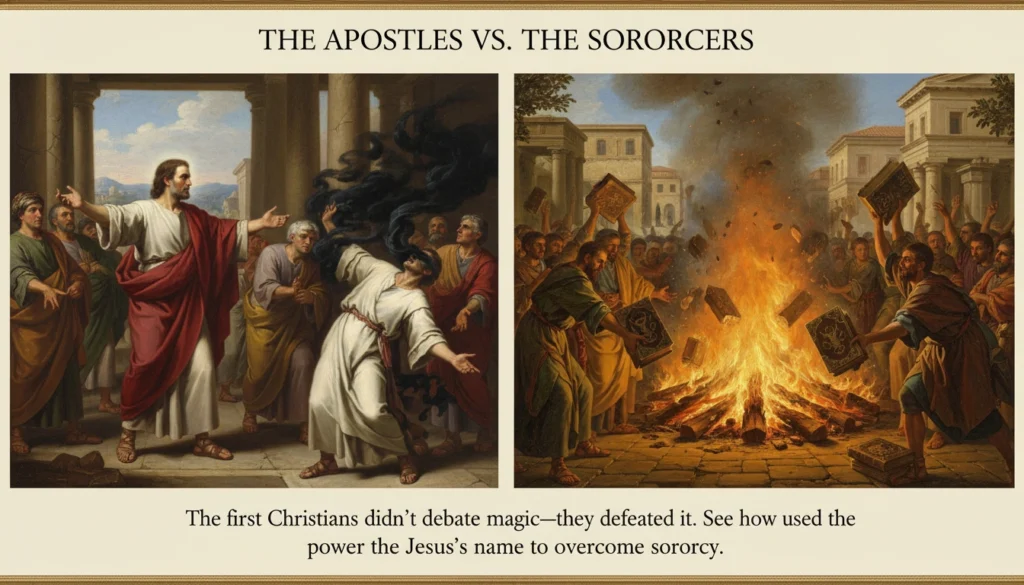
The Book of Acts shows how the apostles, empowered by the Holy Spirit, applied Jesus’s teachings in direct confrontations with magic and sorcery. These narratives provide a model for the church’s response to the occult.
Case Study 1: Peter vs. Simon the Sorcerer (Acts 8:9-24)
In Samaria, the apostles met Simon, a powerful magician who amazed people with his sorcery. After professing faith, Simon saw the apostles give the Holy Spirit and offered them money, saying, “Give me also this ability”.
Peter’s rebuke was severe: “May your money perish with you, because you thought you could buy the gift of God with money!”. This confrontation highlights the core error of magic: the attempt to control and commodify divine power for personal gain.
Case Study 2: Paul vs. Elymas the Magician (Acts 13:6-12)
On Cyprus, Paul and Barnabas conflicted with a Jewish sorcerer named Elymas, who was an attendant to a Roman proconsul. Fearing loss of influence, Elymas tried to turn the proconsul from the faith.
Paul, “filled with the Holy Spirit,” declared, “You are a child of the devil… Will you never stop perverting the right ways of the Lord? Now the hand of the Lord is against you. You are going to be blind for a time”. Instantly, Elymas was struck blind. This was a raw power encounter where the authority of Christ defeated the demonic power of sorcery.
Case Study 3: The Ephesian Conversion (Acts 19:17-20)
Ephesus was a major center for magic. After Paul’s ministry, many new believers who had practiced sorcery came forward. They “brought their scrolls together and burned them publicly,” an act of costly and radical repentance valued at fifty thousand drachmas.
This event illustrates the proper response to past involvement in the occult: a complete and total renunciation. They destroyed their magic books, signifying a clean break from the tools of their former life.
These three narratives from Acts form a comprehensive model for responding to the occult, addressing the motive, might, and materials of witchcraft.
What the Bible Means by Witchcraft and Sorcery (Pharmakeia)
To understand the New Testament’s warnings, it is crucial to examine the specific Greek word translated as “witchcraft” or “sorcery”: pharmakeia. This term reveals a connection to the use of drugs, potions, and poisons for manipulation.
The Meaning of Pharmakeia
In Galatians 5:20, Paul lists “witchcraft” (pharmakeia) as an “act of the flesh.” In Revelation 18:23, John writes that by Babylon’s “sorcery” (pharmakeia), “all the nations were led astray”. This word is the root of “pharmacy” and “pharmaceuticals”.
In the ancient world, the term encompassed the entire spectrum of drug use, including healing remedies, mind-altering substances, and deadly poisons. A biblical sorcerer, or pharmakos, could be seen as an ancient drug dealer, using chemicals to control or harm others.
The Connection to Idolatry and Deception
The use of pharmakeia was deeply intertwined with pagan rituals. Mind-altering drugs were used to induce trances or visions, a form of idolatry that sought spiritual experiences from demonic sources.
Paul groups pharmakeia with “idolatry” in Galatians 5, suggesting a close association. John’s references in Revelation also connect sorcery directly to idolatry and mass deception. The writers were concerned with the real-world evil of using drugs to manipulate people and lead them into demonic worship.
A “Work of the Flesh”
By categorizing pharmakeia as an “act of the flesh” (Galatians 5:19-21), Paul places it in the realm of sinful human behavior. It is listed alongside sexual immorality, hatred, and jealousy.
This shows that witchcraft is not a misguided hobby; it is a manifestation of a heart in rebellion against God. Paul concludes with a solemn warning: “those who live like this will not inherit the kingdom of God”.
The Final Answer: What Did Jesus Say About Witchcraft?
The investigation into what Jesus said about witchcraft culminates not in a single quote, but in the definitive statement of his entire ministry. His final word on the matter is unequivocally clear.
First, Jesus’s authority is his statement. He did not need to issue a new prohibition because he came to dethrone its master. He demonstrated absolute authority over the demonic realm—the source of all magic and sorcery.
Second, Jesus’s warnings are his statement. He directly addressed the methods of the occult when he warned against false prophets performing “great signs and wonders” to deceive. He exposed the deceptive heart of magic.
Third, Jesus’s affirmation of Scripture is his statement. By upholding the Old Testament Law, he affirmed its absolute condemnation of witchcraft as an act of idolatry and rebellion.
Ultimately, the problem with magic, spells, and witches is the source of the power. It is a deliberate attempt to bypass God and tap into a forbidden, demonic realm for personal control. This path leads to spiritual bondage and death.
Therefore, Jesus’s final answer to the allure of witchcraft is Himself. He offers a relationship with the one true God and access to the life-giving power of the Holy Spirit, which is infinitely greater than any counterfeit power.
In the face of the fellowship and security found in Christ, the promises of the occult are revealed as a “miserable mess of pottage” offered in exchange for one’s eternal birthright. In a world of competing spiritual claims, the biblical record is clear: only Jesus has the words of eternal life.