
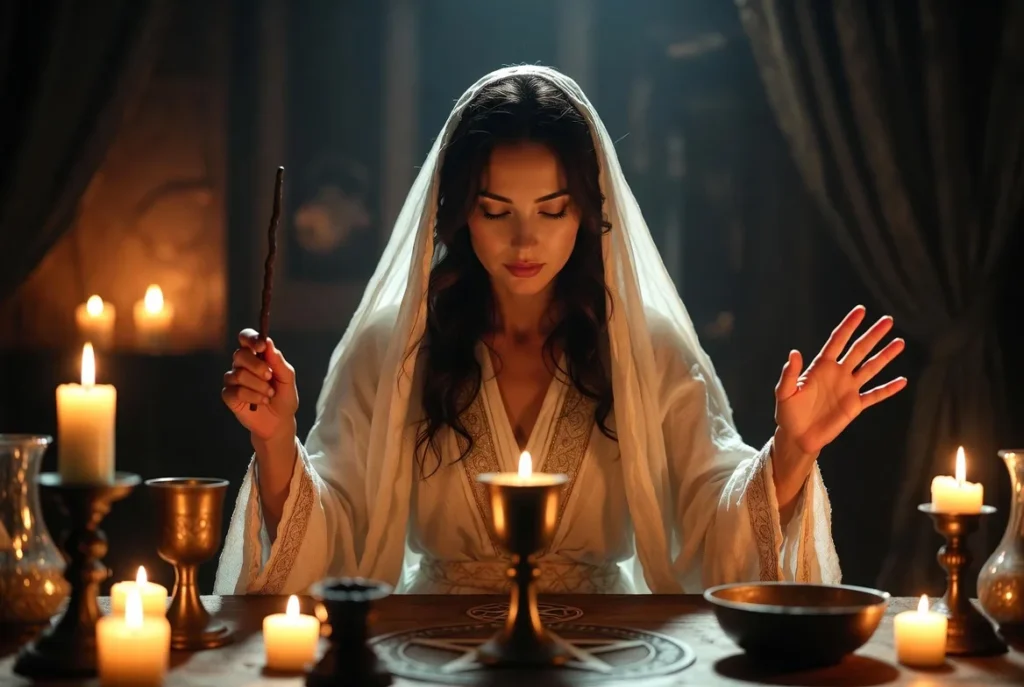
You know what’s interesting? When people ask whether white magic is haram in Islam, they’re often expecting a simple yes or no answer. But here’s the thing Islam doesn’t really distinguish between “white” and “black” magic the way Western pop culture does. The whole concept of good magic versus bad magic? That’s not how Islamic scholarship approaches this topic at all.
Let me explain where this gets complicated.

What Even Is “White Magic” Anyway?
Before we can tackle whether something’s permissible in Islam, we need to understand what we’re actually talking about. White magic, in the Western tradition, typically refers to magic performed with good intentions healing spells, protection charms, love spells meant to bring people together rather than tear them apart. It’s the Glinda approach to magic, if you will, rather than the Wicked Witch.
The problem? This entire framework is borrowed from European folk traditions and doesn’t align with how Islam categorizes spiritual practices. In Islamic terminology, we’re dealing with concepts like sihr (magic or sorcery), ruqyah (spiritual healing through Quranic recitation), and shirk (associating partners with Allah). These categories don’t map neatly onto the white magic/black magic divide.
The Islamic Perspective: Why Intention Doesn’t Change Everything
Here’s where many people get tripped up. They think, “Well, if I’m using magic for good purposes to help someone, to heal, to protect surely that makes it okay?” Honestly, it’s a logical assumption. We’re taught that intentions matter in Islam, and they absolutely do. But intention alone doesn’t make a prohibited act permissible.
Think about it this way: you can’t drink alcohol with the pure intention of becoming more social and friendly at a gathering. The good intention doesn’t transform the haram substance into something halal. The same principle applies to magic.
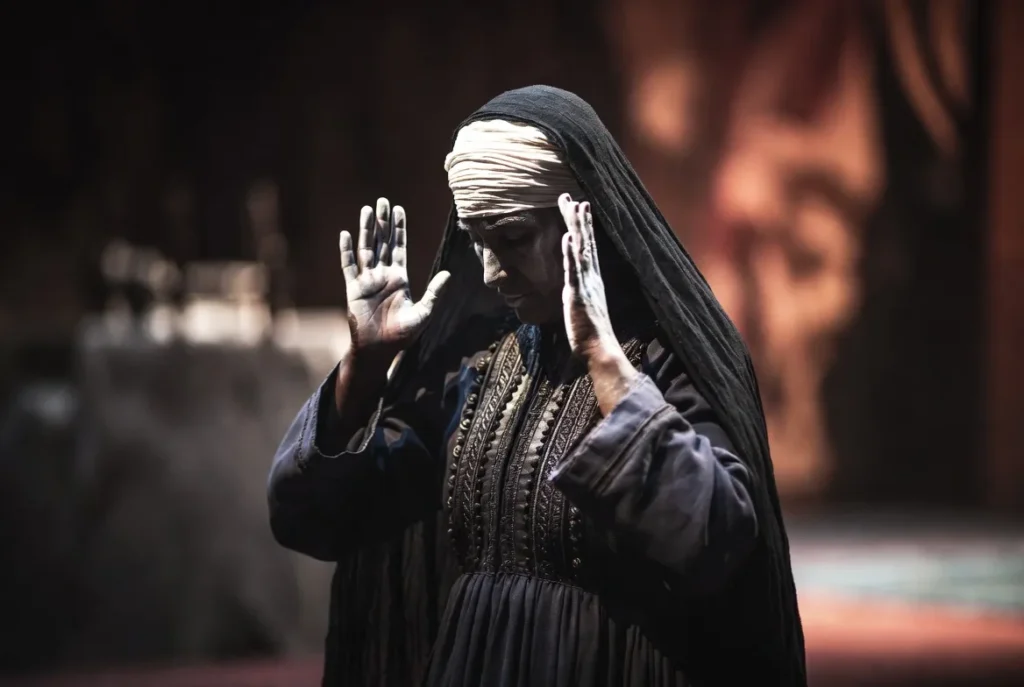
The Islamic Perspective: Why Intention Doesn’t Change Everything
Here’s where many people get tripped up. They think, “Well, if I’m using magic for good purposes to help someone, to heal, to protect surely that makes it okay?” Honestly, it’s a logical assumption. We’re taught that intentions matter in Islam, and they absolutely do. But intention alone doesn’t make a prohibited act permissible.
Think about it this way: you can’t drink alcohol with the pure intention of becoming more social and friendly at a gathering. The good intention doesn’t transform the haram substance into something halal. The same principle applies to magic.What the Quran Says About Magic
The Quran is pretty explicit when it comes to magic, and spoiler alert it’s not endorsing it, regardless of the practitioner’s intentions. In Surah Al-Baqarah (2:102), there’s a detailed account of how magic was taught in Babylon, and the verse emphasizes that those who learned it “would learn from them that by which they cause separation between a man and his wife. But they do not harm anyone through it except by permission of Allah.”
Notice something there? The verse doesn’t distinguish between magic used to harm and magic used for other purposes. It’s discussing magic as a general practice that people were warned against. The scholars who’ve studied this verse extensively point out that the prohibition isn’t contingent on the outcome it’s about the practice itself.
There’s also Surah Al-Falaq (113), where believers are taught to seek refuge from “the evil of… those who blow on knots,” which is understood to refer to practitioners of magic who would tie knots while casting spells.

But What About Healing and Protection?
Now, here’s where people often push back. They’ll say, “What about using spiritual methods to heal or protect? Isn’t that different?” And you know what? They’re onto something just not in the way they might think.
Islam absolutely permits and even encourages seeking protection and healing through spiritual means. But there’s a crucial distinction: the methods matter enormously. Reciting Quranic verses for healing (ruqyah)? Completely permissible. Making du’a (supplication) to Allah for protection? Not just allowed but recommended.
Using incantations that involve invoking jinn, spirits, or anything other than Allah? That’s where you’ve crossed into haram territory, even if you swear up and down that you’re doing it to help someone.
Let me give you a concrete example. Say someone’s dealing with illness, and you want to help them spiritually. If you recite Surah Al-Fatihah over them, blow gently, and make du’a to Allah for their healing that’s legitimate Islamic practice. If you start drawing symbols, mixing weird concoctions, mumbling words in languages you don’t understand, or calling on entities other than Allah to help that’s sihr, plain and simple. The good intention of wanting to heal doesn’t change what the practice actually is.
The Shirk Problem: Why This Really Matters
Here’s the thing that makes magic white, black, or polka-dotted so problematic in Islam: it almost always involves an element of shirk. And shirk, associating partners with Allah, is literally the one unforgivable sin if a person dies without repenting from it.
Magic typically requires believing that something or someone other than Allah has independent power to affect the world. Whether that’s believing certain words have inherent power (rather than power granted by Allah), or invoking jinn or spirits to accomplish something, or attributing supernatural abilities to created things all of these involve shirk at some level.
Think of it like this: when a Muslim makes du’a, they’re acknowledging that only Allah has the power to grant what they’re asking for. When someone performs magic even with good intentions they’re operating under a different framework entirely. They’re suggesting that there are other mechanisms, other powers, other routes to achieve outcomes. That’s the fundamental problem.

But I’ve Seen Muslims Do It”: Cultural Practices vs. Islamic Teachings
Honestly, this is where things get messy in the real world. If you’ve spent time in Muslim communities, particularly in parts of South Asia, North Africa, or the Middle East, you’ve probably encountered people who identify as Muslim and also engage in practices that look an awful lot like magic. Amulets, talismans, visiting certain saints’ graves for specific outcomes, hiring “spiritual healers” who do… questionable things.
Here’s the uncomfortable truth: cultural practice doesn’t equal Islamic permissibility. Just because lots of Muslims do something doesn’t make it halal. (If that were the case, we’d have to accept that charging interest is fine because plenty of Muslims have bank accounts but that’s obviously not how it works.)
Many of these practices are holdovers from pre-Islamic traditions that got mixed in with Islamic identity over centuries. Scholars have been fighting against these syncretistic practices basically since Islam began spreading to different regions. The fact that they persist doesn’t legitimize them; it just shows how hard it is to separate cultural inheritance from religious practice.
What About Learning About Magic for Academic Purposes?
Now we’re getting into nuance territory. Is it haram to study magic from a historical or academic perspective? Most scholars would say no there’s a difference between learning about something and actually practicing it.
You can study the history of occult practices, read anthropological accounts of magic in different cultures, or analyze medieval grimoires as historical documents without engaging in the practices themselves. It’s similar to how a Muslim can study comparative religion without practicing other faiths.
The red line is when you move from academic knowledge to practical application when you start testing whether those spells “work” or experimenting with rituals, even “just to see what happens.”

The Slippery Slope of “Just a Little Bit”
Let me address something I’ve heard variations of many times: “What if I just use a tiny bit of white magic, combined with making du’a to Allah? Like, I’m mostly relying on Allah, but I’ll just add this little charm for extra help?”
This is dangerous thinking, honestly. It’s like saying, “What if I pray five times a day but also bow down to this statue once a week, just in case?” You can’t hedge your bets when it comes to tawheed (the oneness of Allah). Either you believe Allah alone controls everything, or you don’t.
Mixing Islamic practices with magic doesn’t purify the magic it corrupts the Islamic practice. It demonstrates a fundamental misunderstanding of what it means to have tawakkul (reliance on Allah). Real tawakkul means taking permissible means and then trusting Allah with the outcome not taking impermissible means and trying to justify them with good intentions.
So What’s the Verdict?
After all this discussion, where do we land? The overwhelming consensus among Islamic scholars classical and contemporary, from all major schools of thought is that magic is haram. Period. The “white” qualifier doesn’t change this.
Whether you’re trying to curse someone or cure someone, whether you’re attempting to harm or to heal, if you’re using methods that involve invoking anything other than Allah, using incomprehensible incantations, employing supernatural intermediaries, or attributing independent power to created things you’re engaging in prohibited practices.
Does this mean Islam leaves you helpless against spiritual afflictions or prevents you from seeking spiritual solutions? Absolutely not. The alternatives exist: Quranic recitation, du’a, dhikr (remembrance of Allah), seeking knowledge, taking permissible worldly means. These aren’t inferior substitutes they’re the genuine articles, the practices that actually align with Islamic monotheism.

White vs. Black Magic: It’s All the Same Spell
You’ve probably heard of black magic (evil spells) and white magic (supposedly good spells), and you might assume white magic is okay since it’s “good.” But in Islam, that color coding doesn’t wash. There isn’t a special pass for benevolent magic both are just magic. In fact, classical Islamic scholars and fatwas emphasize that there’s no real distinction: “In Islam there is no distinction between Black Magic… and White Magic… both are evil and throw us out of the fold of Islam”. Basically, if you are summoning any jinn or occult force – even to “remove” a curse you’re still playing with fire. One reason is simple logic: if the harm of black magic happens only by Allah’s will, then its removal is also by Allah’s will. Going to a “white magic” practitioner effectively says, “Nevermind Allah, I’ll take care of it!” which Islam views as a form of kufr (unbelief).
You know what? Some people say things like “Prophet Solomon used magic for good,” but the Quran explicitly debunks that myth. Allah Himself clarifies that Solomon’s power came from Allah, not some magic spell – and that devils were the ones teaching magic to people. Scholars warn that whoever claims “white magic” is permissible is essentially trying to fool themselves and others, because in Islam there really is no “white” side of magic. It’s all considered a slippery slope back to shirk (associating partners with Allah)
Quran, Hadith, and the Curse of Spells
Turn on the Quran or Hadith, and the message is clear: magic equals trouble. The Quran describes magic as something humans shouldn’t know – taught by devils to mislead people. For example, Surah al-Baqarah (2:102) tells us “They learn that which harms them and benefits them not”. In other words, Allah calls magic purely harmful and useless – it has no real benefit. How can something that only harms and brings disbelief ever be allowed? As one Muslim scholar writes, why permit something that “is pure harm and in which there is no benefit”?
There are also hadiths (sayings of the Prophet ﷺ) warning against magic. The Prophet ﷺ said that trying to fight a spell with another spell (known as nushrah) is itself “from the work of Satan”. In plain terms: even if your intention is “good” like undoing a hex – using any kind of magic is tainted by Satan’s realm. Some hadith even imply that practicing sihr can amount to kufr (disbelief) because you’re relying on anything other than Allah to change reality. So, according to both Quran and Sunnah, the safe route is to completely avoid magic.

What Should You Do Instead?
If you’ve been drawn to “white magic” because you want to help people, protect yourself, or achieve good outcomes through spiritual means, Islam offers you clear alternatives:
Learn authentic ruqyah from knowledgeable sources. Memorize and regularly recite the protective chapters of the Quran (like Ayat al-Kursi and the last three surahs). Develop a consistent practice of morning and evening adhkar (remembrance formulas from the Sunnah). Make sincere du’a there’s literally no limit to what you can ask Allah for, and no intermediary needed.
Want to help someone who’s sick? Recite Quran over them, make du’a for them, visit them, support them practically. Want protection for your home? Recite Surah Al-Baqarah regularly the Prophet ﷺ taught that Shaytan flees from homes where it’s recited. Want to achieve a specific goal? Make du’a, take the necessary worldly means, and trust Allah with the outcome.
These aren’t just “the halal version” of magic they’re actually more powerful because they connect you directly to the One who actually controls all outcomes. No jinn intermediaries, no mysterious forces, no questionable practices. Just you and your Creator.
The path might seem less glamorous than waving a wand or mixing a potion, but it’s real, it’s authentic, and it actually works because it’s aligned with how the universe actually operates under Allah’s dominion.
Pingback: White Magic Spells – Beginner’s Guide to Positive Energy - Witch symbols
Pingback: How White Magic Spells Work§! - Witch symbols
Pingback: Wicca White Magic: A Gentle Path of Nature, Energy, and Intention - Witch symbols
Pingback: How to Do White Magic Spells, Rituals, and Mysticism - Witch symbols