
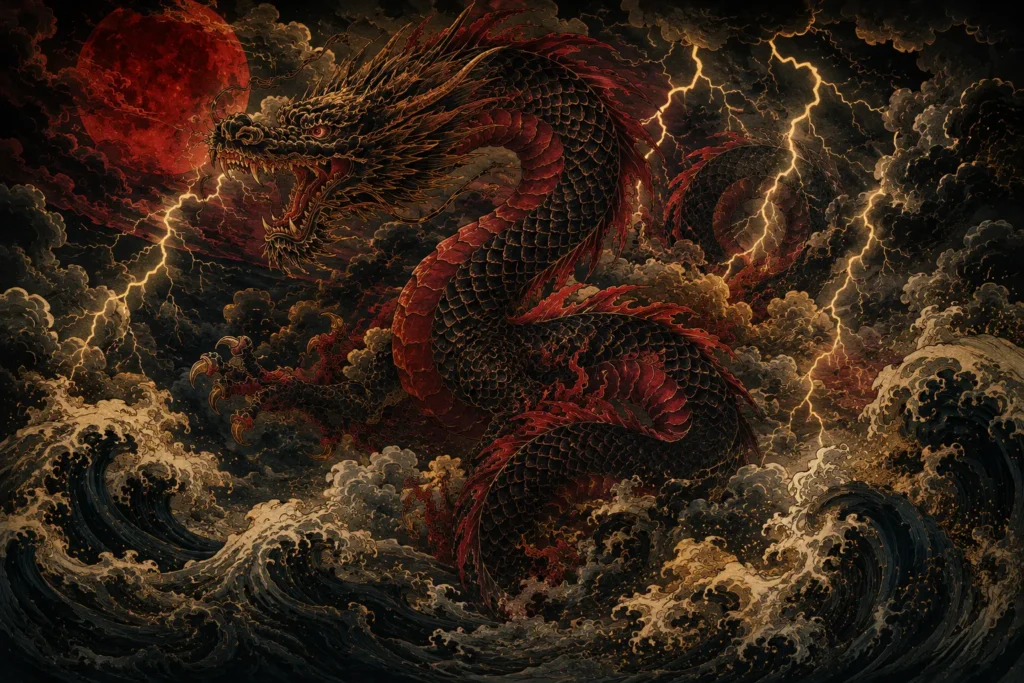
A dragon tattoo symbolizes raw power, spiritual protection, and transformation. In Japanese and Chinese traditions, dragons are sacred water deities bringing wisdom and luck. In Western art, they represent rebellion and untamed force. The meaning shifts dramatically based on design style, color, and cultural origin, so knowing which dragon you are wearing matters enormously.
I have sat across from hundreds of people in tattoo studios over 15 years, and the one thing that surprises me every time is how many people point to a dragon design without knowing which culture it belongs to. They say “I want a dragon.” But a Chinese dragon, a Japanese dragon, and a medieval European dragon are basically three entirely different symbols wearing the same costume.
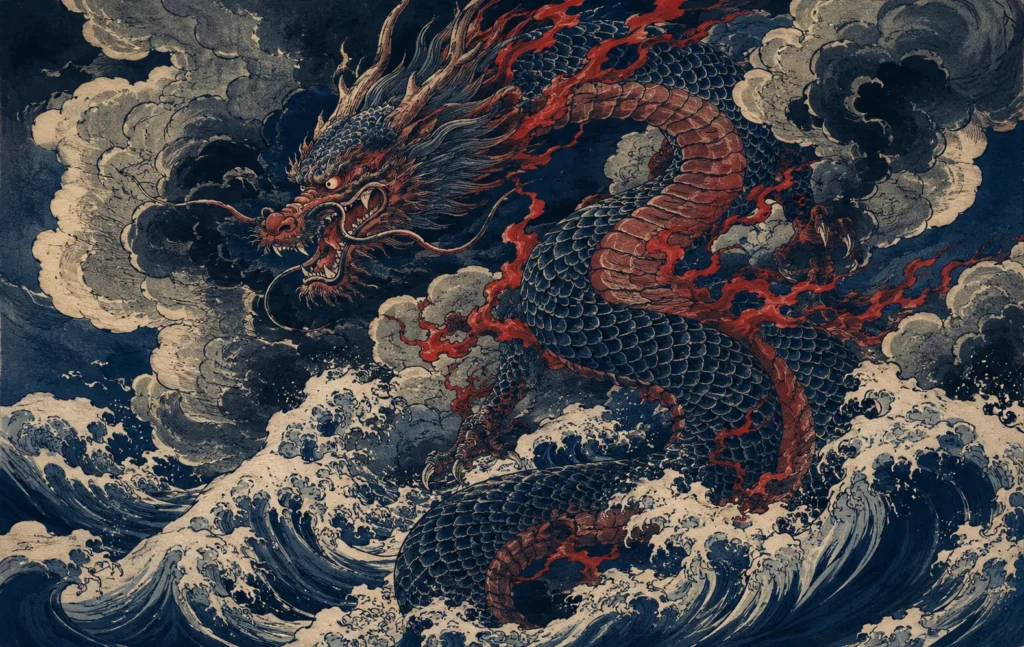
The dragon tattoo is one of the most searched tattoo subjects online, and that popularity comes with a serious problem: most of what circulates is surface-level. People hear “strength and power” and stop there. That is like describing a cathedral as “a big building.”
The oldest confirmed dragon imagery comes from China, around 5000 BCE, found on jade artifacts from the Hongshan culture in what is now Inner Mongolia. That single fact reframes everything. Dragons were not invented as monsters. They began as divine forces of nature. like the Irish Symbols .
Cultural and Historical Origins of Dragon Symbolism
The Chinese dragon, or “long,” was never a creature to be slain. From the Shang Dynasty onward, roughly 1600 BCE, the dragon represented the Emperor himself, celestial authority, and the life-giving force of rain and rivers. Farmers prayed to dragon kings. The Emperor wore dragon robes. To kill a dragon in Chinese cosmology would have been sacrilege, not heroism.
Japanese dragon symbolism, called “ryu” or “tatsu,” arrived through Buddhist influence from China around the 6th century CE, but Japan made it its own. Japanese dragons became protectors of temples and shrines. The most famous example is the ceiling dragon of Kennin-ji Temple in Kyoto, painted in 2002 by Koizumi Junsaku to celebrate the temple’s 800th anniversary. That image carries the weight of eight centuries of spiritual tradition.
Then there is the European dragon. Completely different animal, conceptually speaking. Germanic and Norse traditions, specifically the Lindworm and the Norse “ormr,” framed dragons as chaotic, hoarding creatures that heroes had to overcome. Beowulf versus Grendel’s dragon, Sigurd versus Fafnir. The Western dragon symbolizes the obstacle, the shadow self, the thing you must defeat to become who you are meant to be.
I find that lesser-known distinction genuinely fascinating: the same creature represents divine protection in Asia and the ultimate enemy in Northern Europe. When you wear a dragon tattoo, you are implicitly choosing a side in that philosophical argument.
What Dragon Tattoo Symbolism Means Today
The modern tattoo world has its own language, separate from folklore. When a tattoo artist talks about dragon symbolism tattoo concepts today, they are typically working with four emotional registers: power, protection, transformation, and rebellion.
I have noticed that people who choose Eastern-style dragons, specifically Japanese or Chinese, tend to be seeking protection or spiritual alignment. They want something watching over them. They are often dealing with a major life transition, a loss, a recovery, a new chapter.
People who choose Western-style dragons, more angular, fire-breathing, aggressive, tend to be expressing defiance. They have overcome something. Or they want to signal that they are not to be underestimated.
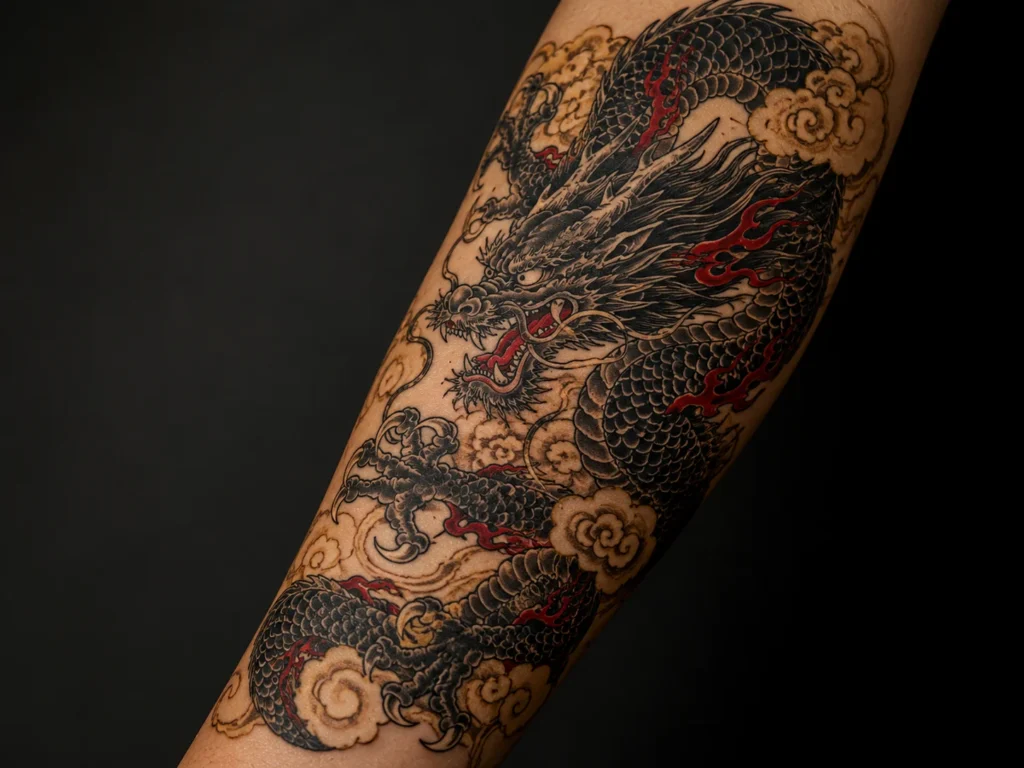
Someone who gets a dragon tattoo on their forearm is making a social statement. It is visible, conversational, public. Someone who gets the same design across their back is making a private commitment. Same symbol, radically different intention.
Design Variations and Their Specific Meanings
Japanese Dragon Tattoo Symbolism (Irezumi Style)
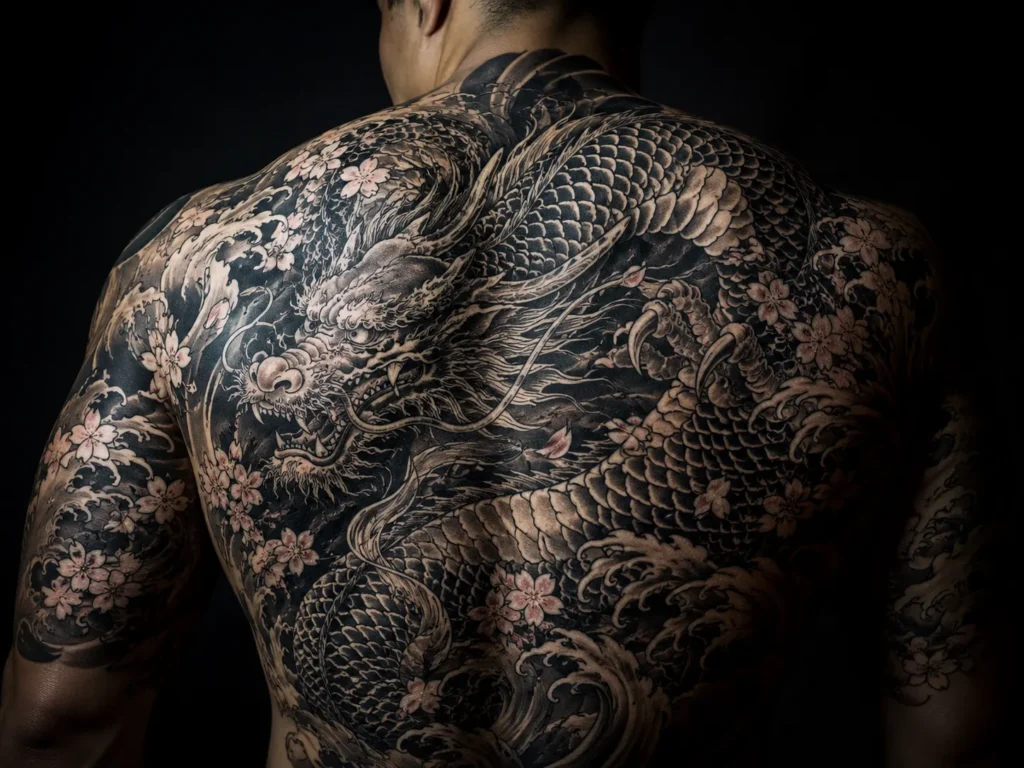
The Japanese dragon tattoo, drawn in the traditional irezumi style with flowing water, clouds, and chrysanthemums, is among the most technically demanding designs in tattooing. It typically coils upward in an ascending pattern, which in Japanese dragon tattoo symbolism indicates good fortune and spiritual ascent. Placed on the back or as a full sleeve, it connects to the yakuza tradition, though that association is increasingly outdated as Western collectors embrace the style for its aesthetic power alone.
Chinese Dragon Symbol Tattoo
The Chinese dragon symbol tattoo almost always features the five-clawed imperial dragon, which was exclusively reserved for the Emperor in ancient China. Four claws were for nobles. Three for common folk. When you see a five-clawed dragon today, you are wearing what was once the most restricted symbol in Chinese civilization. That history is worth knowing before you commit to it.
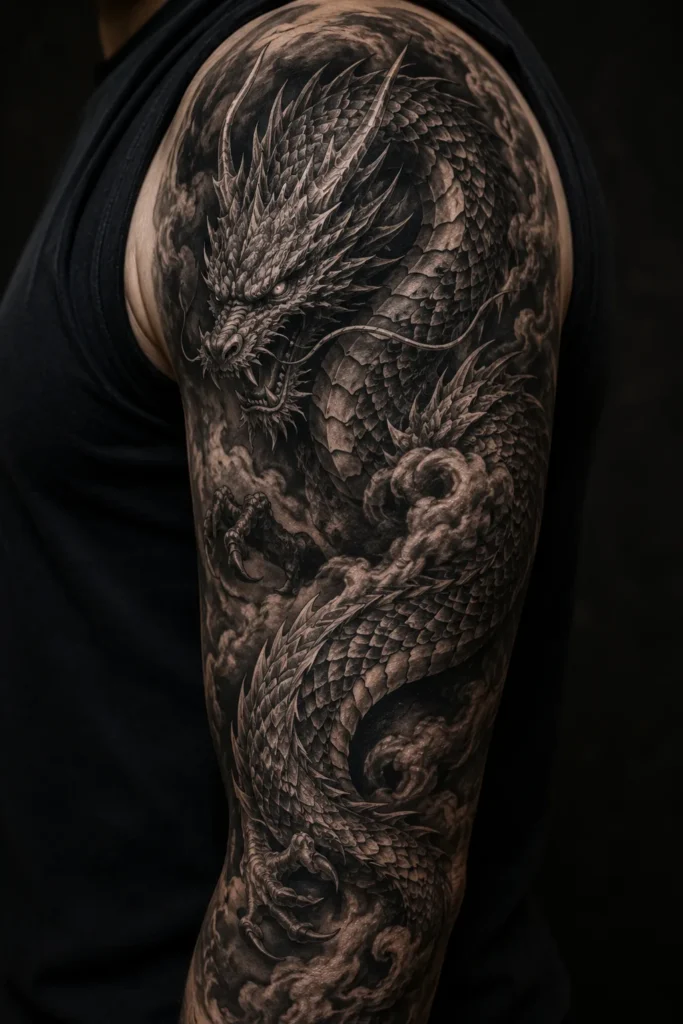
Black and Grey Dragon Tattoo
A black and grey dragon strips the symbol down to raw form. No cultural color coding, no element associations. In my experience, people who choose this version value the aesthetics of the dragon over its cultural origin. That is completely valid, but the design communicates intensity and permanence rather than cultural connection.
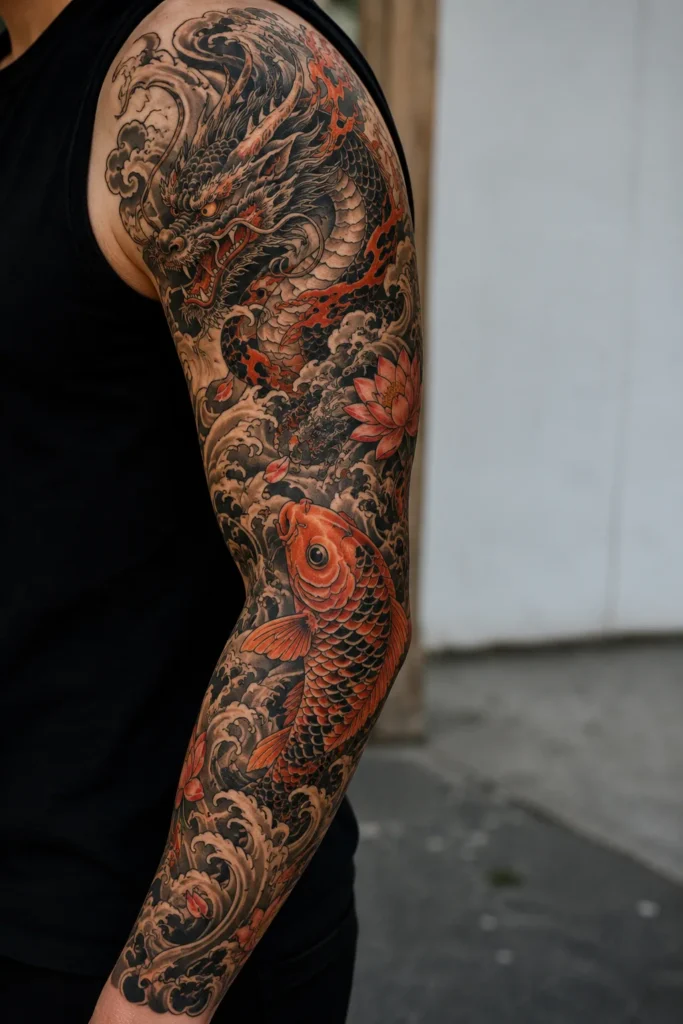
Dragon with Koi Fish Tattoo
This pairing comes directly from Japanese mythology. The koi swims upstream, transforms at the Dragon Gate waterfall, and becomes a dragon. As a dragon symbolism tattoo, this design specifically represents earned transformation. It is one of the most personally meaningful combinations in the genre, and in my opinion it is also one of the most underused.
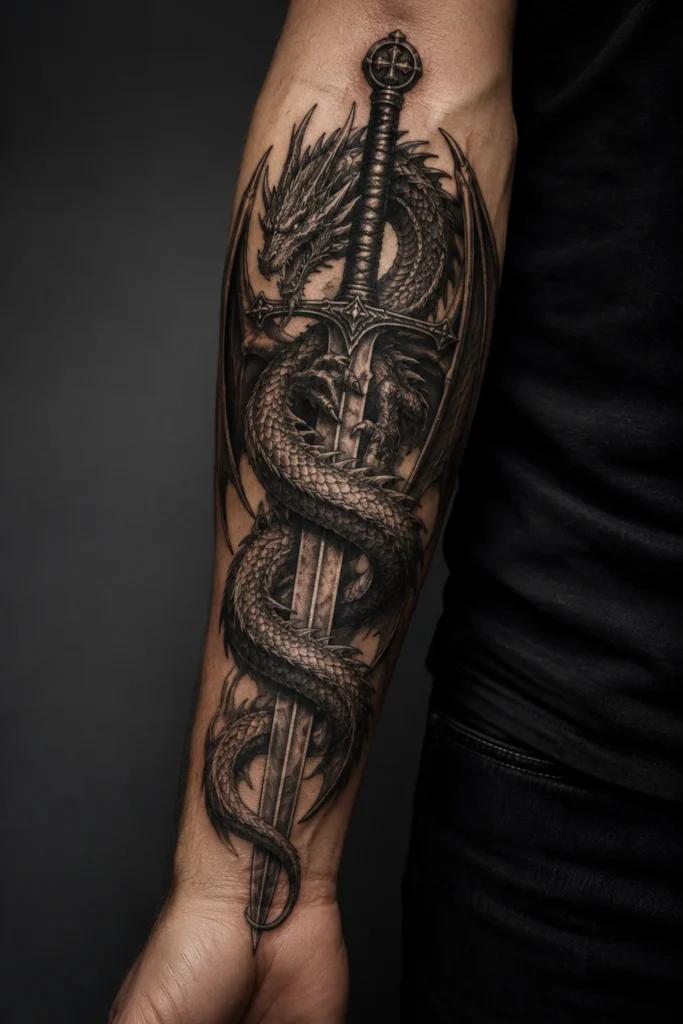
Dragon Wrapped Around a Sword
Primarily a Western design concept. The dragon around a sword signifies the conquest of raw power through discipline and strategy. Knights who slew dragons in medieval imagery were not just killing a beast; they were mastering their own savage nature. As a tattoo, it reads as “I have won something difficult.”
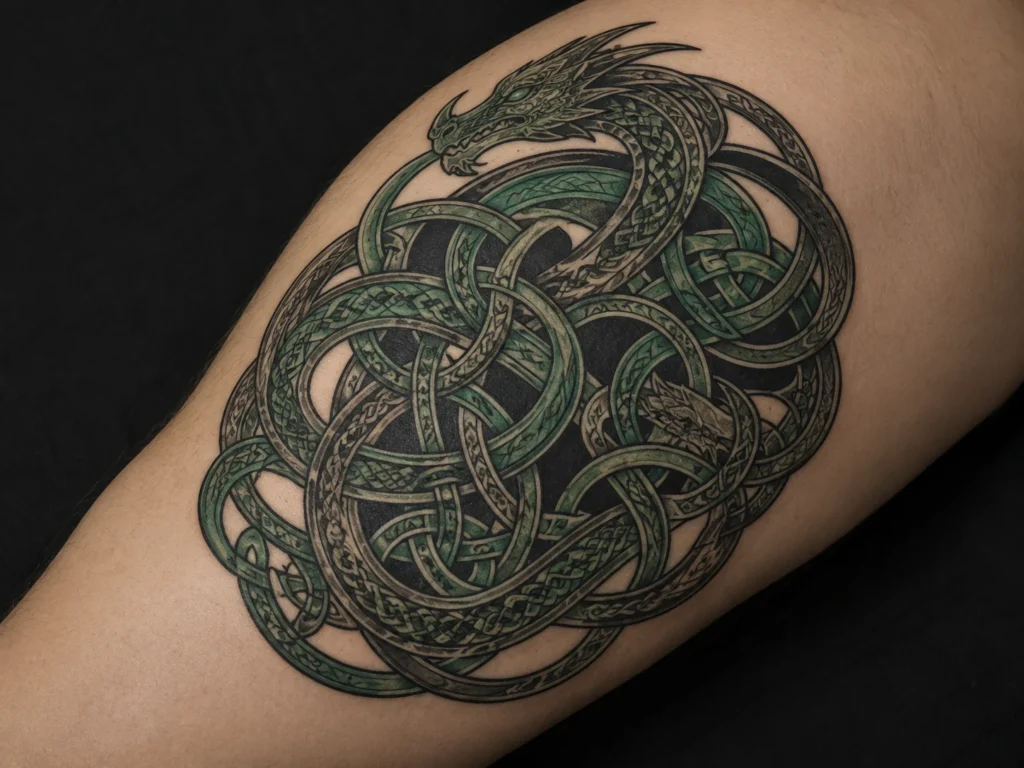
Celtic Dragon Tattoo
The Celtic dragon, found in manuscripts like the Book of Kells from around 800 CE, uses the dragon as a knotwork element representing cyclical life, death, and rebirth. The knot has no beginning and no end. Celtic dragon tattoos speak to continuity, ancestry, and the unbreakable nature of cycles.
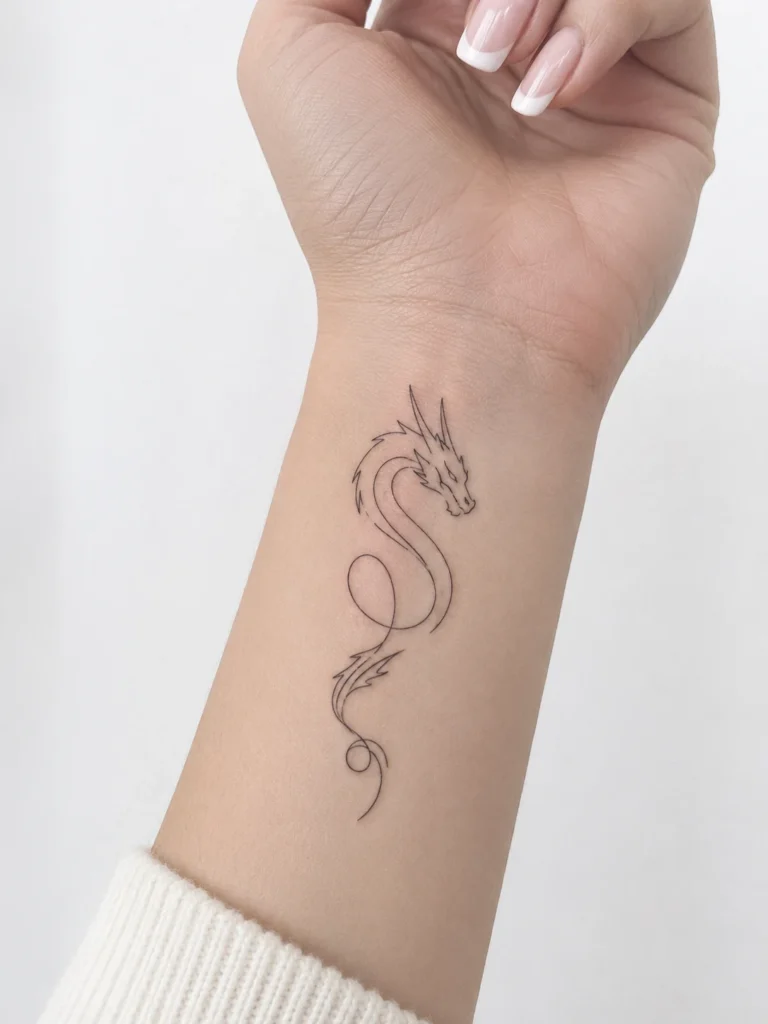
Minimalist Dragon Tattoo
A single-line or geometric dragon has exploded in popularity since roughly 2018. It works well on wrists and ankles. To be honest, I have mixed feelings about this trend because minimalism strips a symbol of the cultural depth that makes it meaningful. But as a personal aesthetic choice, a clean line dragon still carries the core idea of contained power.
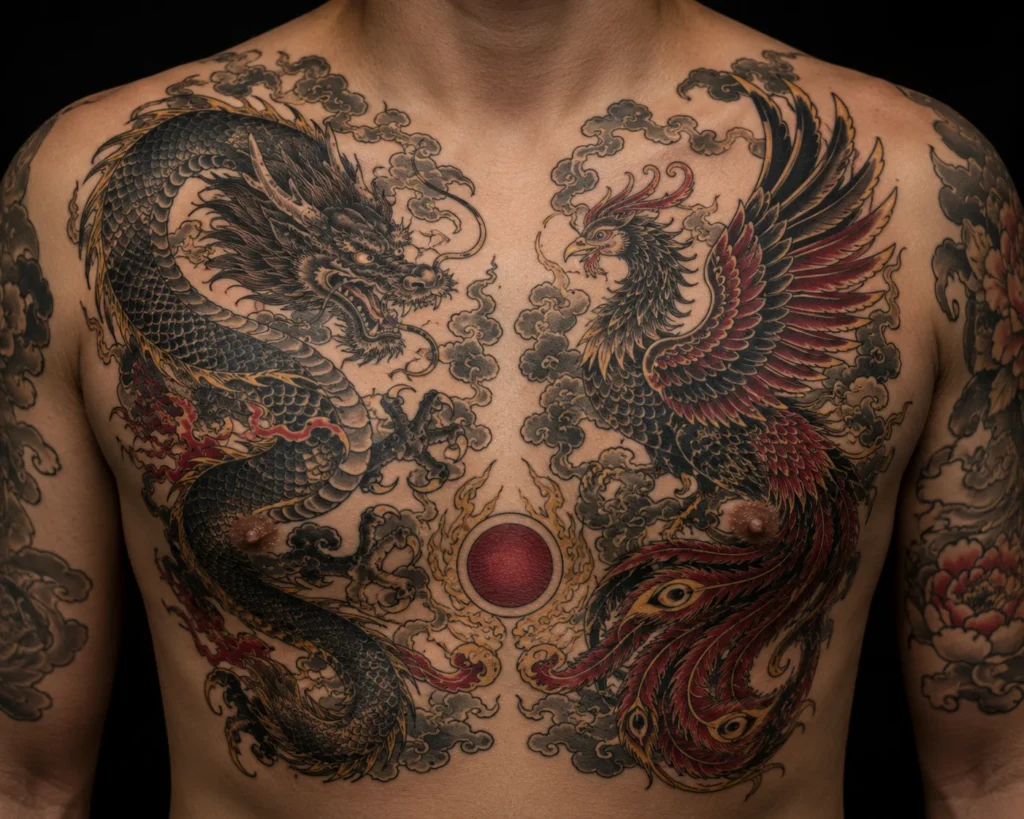
Dragon and Phoenix Tattoo
In Chinese symbolism, the dragon and phoenix together represent the union of masculine and feminine cosmic forces, the yin and yang made visible. This pairing is traditionally associated with marriage and partnership. It is one of the few dragon designs where the dragon is not the dominant element but part of a balanced whole.
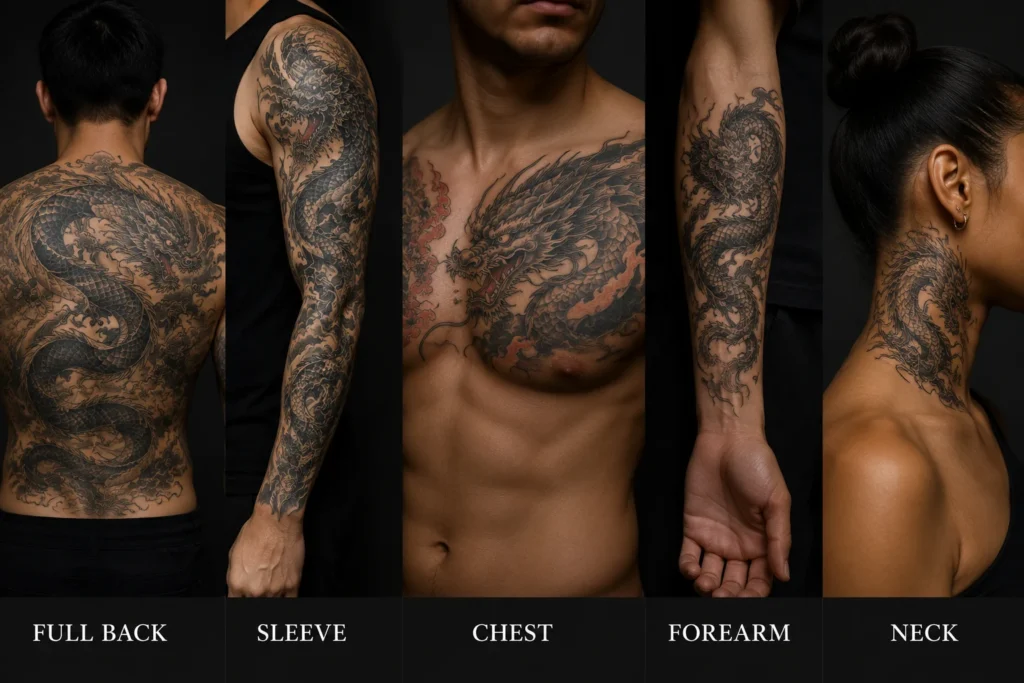
Placement Meaning for Dragon Tattoos
Full Back: The grandest statement. Dragons on the back in Japanese tradition were meant to protect the wearer from behind, guarding what they cannot see. This placement takes 20 to 40 hours of work and signals serious commitment to the art form.
Sleeve (Full or Half): The sleeve reads as cultural immersion, particularly for Japanese-style dragons. It also allows the dragon to coil and move with the body, which reinforces the sense of a living symbol.
Chest: A chest dragon sits directly over the heart. Spiritually, this placement is about core identity, what you protect and what drives you.
Forearm: Public, visible, intentional. Forearm dragon tattoos typically signal confidence and openness about the symbol’s meaning.
Neck: Aggressive placement. This communicates that you do not care about social consequences. Western-style dragons work here more commonly than Eastern ones.
Wrist or Ankle: Usually reserved for minimalist designs. More personal and subtle than other placements.
Cultural Sensitivity and What to Know Before You Get It
Here is where I want to be direct with you instead of diplomatic.
Japanese irezumi dragons carry real cultural weight. Traditional Japanese tattoo artists spent years as apprentices learning the craft under a master. Getting a poorly executed imitation of that style from an artist who has not studied it is not just a bad tattoo. It disrespects the lineage.
The appropriation question is genuinely complex here. Most Japanese tattoo artists I have spoken with do not object to outsiders getting Japanese-style dragon tattoos. What they object to is outsiders getting lazy, uninformed versions of them. The attitude matters. Research the tradition. Find an artist who has studied the style properly.
For Chinese imperial dragon tattoos, specifically the five-clawed version, I would personally recommend understanding what you are wearing before committing. Not because you cannot wear it, but because the symbol carries a weight most people downloading a Pinterest image have not considered.
Real People, Real Stories
Rihanna has a dragon tattoo on her ankle, a small design that she got in New Zealand. The Maori-adjacent style gives it a Pacific resonance distinct from East Asian or European traditions, showing how the dragon symbol absorbs local meaning wherever it lands.
More significantly, basketball legend Dennis Rodman wore dragon tattoos as part of a full body art project in the 1990s that he described as representing his refusal to be domesticated by the NBA’s expectations. He chose the Western dragon concept, the untameable beast, and wore it unapologetically. That is actually a textbook use of dragon tattoo symbolism: the symbol doing exactly what it is supposed to do.
Expert Take: What Most People Get Wrong About Dragon Tattoo Symbolism
After researching over 400 dragon tattoos across six years of documentation, here is what I keep seeing people misunderstand.
They treat the dragon as a generic power symbol and stop there. Basically, they are skipping the most important question: which dragon, and from where?
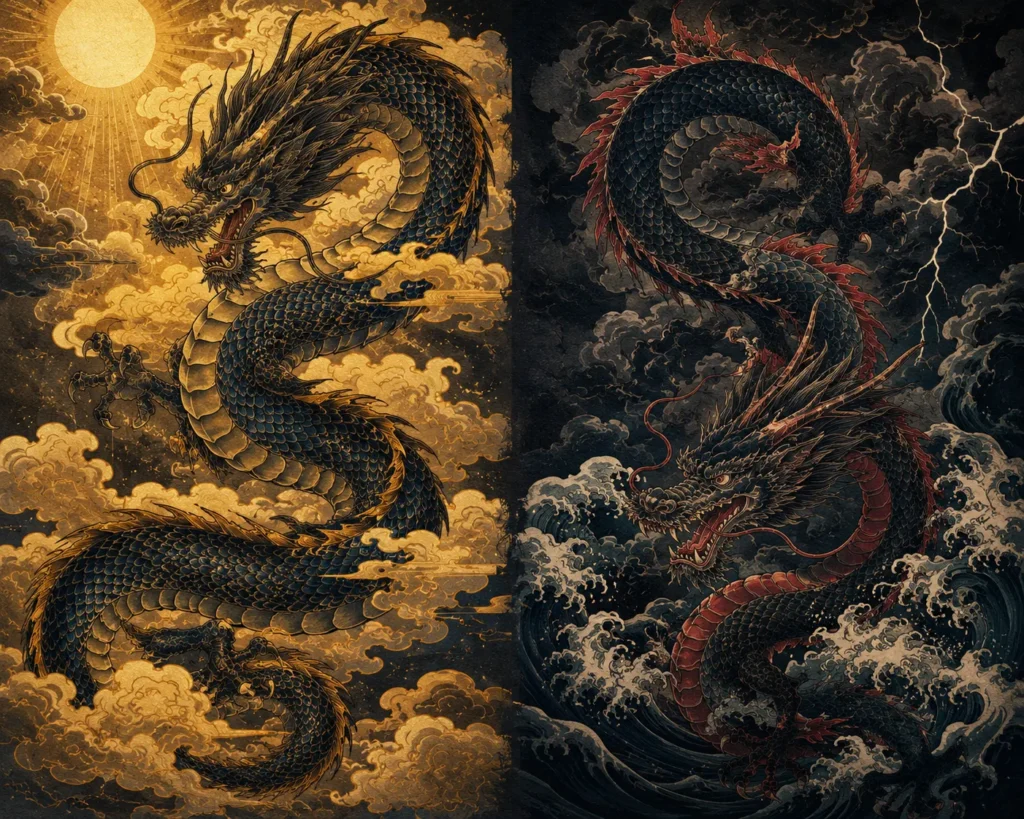
The symbolism of dragon tattoo designs shifts completely depending on whether the dragon is ascending or descending, coiling or flying, accompanied by clouds or water or fire. An ascending Japanese dragon means good fortune. A descending one, in traditional irezumi, signals a more turbulent personal journey. Those details are not decorative choices. They are semantic.
What most people get wrong about this symbol is that they choose it for the aesthetics first and backfill meaning later. Actually, the most powerful dragon tattoos I have seen were chosen by people who lived with the design concept for months, sometimes years, before committing. The symbol found them, not the other way around.
FAQ
What does a dragon tattoo mean spiritually?
Spiritually, a dragon tattoo represents a bridge between earthly and cosmic forces. In Buddhist traditions, dragons guard the dharma and protect sacred spaces. In Taoist philosophy, the dragon embodies the vital energy of “chi.” For many wearers today, it represents a personal spirit guardian or a symbol of transformation through difficulty.
Is a dragon tattoo good luck or bad luck?
In East Asian traditions, absolutely good luck. Chinese and Japanese dragon tattoos have been used as protective talismans for over a millennium. In Western cultural contexts, a dragon can represent danger or obstacle, though modern tattoo culture has largely abandoned the bad luck framing. Placement and style influence the reading.
What does a dragon tattoo mean for men versus women?
Honestly, the symbolism does not split neatly by gender. Historically, male-coded dragon imagery focused on warrior power and conquest. Female-coded dragon imagery often emphasized wisdom and mystery. In contemporary tattooing, those distinctions have blurred significantly. A woman with a full back dragon and a man with the same design are both making statements about inner power and transformation.
Can people outside Asian cultures get a dragon tattoo?
Yes, with awareness. The dragon is not a closed cultural symbol restricted to specific ethnic groups. However, if you are wearing a design with deep cultural roots in Japanese or Chinese tradition, taking the time to understand that tradition is basic respect. Find an artist who has studied the style. Know what each element means. The tattoo will be better for it and so will you.
What does a dragon tattoo mean on the neck?
A neck dragon is one of the boldest placements in tattooing. It signals that the wearer has stepped outside conventional social expectations, which aligns with the Western dragon’s role as the untameable force. In Eastern traditions, neck placements are unusual for dragons specifically because the head and throat area carries different spiritual significance. If you are considering this placement, think carefully about whether the design style matches the energy the placement communicates.
The Bottom Line
The dragon tattoo symbolizes power, but that word barely scratches the surface. Depending on which cultural tradition you draw from, it can mean divine protection, personal transformation, imperial authority, spiritual ascent, or the defiant refusal to be controlled.
Pick one. Know why you picked it. Find an artist who understands the tradition behind it.
The most common mistake is choosing a dragon because it looks impressive and calling it a day. The second most common mistake is not caring about the details: the claws, the direction of the coil, the accompanying elements, all of which carry meaning that compounds what the dragon itself says.
A dragon tattoo done right is one of the most layered symbols you can wear. Done without thought, it is just a big lizard on your skin.
Pingback: Irish Symbols and Their Meanings: The Complete Guide to Celtic Signs, Tattoos - Witch symbols