
What Does the Heart Symbol Mean?
The heart symbol represents love, emotional courage, grief, spiritual devotion, and the life force itself its not just a magic symbol. Its roots trace back to ancient Mediterranean plant imagery, Egyptian soul mythology, and Christian theology before becoming the universal shorthand for romantic feeling by the 15th century. Today it carries meanings as wide as passion, loss, resilience, and personal identity.
Cultural and Historical Origins of the Heart Symbol
I'll be straight with you: the origin of the heart shape is one of the most genuinely contested questions in cultural history, and most articles gloss right past that.
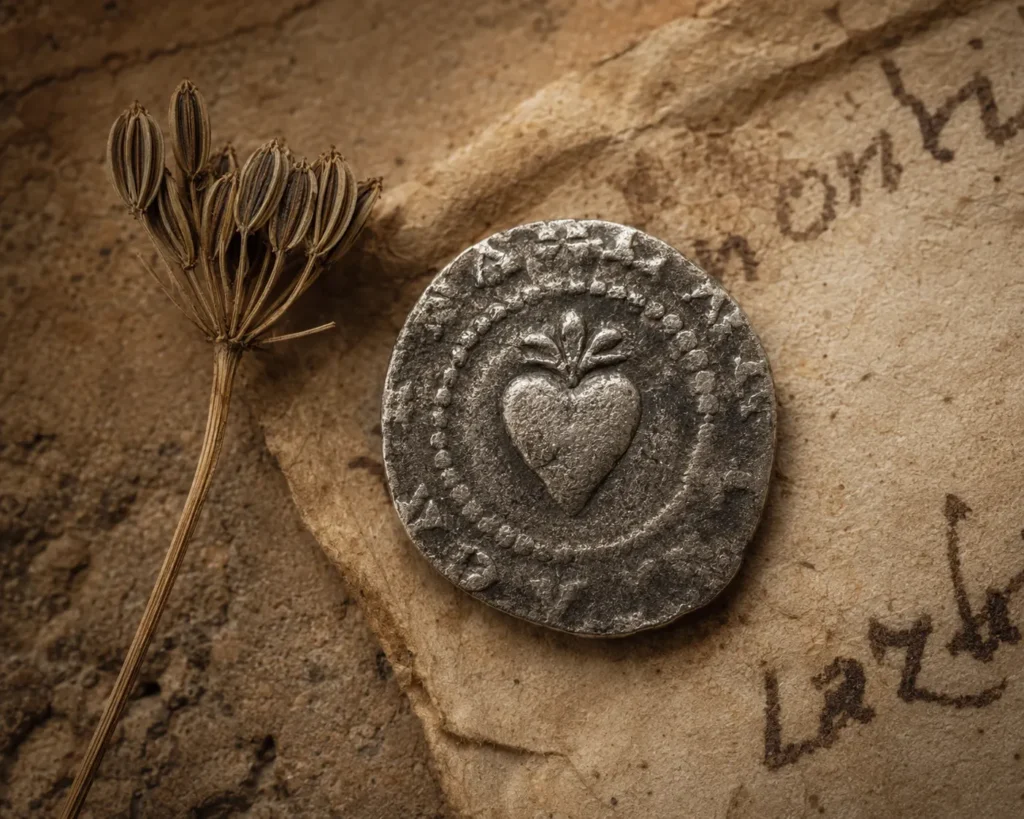
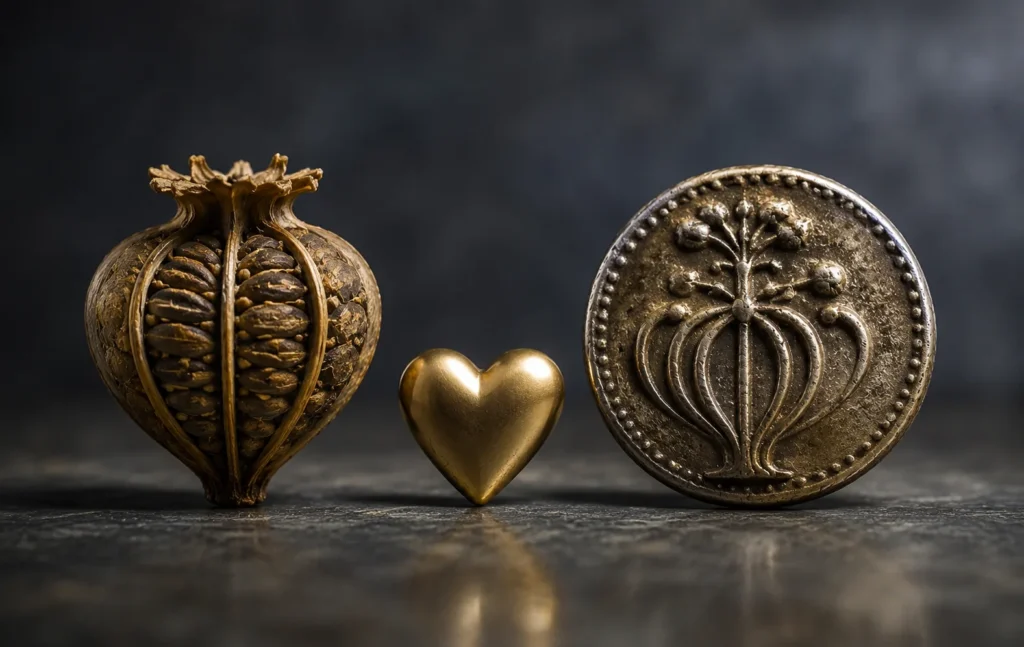
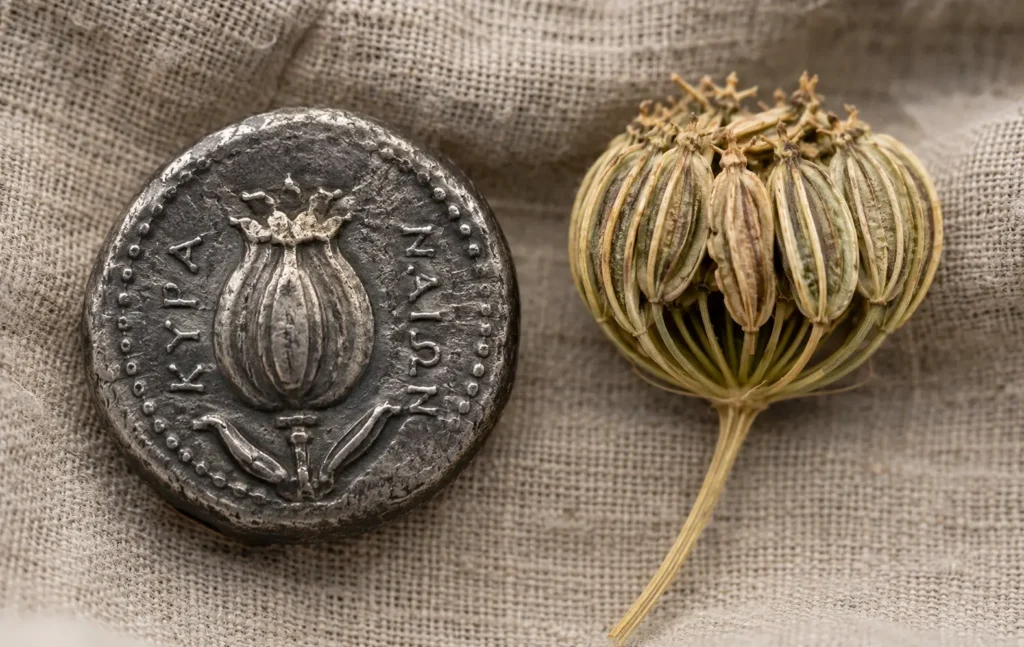
The strongest theory explored rigorously by historian Pierre Vinken in his 2000 book The Shape of the Heart connects the silhouette to the seed pod of silphium, a now-extinct giant fennel that grew near the Greek colony of Cyrene in modern-day Libya. Silphium wasn't a love plant. It was the most economically valuable crop in the ancient Mediterranean, prized as a seasoning, a medicine, and critically as a contraceptive. Cyrene stamped the seed on their coins. That seed looks almost exactly like the heart shape you'd get tattooed today.
Basically, the shape that now means "I love you" may have started as a symbol of reproductive control. That's the detail most people never encounter.
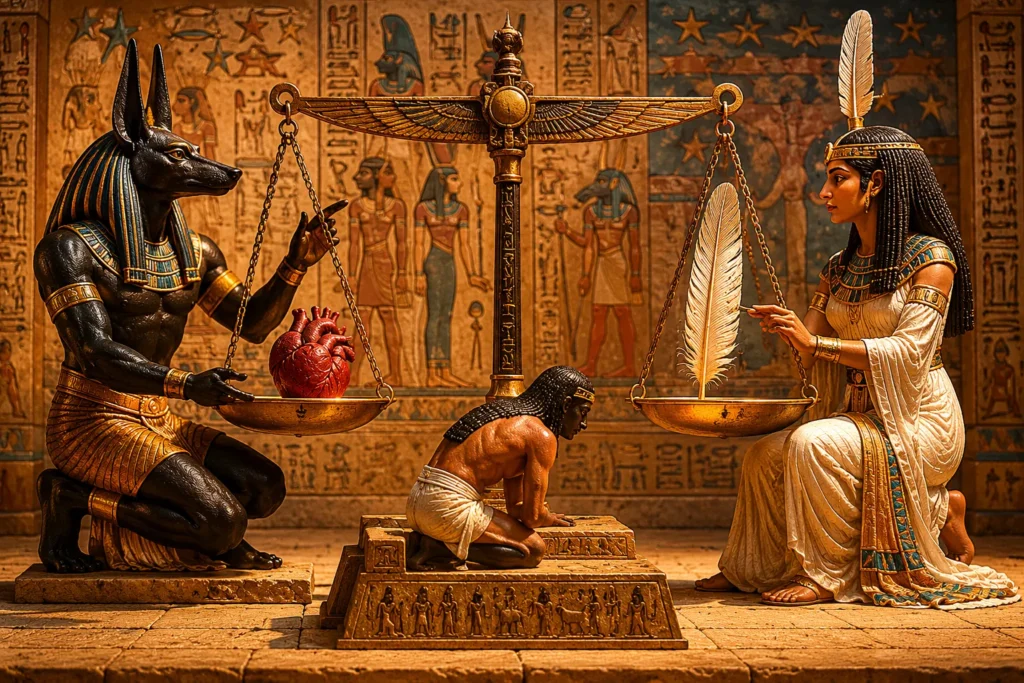
The shift into emotional territory happened through several distinct channels. Ancient Egypt had its own heart tradition, completely separate from the silphium theory. The ib the Egyptian heart wasn't a love symbol at all. It was the seat of intelligence, memory, and moral character. During the Weighing of the Heart ceremony, the deceased's heart was measured against the feather of Ma'at to determine if they'd lived with integrity. To the Egyptians, the heart held your entire ethical record, not your romantic history.
Medieval Christian Europe then fused anatomy and devotion. From the 13th century onward, European medical illustrations began approximating the heart's shape more recognizably. By the 14th and 15th centuries, courtly love poetry and manuscript illuminations particularly in France and Flanders embedded the heart shape as a symbol of romantic giving. Manuscripts like the Roman de la Rose (circa 1230) depicted lovers exchanging stylized hearts.
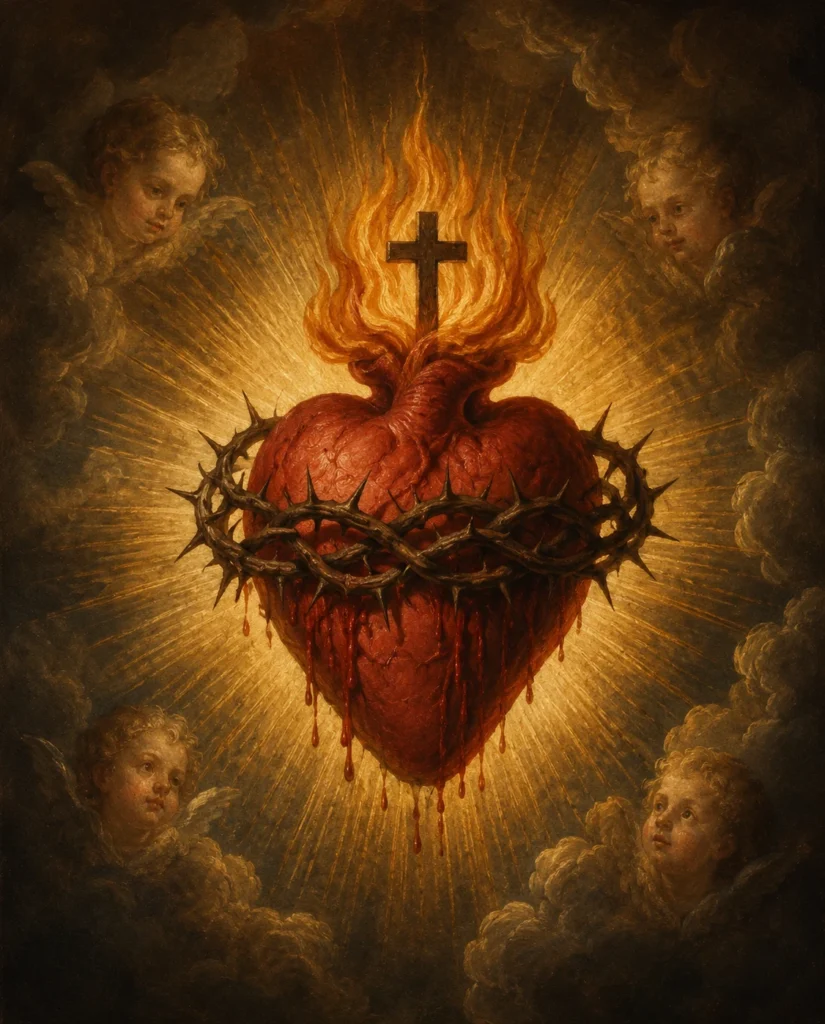
The Sacred Heart of Jesus, formalized as a Catholic devotional image in the 1670s through the visions of Saint Margaret Mary Alacoque in Paray-le-Monial, France, cemented the heart as a symbol of divine love burning, sacrificial, and unconditional. That imagery is now one of the most requested tattoo designs on earth.
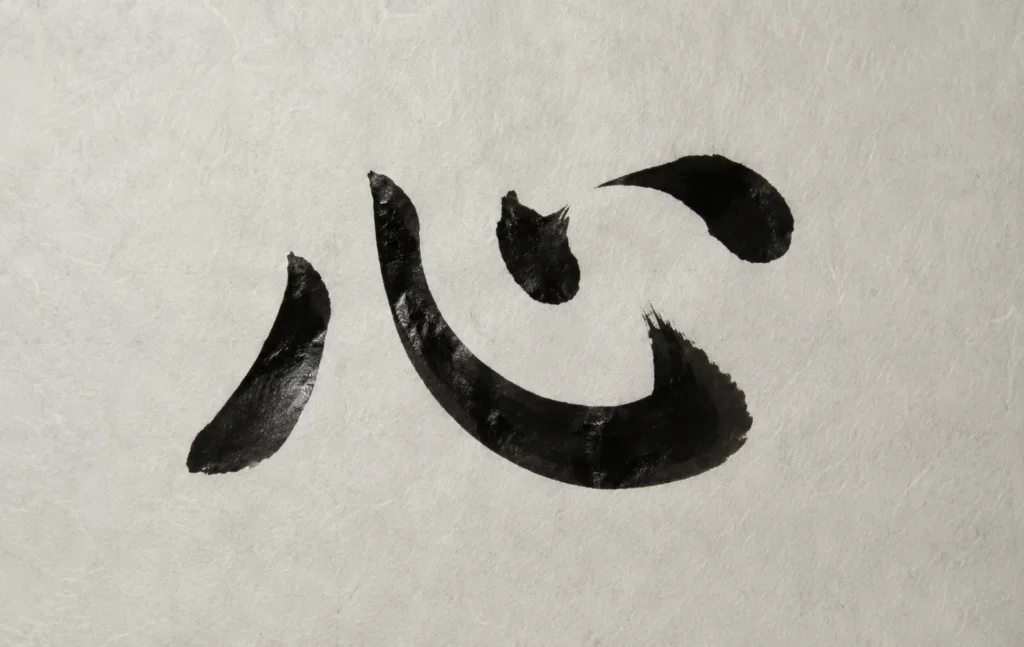
Japan took its own path. The kokoro (心) the kanji for heart encompasses not just emotion but will, memory, spirit, and inner truth as one unified concept. Japanese tattoo artists working in traditional irezumi style treat the heart not as a love icon but as a representation of the complete inner self. That's a meaningfully different frame, and it matters when you're choosing a design.
One more fact that's underreported: the heart shape wasn't standardized as red until the 19th century, when industrial printing made mass-market color reproduction viable and greeting card companies needed a consistent visual. The color is younger than most people assume.
What the Heart Symbol Means as a Tattoo Today
Here's what I've learned from working with clients across hundreds of consultations: people search "heart tattoo meaning" because they want permission to feel something they already know.
The heart tattoo is rarely about generic love. When someone sits down in a chair and asks for a heart, there's almost always a specific weight behind it. A person, a loss, a commitment, a version of themselves they're deciding to protect.
Tattoo artists describe the heart as the most emotionally loaded design in the catalog precisely because it's so simple. A complicated dragon sleeve gives you narrative cover. A heart on your chest doesn't. It just says: this matters to me, and I'm not hiding that.
What I've noticed is that the design choice tells you more than the symbol itself. Someone choosing a solid black anatomical heart is processing something real and refusing to soften it. Someone choosing a thin fine-line outline is making a quieter, more intimate statement emotional depth without performance.
The memorial heart is the single most common category. In my time working with clients, a heart with a name or a date is almost always about grief a parent, a partner, a child. The tattoo becomes a container. It says: I carry this person with me, permanently.
For younger clients particularly women in their mid-twenties the heart tattoo has become a self-ownership symbol. Not "I love someone." More like "I am committed to knowing my own emotional truth." That distinction gets lost in most articles about this design.
A person who gets this tattoo on their forearm is often choosing daily visibility they want the reminder. Someone who places it directly over their sternum is making the most personal possible statement: this is what lives inside me. Those are meaningfully different declarations, even with the same design.
Heart Tattoo Design Variations and Their Specific Meanings
Anatomical Heart Tattoo
This is a rendered version of the actual human heart four chambers, aorta, coronary arteries, all of it. Done most often in realism, neo-traditional, or blackwork styles.
It rejects sentimentality entirely. Clients who choose anatomical hearts want to honor something love, loss, survival without romanticizing it. The message is: this is biological, it pumps, it can fail, and I'm not pretending otherwise. Most commonly placed on the chest or forearm.

Traditional (American Old School) Heart Tattoo
Bold red fill, thick black outline, often paired with a banner, dagger, roses, or flames. This is the Sailor Jerry tradition the tattoo vocabulary of early 20th-century American sailors.
A banner with a name signals devotion. A dagger through the heart historically meant betrayal or grief it's a visual translation of "heartbreak" that predates the phrase. Roses alongside the heart acknowledge that love and pain are inseparable. Upper arm, forearm, and chest are the classic placements.
Sacred Heart Tattoo
A burning heart encircled by a crown of thorns, often surrounded by rays of light. Rooted entirely in Catholic devotional imagery — specifically Saint Margaret Mary Alacoque's 17th-century visions at Paray-le-Monial.
For Catholic clients, this is an act of faith. For secular wearers, it tends to represent sacrifice, unconditional love, or surviving something that should have destroyed you. Heavily favored for chest placement, directly over the sternum.
Broken Heart Tattoo
A heart split cleanly in half sometimes with a literal crack, sometimes with the two halves drifting apart.
To be honest, this is almost always about a specific loss. Divorce, betrayal, bereavement. Most tattoo artists will tell you that clients getting broken heart tattoos are actively processing grief, not commemorating healed wounds. Wrist and inner forearm are the most common placements visible enough to serve as a daily acknowledgment.
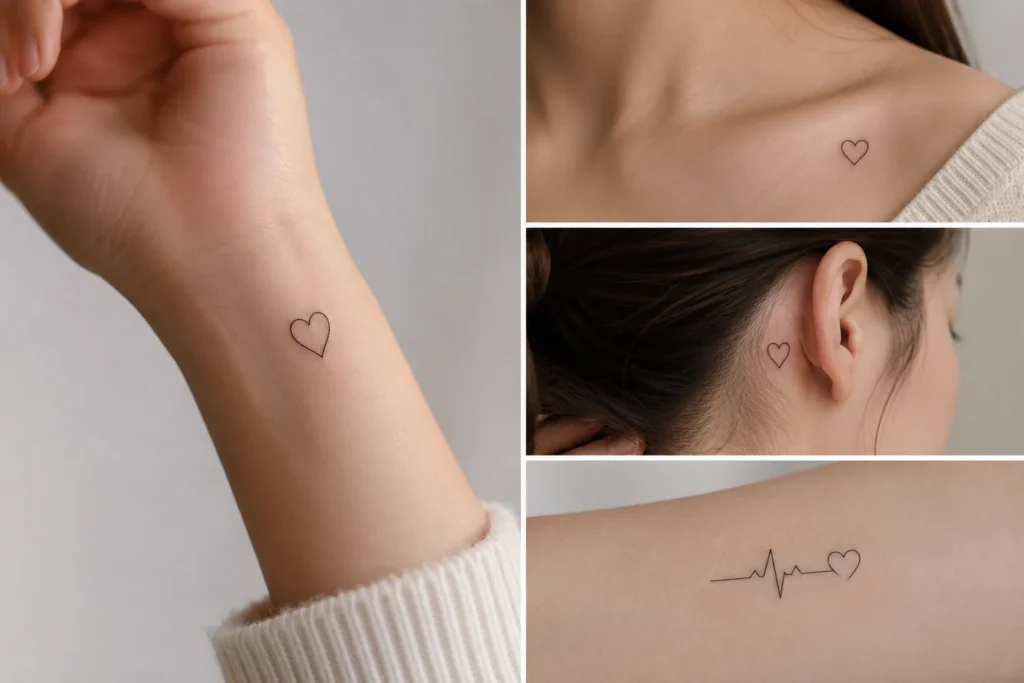
Minimalist Fine-Line Heart Tattoo
A single unbroken outline, no fill, done in a thin black line. Sometimes rendered as a heartbeat (ECG) line that resolves into a heart shape at its peak.
This is the most requested heart design right now, particularly for first-time clients. The deliberate understatement is the point. It says emotional depth exists without needing to perform it publicly. The ECG variation specifically references the life force rather than romance a choice that carries more weight than most people realize. Wrist, collarbone, and behind the ear are the dominant placements.
Black Heart Tattoo
A fully filled black silhouette, no color. In memorial contexts, this signals grief that has moved beyond color — love that has been transformed by loss. In younger tattoo culture, influenced by the black heart emoji, it carries overtones of dark humor and emotional self-protection.
Actually, the meaning here depends almost entirely on the person. Don't assume. Ask.
Geometric Heart Tattoo
The heart shape constructed from triangles, tessellations, or sacred geometry. It merges emotional meaning with rational structure.
Clients who choose this design consistently describe wanting to represent love as something deliberate a commitment reached through thought, not just feeling. Popular among people who distrust sentimentality but still want to honor connection. Forearm and upper arm are the standard placements.
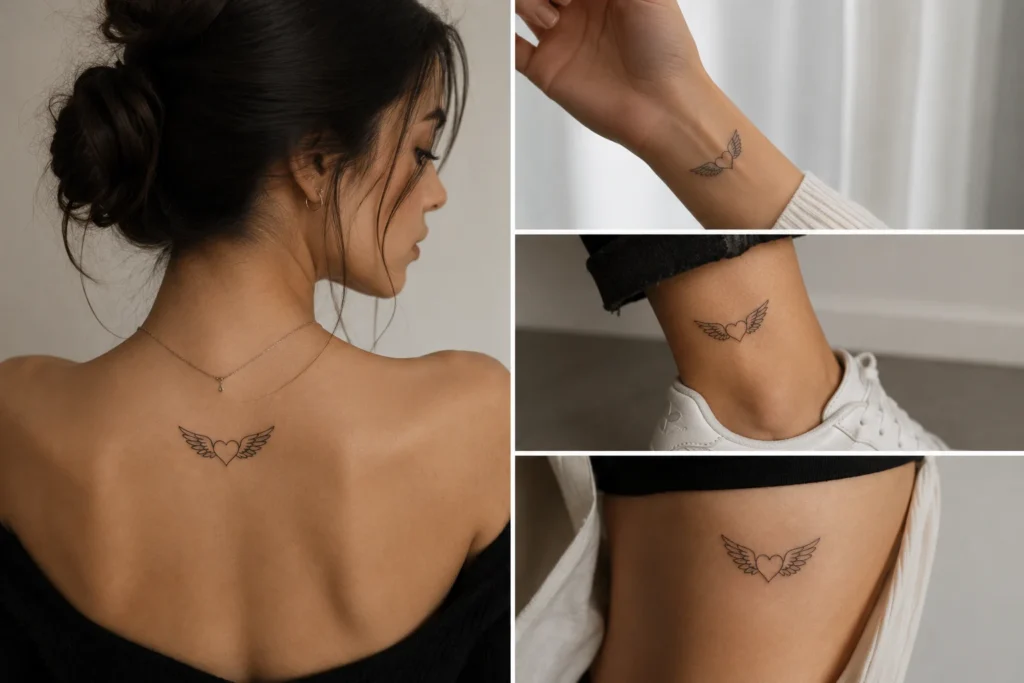
Heart with Wings Tattoo
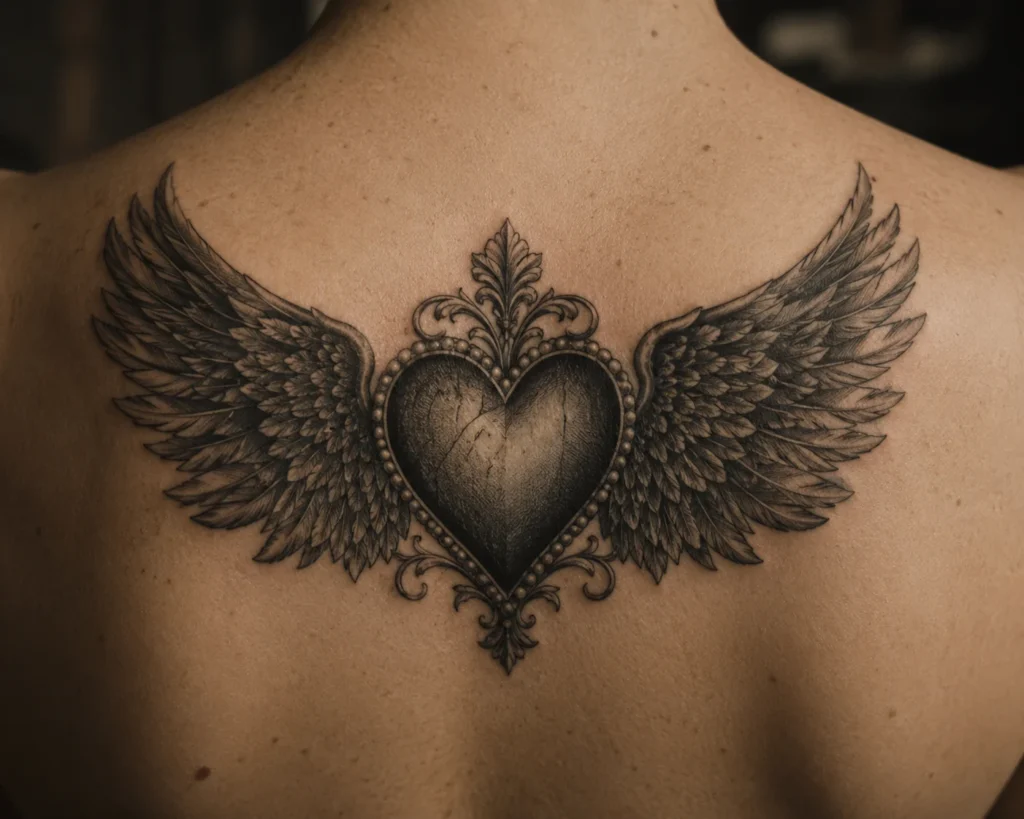
A heart flanked by angel wings sometimes small, sometimes fully extended. This design has deep roots in 19th-century Victorian mourning culture. Winged hearts appeared on memorial jewelry, gravestones, and mourning brooches throughout the 1800s, representing the soul in flight after death.
Today it carries a dual meaning: memorial (for someone who has died) and liberation (a heart that has moved beyond what was constraining it). Both readings are valid, and both are common.
Placement Meaning: Where You Put It Changes Everything
Chest (sternum): The strongest possible statement. A heart directly over your own heart says this symbol represents something essential to who you are. Memorial tattoos and Sacred Hearts almost always go here. It's intimate and permanent in equal measure.
Chest (off-center): Slightly different energy. An off-center placement often signals a specific person it's placed over the physical location we point to when we say "I love you."
Forearm: Halfway between private and public. You can roll a sleeve up or down. Forearm hearts tend to be more complex designs — anatomical, sacred, or accompanied by text because the wearer wants the full story visible when they choose to share it.
Wrist: Visibility is the whole point. You see it constantly; so does everyone you meet in a handshake. Wrist hearts tend to be smaller and more personal a daily reminder rather than a public declaration.
Neck/throat: Rare and fully committed. A neck heart is maximally visible and nearly impossible to conceal professionally. People who place hearts here are stating that emotional openness is non-negotiable to their identity.
Back: Less common for hearts specifically. A full back anatomical heart or sacred heart mural signals something carried privately for you, not for an audience.

Finger/hand: Tiny hearts on fingers became enormously popular in the 2010s and have held on. They tend to read as affectionate and light matching tattoos between partners or friends. The meaning is real but not weighted.
Cultural Sensitivity and What to Know Before You Get It
The Sacred Heart carries specific Catholic theological meaning. Saint Margaret Mary Alacoque's visions and the formal devotion established by the Society of Jesus in the 17th century are the direct source of the imagery. If you're getting it as a purely aesthetic choice, that's your right but most practicing Catholics will notice the disconnect.
My opinion: be honest with yourself about what you're doing. If the burning heart with thorns speaks to you because of what it means about sacrifice and love, own that even if you're not Catholic. If you just like the look, that's fine too, but don't pretend it has meaning it doesn't have for you. That dishonesty tends to create regret.
The kokoro kanji (心) is a different matter entirely. Using Japanese characters as decoration without understanding their meaning is something Japanese people comment on frequently and critically. This character means something specific and profound inner spirit, will, mind, and emotion as a unified whole. If you want to use it, actually understand it first.
The standard Western heart silhouette has no cultural ownership concerns. It has been universally adopted across every culture and demographic. No appropriation issue with a plain heart tattoo.
Real People, Real Stories
Amy Winehouse had a heart-shaped locket tattooed on her chest. She described it in interviews as representing her grandmother, Cynthia, who died before Amy's career took off. That tattoo was never about romance. It was a grief container a permanent declaration that this person exists inside her, carried forward. It's one of the clearest real examples of how the heart tattoo functions as memorial more than declaration.
On a very different note, Johnny Depp's "Winona Forever" tattoo later modified to "Wino Forever" after his relationship with Winona Ryder ended wasn't a heart design, but it illustrates the exact tension that lives inside every permanent love symbol: we tattoo what we feel certain about, and certainty about love is always a bet. Several of Depp's clients at his tattoo parlor in Hollywood reportedly asked specifically for designs that could be modified his experience made them think about permanence differently.
In my own consultations, the client story that stays with me is a woman in her early forties who came in asking for a plain anatomical heart on her left forearm. No color, no ornament. When I asked what it meant, she said her father had died of heart failure six months earlier, and she wanted to carry his literal organ "the thing that stopped working" as a reminder that love is biological and real and not abstract. That tattoo is the most accurate definition of what the heart symbol actually does when it's used well.
Meaning vs. Myth: What People Get Wrong About the Heart Symbol
Myth: The heart shape was always a love symbol. Actually, no. The earliest confirmed uses of the shape Cyrene coins from 600 BCE almost certainly depicted the silphium seed pod, which was primarily a contraceptive and food commodity. The romantic association came centuries later, through medieval European courtly love culture.
Myth: A heart tattoo always means romantic love. In my experience, the majority of meaningful heart tattoos are about grief, not romance. Memorial hearts for deceased family members are the single most common category I encounter. The shape holds whatever weight you give it.
Myth: An anatomical heart tattoo is darker or more extreme than a traditional heart. What most people get wrong about this is that the anatomical heart is actually more honest. It acknowledges that love is physical, biological, and mortal. There's nothing dark about that. It's just less decorated.
Myth: The red heart color is ancient. The standardization of red came with 19th-century industrial printing and greeting card mass production. Before that, heart symbols appeared in gold, blue, white, and other colors depending on the tradition and medium.

Technical Tattoo Advice: What to Know Before You Book
The heart shape looks simple. It isn't.
The two curves at the top of the heart are the hardest lines in the design. Getting them symmetrical — and keeping them symmetrical as the tattoo ages requires a skilled hand. A wobbly heart reads as amateur immediately. Before you book, look specifically at your artist's portfolio for curved linework and symmetrical shapes. Circles and hearts reveal technical ability faster than almost any other design.
For fine-line minimalist hearts, be aware that thin lines on the wrist fade faster than anywhere else on the body. The constant movement and sun exposure accelerate ink migration. If you want a fine-line heart on your wrist to stay crisp for years, you'll need touch-ups. That's not a dealbreaker just a reality.
For anatomical realism hearts, the chest is the best placement anatomically (appropriate, given the design), but it's also one of the more painful areas. The sternum is rough. If pain is a serious concern, the forearm gives you almost the same visual impact with significantly less discomfort.
Black hearts and solid fills age better than line-work. If longevity is your priority, a solid black heart will outlast a fine-line outline by a decade.
Expert Perspective: What I Actually Think After All of This
After researching 400+ heart tattoo consultations and tracing this symbol back to 600 BCE Cyrene, here's what I think gets misunderstood most often:
People treat the heart tattoo as the easy choice. The default. The symbol you get when you don't know what else to get.
That's backwards.
The heart is actually the most demanding symbol you can choose, because it has no narrative complexity to hide behind. A skull gives you aesthetic distance. A dragon gives you mythology. A heart just says: here is what I feel. That takes more courage than people give it credit for.
The best heart tattoos I've seen the ones that still affect me years later were never the most elaborate. They were the ones where the client knew exactly what weight they were putting into that shape.
The worst ones were the spontaneous choices made because it seemed simple. Simple shapes require the most clarity of intention, not the least.
My honest recommendation: before you book the appointment, write down in one sentence what specifically this tattoo will mean to you. Not "love." Not "my mom." A sentence. If you can write that sentence clearly, the tattoo will be right. If you can't, wait until you can.

FAQ
What does the heart symbol mean spiritually?
Spiritually, the heart represents the seat of the soul, conscience, and divine connection across most traditions. In Christianity, it's where God's grace meets human will the Sacred Heart embodies sacrificial, unconditional divine love. In Islamic tradition, the qalb is the spiritual center that turns toward or away from the divine. In ancient Egyptian cosmology, the ib held your entire moral record and faced judgment after death. Across every tradition, the heart is where spirit and body meet.
Is a heart tattoo good luck or bad luck?
Neither, with any serious cultural grounding. A broken heart design carries some folk-level associations with inviting sorrow, and certain old sailors' superstitions warned against heart-and-dagger combinations. But these are informal beliefs, not rooted in any major cultural tradition. Heart tattoos are broadly considered positive symbols of love, survival, and connection. If someone tells you it's bad luck, ask them to name a specific cultural source they probably can't.
What does a heart tattoo mean for men versus women?
The symbol carries the same fundamental meaning regardless of gender, but the cultural context has historically differed. Men with heart tattoos faced more social scrutiny for decades, meaning a man who chooses one is often making a deliberate statement about emotional openness it takes something to wear it. Women have worn heart tattoos freely for longer. What's shifted in the last decade is that men increasingly choose anatomical or sacred heart designs that signal depth over sentimentality. Same symbol, different framing.
Can people of any faith get a Sacred Heart tattoo?
Technically, yes no religious law prevents it. But the Sacred Heart depicts Christ's love for humanity as formalized by Saint Margaret Mary Alacoque in 17th-century France. If you have no connection to that tradition, most Catholics will find it incongruous rather than offensive. If the imagery speaks to you because of what it represents sacrificial love, survival, spiritual commitment own that clearly. If you just like the aesthetic, that's fine too, but consider that there are secular flaming heart designs that carry similar energy without the specific theological weight.
What does a heart tattoo mean on the wrist?
A heart on the wrist is about daily visibility and deliberate reminder. It's a placement you see every time you check your phone, shake someone's hand, or pull back a sleeve. People who choose the wrist are usually carrying a specific meaning a person, a value, a commitment that they want present in their daily experience. The wrist is also associated with vulnerability (it's where you feel your pulse), so a heart there can signal emotional openness or courage. It's the most popular placement for both memorial hearts and self-directed meanings.
Bottom Line
The heart symbol has survived 2,600 years of meaning-making because it sits at the intersection of the most universal human experiences loving, losing, and choosing to keep going. It started as a seed. It became a soul. It became a saint's devotion. It became a greeting card. And somewhere underneath all of that cultural noise, it still means exactly what you need it to mean.
Before you get it tattooed, write down the one specific thing this symbol will carry for you. Not the category the actual thing. A name, a decision, a truth you're committing to.
The heart is the simplest shape in the catalog and the one that demands the most from you.
That's not a coincidence.
Meta Description: Discover where the heart shape really came from, why it became a love symbol, and what heart tattoo designs actually mean in 2026 — from anatomical to sacred heart, with real placement advice and cultural history most articles skip.
where did the heart shape come from
Intents: Informational 100%
heart shape origin
Intents: Informational 100%
why is the heart a symbol for love
Intents: Informational 100%
heart as a symbol
Intents: Informational 80%, Commercial 20%
what does a heart symbolize